

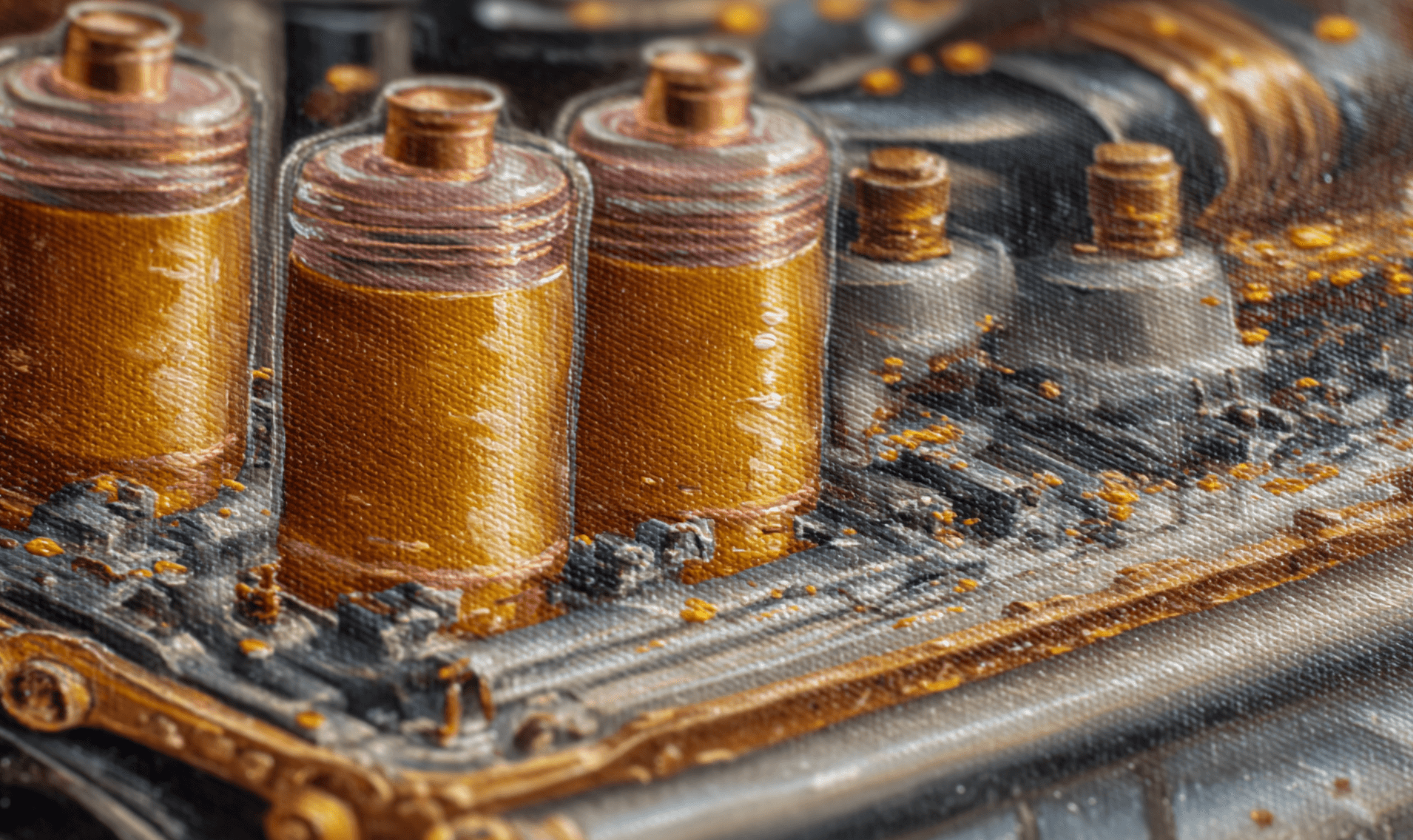
The morning light pierces through 28°C water at Lizard Island, revealing a stark contrast on the deployment racks. On one side, Acropora fragments struggle beneath a suffocating blanket of algae and marine growth. On the other, similar fragments sit atop surfaces that remain remarkably clear despite 30 weeks underwater. The rhythmic hum of dive tanks and gentle current masks the significance of what we're witnessing – a potential solution to coral restoration's most persistent economic barrier.
"We're fighting a constant battle against time," says Dr. Emma Chen, marine biologist overseeing the deployment. "Without intervention, these algae smother young corals within weeks. But we can't possibly clean every surface on a reef-scale restoration project."
As Lizard Island records 92% coral mortality following the 2024 bleaching event – one of the highest rates globally – restoration practitioners are turning to an unexpected ally: non-biocidal fouling release coatings (FRCs) that could transform the economics of reef restoration by solving the maintenance trap that has kept projects small, short-lived, and economically unsustainable.
The Maintenance Trap Keeping Restoration Projects Small
The numbers tell a sobering story about coral restoration's scaling problem. A comprehensive review of global restoration efforts found that 60% of projects last less than 18 months, with a median restored area of only 100 m². This isn't just a funding problem—it's a fundamental contradiction between ecological ambition and economic reality.
"We're caught in a painful paradox," explains Chen, brushing algae from an uncoated control device. "Larger restoration projects deliver greater ecological benefits but face exponentially growing maintenance burdens that ultimately doom them to failure."
DEPLOYMENT DATA: Maintenance Reality
Typical maintenance requirements: 4-6 hours per 10 m² per week
Uncoated substrate remaining clear after 37 days: 4-8%
Median project duration: 18 months
Median restored area: 100 m²
This maintenance trap explains why, despite coral reefs contributing approximately $10 trillion globally to ecosystem services, restoration efforts remain frustratingly small-scale and short-lived. The economics create an impossible choice between unsustainable maintenance costs or accepting high mortality rates.
Maritime Innovation Transforms Coral Conservation
The potential breakthrough comes from an unlikely source: the shipping industry's battle against hull fouling.
"Non-biocidal fouling release coatings create surfaces with extremely low surface energy that prevents most marine organisms from establishing strong adhesion," explains Dr. James Harrington, materials scientist who adapted the technology for coral applications.
"They create a slippery surface that prevents organism adhesion, particularly in areas with water movement, which helps dislodge any organisms attempting to settle," explains Dr. James Harrington, materials scientist who adapted the technology for coral applications.
The field performance at Lizard Island has been remarkable. In a 46-week trial, the best-performing coating maintained over 10 times more clear surface area than uncoated controls. Most importantly, corals successfully overgrew the coatings by the end of the trial, indicating no negative effects on the organisms restoration aims to protect.
DEPLOYMENT DATA: Technology Performance
Best-performing coating: Silicone-based FRC
Clear surface area vs. uncoated controls: 10x improvement
Trial duration: 46 weeks
Coral overgrowth success: Complete by trial end
Transforming Restoration Economics
The economic implications could be transformative. Current coral restoration costs approximately $404,147 per hectare, with maintenance representing up to 40% of that total. By dramatically reducing maintenance requirements during the critical early growth phase, anti-fouling technology could reduce 18-month project costs by 35% and extend effective deployment periods from months to years.
"The ROI timeline shifts dramatically," says Maya Rodriguez, investment analyst specializing in blue economy ventures. "When a USGS study shows that reef restoration could prevent $391 million in annual economic damage in Florida and Puerto Rico alone, the investment case becomes compelling if maintenance costs don't scale linearly with project size."
Implementation Pathway From Testing to Scale
Successful deployment at scale requires navigating several challenges beyond the technical performance. Supply chain limitations for specialized coating materials represent a potential bottleneck, while training requirements for deployment teams add complexity to field operations.
Community engagement has proven critical in early deployments. At O'ahu, Hawai'i, initial resistance from local fishing communities was overcome by demonstrating how SLIPS coatings reduced algal coverage by 70% over a 12-week period without affecting fish populations or water quality.
"The regulatory framework presents another hurdle," notes Environmental Protection Agency marine specialist Dr. Sarah Williams. "While the International Convention on the Control of Harmful Anti-fouling Systems provides some precedent for non-biocidal coatings, deployment in marine protected areas requires navigating complex permitting processes that vary dramatically between jurisdictions."
TRACKING STATUS: Implementation Timeline
Current phase: Extended field trials across three reef systems
Next milestone: Standardized application protocols (Q4 2024)
Regulatory guidance expected: Q2 2025
Target for scaled deployment: 2026
For climate technology investors and marine infrastructure fund managers, the message is clear: sometimes the most promising restoration technologies come from entirely different industries. The key to scaling coral restoration may lie not in biological breakthroughs but in solving the maintenance economics that have kept projects small and short-lived.
As the morning dive team prepares to check on the next batch of coated devices at Lizard Island, Chen offers a final thought: "We've spent decades perfecting how to grow corals. Now we need to perfect how to deploy them at scale. That's where these cross-industry innovations become game-changers."
Things to follow up on...
-
SLIPS coating performance: Recent aquarium experiments and in situ trials on O'ahu demonstrated that SLIPS coatings can significantly reduce algal coverage by up to 70% compared to commercial surfaces over a 12-week deployment period.
-
Standardized monitoring protocols: NOAA has released a comprehensive guide for monitoring coral restoration efforts that provides standardized scientific guidance and best practices for measuring success across different projects and regions.
-
Regulatory developments underway: The UK recently strengthened marine environment protections with new anti-fouling shipping regulations that prohibit cybutryne in marine paints, effective May 10, 2024.
-
Coral restoration economics: A USGS cost-benefit study found that coral reef restoration in Florida and Puerto Rico could prevent over $391 million in annual economic damage and protect nearly 3,000 people each year from storm damage.