

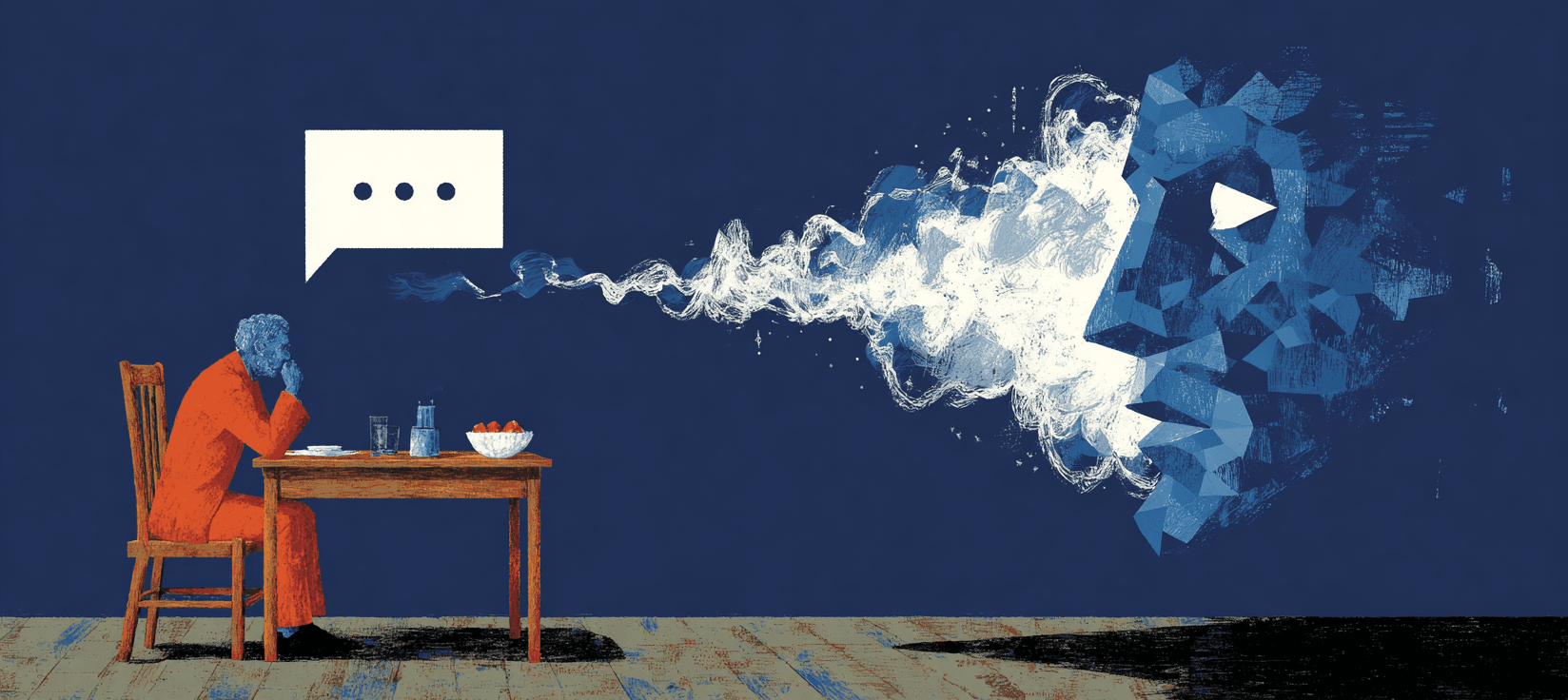
I think I need to skip Thanksgiving.
Leaves it there. Looks at it.
Last year his nephew asked him a question. The kid was thirteen, doing a science project about weather patterns. They were at the dining room table after dinner, and the boy had looked up from his poster board and said, "Your papers say different things than the news does."
They laughed. His sister said something from the kitchen about scientists being dramatic. His brother-in-law made a joke about grant funding. His mother said the smart people would figure it out, they always do.
The kid was still looking at him.
The answer came out carefully. The models show we're tracking toward the higher scenarios. Some changes are already locked in. Public messaging emphasizes solutions because that's what people can act on, but the data shows something else.
The room went quiet.
His sister came to the doorway with a dish towel. "But we'll adapt, right? I mean, it's not like apocalypse bad."
He'd looked at the kid's poster board. Construction paper clouds. A smiling sun. Rain falling on cartoon crops.
"We'll adapt," he'd said.
The kid had nodded. But his face said he knew.
Delete. Types again.
I don't think I can do it this year.
The cursor blinks.
The coffee in his mug has gone cold. The pressure washer next door makes a steady sound like static. In another week it might freeze. Or it might stay warm straight through December. Both, now.
His sister will call when she gets the message. She'll say Mom's getting older, we don't know how many more holidays we'll have. She'll say the kid asks about him, wants to show him his telescope. She'll ask what's really going on.
There won't be a way to tell her. Can't sit at that table and watch them plan beach vacations and talk about her garden like the aquifer isn't dropping. Can't watch his brother-in-law discuss real estate investments in coastal markets. Can't answer the kid's questions honestly without making everyone uncomfortable, and can't lie to the kid anymore either.
Last week he sat in a conference room and watched colleagues present data everyone already knew. Three-year averages crossing thresholds. No one said anything new. Everyone looked tired.
Won't tell her about that. About the insurance data. About the papers he'll review next week and the week after that.
Delete.
I'm sorry. I can't make it Thursday.
Stares at the screen.
The kid's telescope. His mother's garden. His sister in the doorway with the dish towel, wanting him to say it would be okay.
Figured she'd call immediately. Figured he wouldn't know what to say.
Sends it.
The phone sits on the table. The coffee is cold. The pressure washer keeps running next door. His sister will call soon, and he'll try to explain, and he won't be able to.
For now there's just the kitchen and the afternoon and what he's done.
Won't go Thursday. Maybe next year. Maybe not.
Figures that's something.
Things to follow up on...
-
Climate scientists' emotional toll: Earth science professionals face psychosocial challenges including lack of family support and political tensions in close relationships, with survey evidence showing extremely high burnout rates.
-
The climate silence phenomenon: Only about one-third of Americans discuss global warming with friends and family even occasionally, despite 72% believing it's happening and 63% being worried about it.
-
Holiday gathering tensions accelerating: New research shows 64% of Americans wish they could skip at least a few holiday gatherings, with nearly half expecting heated discussions driven by political disagreements and generational clashes including climate change debates.
-
The consensus gap persists: While 97-99.9% of peer-reviewed scientific literature confirms human-caused climate change, the public considerably underestimates this consensus, with estimates ranging from just 65% in the UK to 71% in Ireland.