
The soil was wrong in his hand.
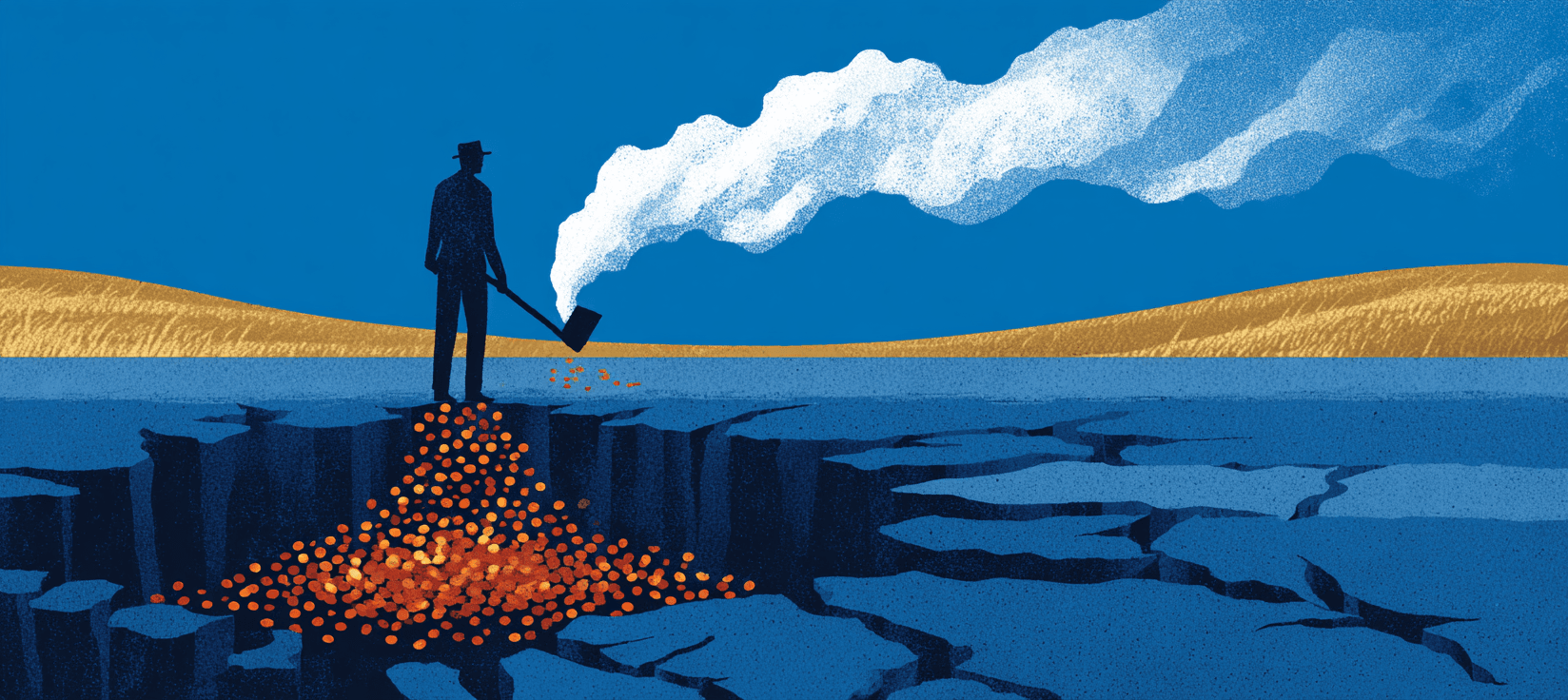
He knelt at the field's edge where the planter would make its first pass, scooped from four inches down, and worked it between thumb and fingers the way his father had taught him. Feeling for the give that meant moisture. The slight cool that meant the ground was ready. The dirt crumbled to powder and the wind took it before it reached his boot.
Late September, and the ground still held summer in it. His knees ached against the hardpan underneath.
He stood and wiped his palm on his jeans. The stain was pale, almost white where it should have been dark.
His father would have walked the west quarter next. Knelt again, read the subsoil down through the root zone foot by foot, and known from the texture of it whether rain was three days out or ten. His father could read a sky. The particular grey of a front building over Colorado, the way cirrus feathered before a system. All of it calibrated to a world where September meant something specific, where one year rhymed with the years before it.
He looked south. Buffalograss had gone tawny along the fencerow. The windbreak his grandfather planted was half dead standing wood now, cedars brown from the top down. The sky was enormous and pale, blue leached to a haze that could have been dust or smoke or just how light looked now. A harrier worked the ditch line to the east, tilting and correcting in wind he couldn't feel yet at ground level.
He checked his phone. Thirty percent chance of rain in six days. Last month the app had shown sixty percent three times and nothing fell. The month before that it missed the hailstorm that took out Gary Metzger's milo. He put the phone back in his pocket, felt the warmth of the screen against his thigh.
There had been a woman named Linda who drove a white K-State truck and could identify any rust or smut from a single infected head. Soil test results that came back with recommendation sheets. Variety performance data for the region. Planting date windows adjusted for the county. All of it specific to the dirt under his boots. The number rang to Salina now, when it rang at all.
The wheat seed sat in the drill. Sixty pounds to the acre. It needed to germinate, set roots, push two tillers before the first hard freeze. If he planted today into this dry ground, the seed would sit. Viable but still. Waiting in the dark for moisture the soil couldn't promise. And if a light rain came, just enough to trigger germination but not enough to sustain it, the coleoptile would extend toward the surface and the moisture would quit. The seedling couldn't go back to waiting. It would be committed and dry.
If he waited, the window would narrow. Every week past the optimum cost him yield, cost him winter hardiness, cost him the root architecture that was the whole point. And if it stayed dry into November the field would sit bare through winter, and the wind would take the topsoil the way it had taken Gary's north quarter two springs ago, scouring down to caliche.
His lower back held the stiffness of a body that had already loaded the drill, already driven out here, already committed the morning to this. His hands smelled of treated seed and diesel. The sun pressed the back of his neck where his cap didn't cover.
His father would have known. His father's knowing was built on sixty years of weather that behaved within a range, soil that answered to seasons that arrived when they were supposed to.
He climbed into the cab. The operating note from the bank sat in the console where he'd left it, the per-acre number printed in a font too small for what it meant. The diesel turned over rough, caught. The seat vinyl was hot through his jeans. He lowered the drill and pulled forward, watching the seed tubes in the mirror to make sure they were feeding. Seven-and-a-half-inch rows. Inch and a half deep into ground that gave no resistance, the coulters cutting through it like it was nothing, like the earth had lost the will to hold together.
The planter moved through the field trailing a thin haze. Seed fell at the rate his father would have used, at the depth his father would have set. On a date his father would have chosen. The vibration came up through the steering column into his wrists and forearms and settled in his shoulders. Sixty pounds to the acre dropping into dirt that might as well have been ash.
He made the turn at the end of the first pass and started back north. Behind him the dust was already gone.
Things to follow up on...
-
Seeds in parched earth: KCUR journalist David Condos documented a northwest Kansas wheat farmer planting into fields still covered with dead crops from the previous season's failures, with a third of his wheat sitting unsprouted in bone-dry soil.
-
The forecasts degrade further: The Trump administration's proposed 2026 budget calls for zero funding for climate research and elimination of NOAA's weather laboratories and cooperative institutes, threatening the data infrastructure that farmers and emergency managers depend on.
-
Drought, fire, wind compound: A report released today finds that 2025 brought record drought, massive wildfires, and destructive windstorms across the Mountain West, with researchers underscoring how closely connected those disasters have become.
-
Whiplash, not warming alone: New research shows that rapid wet-to-dry climate swings are projected to intensify, creating conditions where adaptation to one extreme becomes vulnerability to the next.