

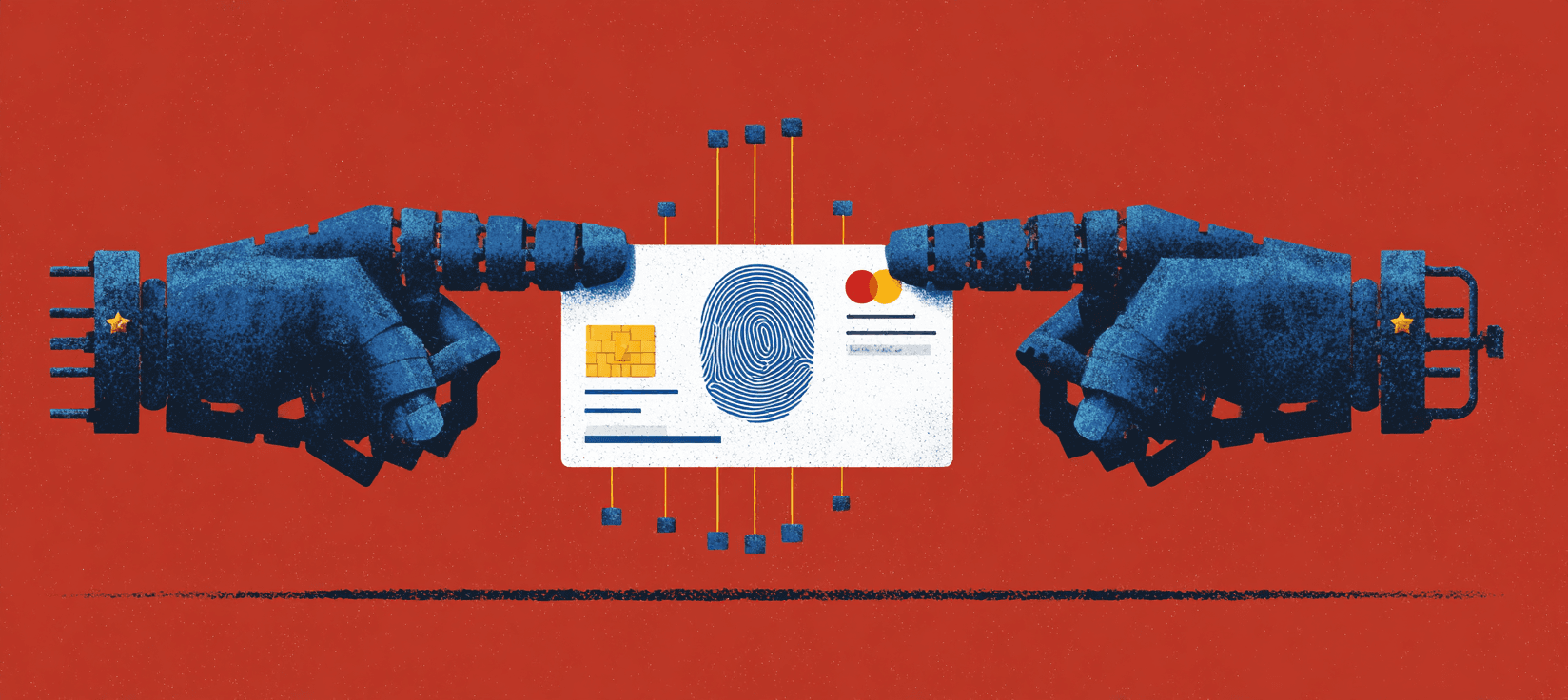
Four layers of companies sit between a frontier AI lab and the agency that deploys its models. Most procurement conversations treat them as one.
The AI vendor landscape evolved fast enough that the vocabulary hasn't caught up. When a CAIO says "we're using Anthropic," they're making a statement about a training relationship — Anthropic trained the model — not necessarily a billing relationship. The agency might be paying Amazon Web Services. Or Microsoft. Or a middleware platform that routes across multiple providers. Or a SaaS vendor that embedded the model and doesn't advertise which one. "We're using Anthropic" is accurate the way "we're using Intel" was accurate in 2005. Accurate, and incomplete.
The four-layer stack is the framework that makes the picture whole. Once you have it, every other question in this section — pricing structures, open-weight licensing, geopolitical supply chain risk, specialty providers — becomes tractable. Without it, you're navigating a vendor conversation without a map.
The Four Layers
Frontier labs are the entities that train the models. They employ the researchers, run the compute, own the weights, and set the capability ceiling. A small number of organizations operate at this level; the training runs cost hundreds of millions of dollars and require infrastructure that most companies can't assemble. Some frontier labs sell direct API access. All of the major ones also license their models to cloud platforms that can serve them at enterprise scale.
Hyperscalers are those cloud platforms. AWS, Microsoft Azure, and Google Cloud each host multiple frontier models under their own service wrappers, with their own SLAs, their own compliance certifications, and their own billing relationships. This is where most enterprise and public sector buyers actually sign contracts and receive invoices. The hyperscaler handles the infrastructure, the uptime guarantees, the data residency controls, and the enterprise agreement mechanics. The frontier lab provides the weights. The hyperscaler provides everything the enterprise procurement process actually requires.
Aggregators occupy a position above the hyperscaler layer and below the application layer — easy to miss, hard to categorize. These are platforms that provide model routing, prompt management, observability, multi-model access, or fine-tuning orchestration across providers. Some buyers add this layer deliberately, for flexibility or cost optimization. Others acquire it accidentally, because a tool they adopted for another reason turns out to route through an aggregator. This layer is genuinely less settled than the others; the category is still consolidating, and the line between aggregator and application is blurry in ways that matter for data governance.
The enterprise layer is where end users actually touch the system. Productivity suites with embedded AI, CRM platforms with AI-assisted workflows, agency-built applications — these are products that embed AI capabilities, often from multiple providers, and expose them through a workflow interface. Billing here is typically per-seat or per-workflow, not per-token. The end user often has no visibility into which model is running, which version, or which cloud is serving it.
Why the Conflation Happens
The confusion is structural. Frontier labs are the entities with the recognizable names and the public profiles — the ones that publish research, generate press coverage, and show up in congressional testimony. Hyperscalers are the entities with the enterprise relationships, the compliance documentation, and the contract vehicles. Buyers talk about the former because that's what they read about. They pay the latter because that's how enterprise procurement works.
The result is a conversation where both parties are technically correct and practically talking past each other. The CAIO says "we're evaluating Claude." The AE hears a vendor name and doesn't know whether to engage on model capabilities, a specific cloud platform's service terms, or the agency's existing enterprise agreement — all of which are potentially relevant, none of which are the same conversation.
Knowing which layer the buyer is describing determines which question comes next.
IDAM Bridge — In identity, the trust chain between an identity provider, a broker, and a service provider is documented in metadata and surfaced in assertions. The SP knows exactly who issued the credential, under what conditions, and with what attributes attached. The closest AI equivalent is the chain from frontier lab to hyperscaler to application. It diverges here: there is no standardized provenance assertion in AI. When a model response arrives at your application, nothing in the response tells you which model version ran, whether it was fine-tuned upstream, or what system prompt preceded yours. The chain exists. It's just not visible — and unlike SAML, there's no metadata exchange that makes it so.
What This Section Covers
The lessons that follow build on this framework. Lesson 1 profiles the frontier labs — who they are, what distinguishes them, and what their direct-access options look like. Lesson 2 covers open-weight models, which introduce a different ownership structure that the four-layer stack doesn't fully capture. Lesson 3 examines the hyperscaler platforms in detail. Lesson 4 addresses pricing models, which vary significantly across layers. Lessons 5 through 7 cover the aggregator landscape, geopolitical supply chain considerations, and specialty providers.
None of those lessons require re-learning the stack. They extend it. The framework is stable; the details change faster than any publication can track, so where specific figures appear, treat them as benchmarks rather than current pricing.
One honest note on the aggregator layer: it's the least settled part of the stack, and the lesson that covers it will say so. If you're in a buyer conversation where the aggregator question surfaces and you don't have a current answer, that's the right response. Buyers sophisticated enough to ask about aggregators are sophisticated enough to respect "let me get you the current picture on that" — and to notice when someone pretends otherwise.
The stack is the map. Everything else in this section is terrain.