
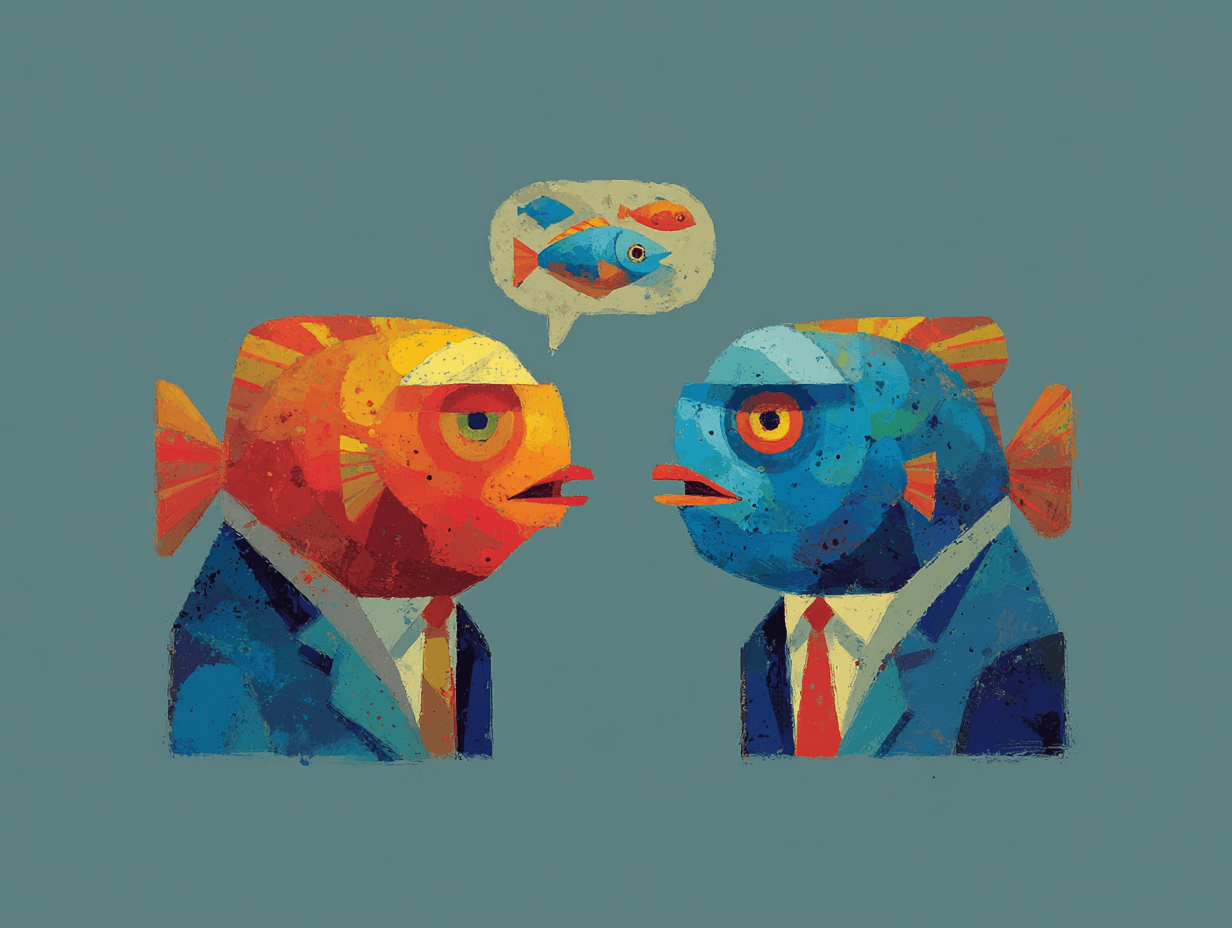
The sommelier profession is having a quiet identity crisis. The parts of the job that look like expertise are increasingly reproducible by machines. The parts that actually constitute expertise resist description entirely.
Consider the scoreboard. GPT-4 has already passed the Introductory, Certified, and Advanced Sommelier theory examinations without ever tasting a wine.1 Vivino's database of roughly 70 million users can match your palate to 16 million bottles after you've rated five wines.2 Transformer models generate wine reviews that trained evaluators can't reliably distinguish from human-written ones.3
And yet no algorithm can tell whether the couple at table nine is celebrating or breaking up. No model can detect that the guest who asked for "a dry red, nothing too expensive" is actually nervous about looking unsophisticated in front of his boss. No recommendation engine can open the bottle and tell you it's corked.4
We wanted to talk to someone who lives in that gap professionally. Declan Cork is the head sommelier at a Michelin-starred Manhattan restaurant, Irish-born, a former bartender from Dublin who fell sideways into wine after a customer at his pub asked him to recommend a bottle and he realized he hadn't a clue. He holds an Advanced Sommelier certification from the Court of Master Sommeliers. He does not exist, but his professional dilemmas are real, and his observations are drawn from documented sommelier practice and published industry research. We spoke over coffee at a wine bar in the West Village that he chose because, he said, "they won't judge me for ordering a beer."
You came to wine through bartending. Does that change how you see the job?
Declan: Massively. Behind a bar in Dublin, nobody performs their drink order. You want a Guinness, you say Guinness. You want whiskey, you tell me which one or you say "surprise me." There's no theater around it.
Then I moved into wine service and suddenly people are telling me they want something "dry," which, by the way, almost every wine technically is. Or they say "no oak" like it's a moral stance. And I realized pretty quickly that what people say they want and what they actually enjoy are often completely different things.5
Can you give a specific example?
Declan: Happens constantly. A guest says, "I only drink Cabernet Sauvignon." Grand. But after a few questions about what they had last week, what they loved about it, turns out what they actually like is weight. Structure. That feeling of something substantial in the mouth. They don't love Cabernet specifically. They love what Cabernet does. So I might pour them a Châteauneuf-du-Pape or a Barossa Shiraz and they're thrilled. An algorithm would've given them another Cab.
Why do people misstate what they want?
Declan: Loads of reasons. Sometimes it's vocabulary. They know one word and they're using it as a container for a feeling they can't articulate. Sometimes it's identity. "No Merlot" is almost never about Merlot. It's about that scene in Sideways. It's a signal: I know enough about wine to have opinions.5 My job is to hear what that actually tells me about the person, not to take the words at face value.
That sounds more like a diagnostic skill than a wine skill.
Declan: Yeah. That's exactly right, and it's the bit that doesn't fit on a certificate. The exam tests whether you can blind-taste a wine and deduce its origin, its grape, its vintage from sensory data alone.6 That's genuinely hard. Fewer than 300 people have passed the Master Sommelier exam in fifty-odd years.7 But that skill, impressive as it is, is the legible part. You can practice it, measure it, test it. A machine could probably get decent at it with enough sensor data.
The part that actually makes me useful on a Tuesday night? Reading the table. Who's paying. Whether this is a celebration or an obligation. Whether the person asking questions wants to learn or wants to be reassured. None of that shows up in a database.
The AI wine apps would argue they're solving a different problem. Helping regular consumers, not replacing fine-dining sommeliers.
Declan: Fair enough. And they do some things well. If you've rated enough wines, a collaborative filter can find patterns you might not see yourself. Genuinely useful for someone standing in a wine shop staring at three hundred labels with a glazed expression.
But here's the thing. Seventy-three percent of ratings on the big platforms are four or five stars.8 People rate wines they liked. They don't bother rating wines they hated. So the algorithm is learning from a systematically polite dataset. It knows what people are willing to say they enjoyed. That's a very different thing from knowing what they enjoy.
That's a striking distinction.
Declan: And it compounds. A study tracked over two hundred regular wine drinkers for eighteen months. Sixty-eight percent of them shifted their preferred intensity level after trying new categories, but the apps didn't adjust until the users manually re-rated.8 Your palate moves. Mine moves. I drank nothing but bold reds for years, and now half the time I want a crisp white Burgundy. A good sommelier notices that drift in real time. An app waits for you to file a report.
So what can't be automated?
Declan: The moment. That's what can't be automated.
I had a table last month. Two people, clearly a first date. He's trying to impress her. She's being gracious about it. He asks for "your best Barolo." Now, "your best" usually means "your most expensive," and our best Barolo is four hundred dollars. I could see she was uncomfortable. He was performing.
So I said, "We have a beautiful Barolo, but honestly, with what you've ordered, this Nebbiolo from a smaller producer is going to sing. It's half the price and it's drinking perfectly right now." He relaxed. She relaxed. They had a great night.
An algorithm given "best Barolo" would have returned the four-hundred-dollar bottle. Procedurally perfect. Biographically wrong.
"Biographically wrong." That's an unusual phrase for a sommelier.
Declan: (laughs) I read things. But look, the job, at its core, is about giving someone an experience that fits them, not an experience that fits their stated specification. Those are different things. Wine is what economists call an experience good: you literally cannot evaluate it until you've consumed it.9 So every recommendation is a bet. The question is whether you're betting on the data or betting on the person.
Where does that leave the profession as AI gets better at the data part?
Declan: Honestly? I think it clarifies what we're actually for. The theory, the scores, the regional knowledge, that stuff is already commoditized. GPT can pass the sommelier theory exams.1 Grand. That was never the hard part anyway. It was the testable part, which is different.
The hard part is the human in front of you, tonight, in this specific context, with whatever they're carrying into the room. That's not a data problem. I don't know what to call it. An interpretation problem. A presence problem. Something that requires you to be there, in the room, paying attention to things that have no field in a database.
Do you worry about it?
Declan: Nah.
People have been predicting the death of bartenders since the cocktail machine was invented. Turns out humans like being understood by other humans. Weird, that.
Declan Cork is a fictional sommelier. His observations are grounded in documented sommelier practice, published research on AI wine recommendation systems, and industry reporting on the current state of wine technology. Any resemblance to an actual Irish bartender-turned-sommelier named Cork is, regrettably, too perfect to be real.
Footnotes
-
GPT-4 passed the Introductory, Certified, and Advanced Sommelier theory examinations as reported in the GPT-4 technical report (2023), cited in Cao, J., "AI: A New and Impactful Player in the Quality Evaluation of Wine," Harvard Data Science Review, Issue 7.1, Winter 2025. https://hdsr.mitpress.mit.edu/pub/axrcdnax ↩ ↩2
-
sommo.app, "Vivino vs Wine-Searcher 2026," August 2026. https://sommo.app/blog/vivino-vs-wine-searcher/ ↩
-
Carlson et al., International Journal of Research in Marketing, 2023, cited in Cao, J., Harvard Data Science Review, 2025. ↩
-
sommo.app, "The Truth About AI Wine Apps in 2026," September 2026. https://sommo.app/blog/truth-about-ai-wine-apps-2026/ ↩
-
Gomez, J. (MS), "What Sommeliers Think of Customers," Matching Food & Wine. https://www.matchingfoodandwine.com/news/wine_pros/what-somms-think-of-customers/ ↩ ↩2
-
Court of Master Sommeliers, Certified Sommelier Examination. https://www.mastersommeliers.org/certification/certification-levels/certified-sommelier-examination/ ↩
-
Court of Master Sommeliers, About Master Sommeliers. https://www.mastersommeliers.org/about-sommeliers/about-master-sommeliers/ ↩
-
Alibaba Product Insights, "Are AI-powered Wine Recommendation Apps Actually Learning Your Palate," February 2026. https://www.alibaba.com/product-insights/are-ai-powered-wine-recommendation-apps-actually-learning-your-palate-or-just-recycling-top-sellers.html ↩ ↩2
-
Nelson, P. (1970), "Information and Consumer Behavior," Journal of Political Economy, 78(2), 311–329. ↩