

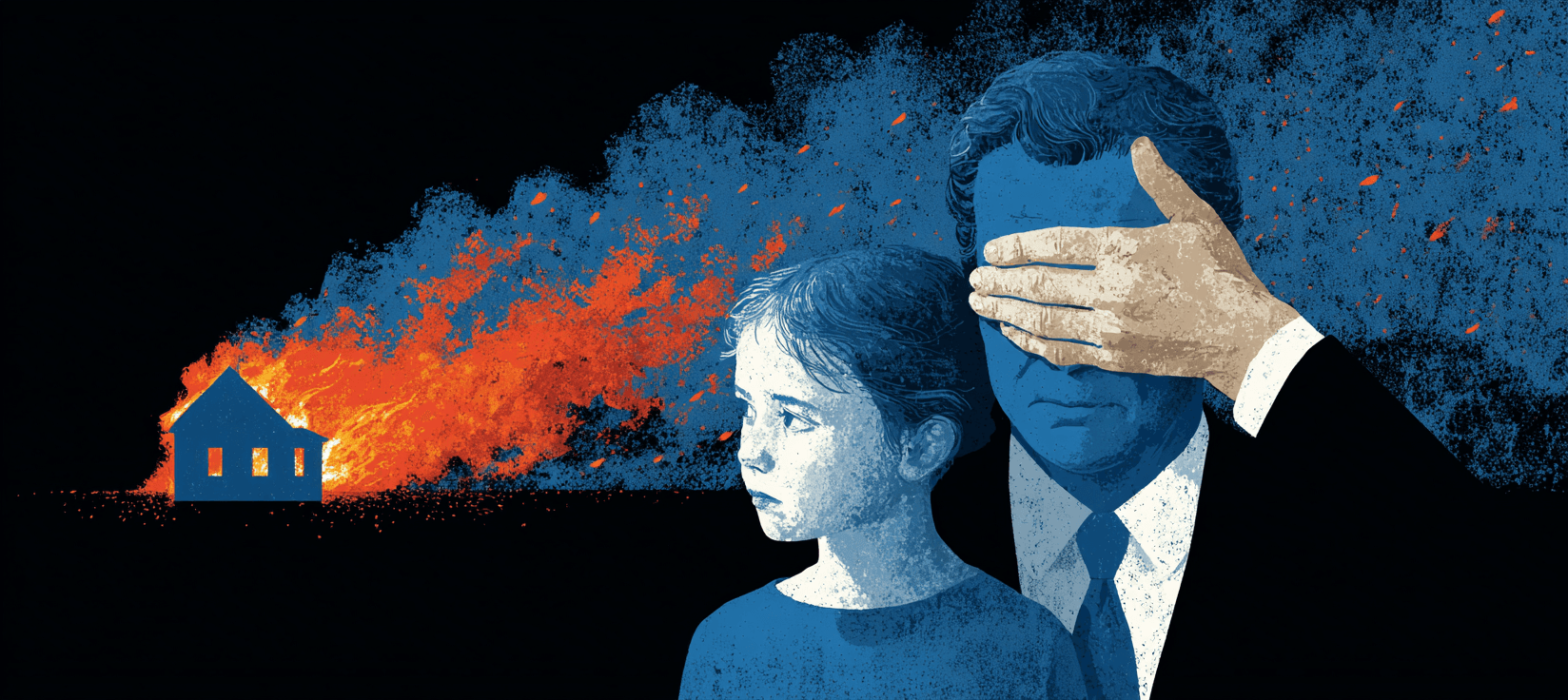
I keep seeing this statistic and I can't figure out what it means: 68% of parents say they're interested in talking to their children about climate change. When researchers check back a month later, only 46% have actually done it. Twenty percent have never tried at all.
Which suggests we've collectively decided that discussing climate change with your child is a developmental milestone—like potty training or learning to read—that requires waiting for readiness. Except this milestone has a distinctive feature: the child is never quite ready. Not at three, not at seven, not at twelve. Always later. Definitely not now.
Meanwhile, 96% of Australian youth aged 7-24 consider climate change a serious problem. Eighty-nine percent are worried about it. And 62% of young people report trying to talk to adults about climate, but 58% say they feel ignored or dismissed when they do.
Which means we've perfected a parenting practice where love means pretending.
The Readiness Assessment
The most popular reason parents give for not having the conversation is wanting to protect children from worry or anxiety—about 50% cite this. The second most common? Parents' own anxiety makes it too hard.
This would make sense if children learned about climate change exclusively from parental disclosure, like sex or mortality. But children are learning about climate change the way they learned about gravity: by existing in the world. Two hundred forty-two million students had their education disrupted by climate events in 2024. More than half of childcare providers experienced extreme weather in the past two years. A psychiatrist reports seeing climate anxiety "in children as young as three"—kids sobbing on TikTok about teddy bears lost in floods, animals killed in fires.
But we've determined that three-year-olds aren't developmentally ready to discuss what three-year-olds are already experiencing. Which is an interesting theory of child development.
One parent explained their approach: no television, a nature preschool where kids plant trees without discussing why trees matter, carefully curated exposure. "Their exposure to anxiety-provoking news about the environment is non-existent," they said. Then added: "She will be starting Kindergarten soon and who knows what the other children will be talking about."
Probably climate change. Because the other children also live on Earth.
The Milestone Markers
Children's concern about climate increases predictably with age. Twenty-one percent of kids aged 0-5 are concerned, rising to 43% for ages 6-11, and 56% for ages 12-17. But parents' interest in communicating stays flat across all age groups.
The milestone just keeps receding. We're not waiting for the right developmental stage. We're waiting for never.
And what are children learning instead? Research shows that when kids try to discuss climate and get dismissed, they're absorbing what researchers call a "culture of uncare"—learning that their concerns don't matter, that adults aren't taking threats seriously, that their fear is invalid. A psychiatrist studying climate anxiety puts it plainly: "One of the things that's very damaging to children across the spectrum on any issue is invalidation."
The invalidation of what they already know—that's what does the damage.
We think we're protecting them from anxiety. But what we're teaching them is that when they're scared about something real, the adults around them will gaslight them about it.
The Curriculum Nobody Planned
I don't know if this is protection or just elaborate avoidance, but here's what the research reveals: parental distress following climate events is a key driver of PTSD, depression, and anxiety in children. When parents can't cope with climate fear, kids absorb that distress. The silence doesn't shield them from our anxiety—it just means they experience our anxiety without any framework for understanding it.
The children are already worried. Already noticing heat, fires, floods. Already hearing about it from friends, seeing it online, living through evacuations. They'll encounter climate anxiety either way. What we're choosing is whether they encounter it alone.
And we keep choosing alone.
Maybe that's the mutation worth documenting: we've created a parenting milestone that can never be reached because reaching it would require acknowledging what's already happening. So we track first words, first steps, emotional regulation, conflict resolution—every developmental marker except the one that matters most. We've normalized a form of love that requires pretending.
Over 70% of young people say they wish others would be more open to discussing climate. Over 66% want their parents' generation to understand their feelings. They're not asking to be protected from knowledge. They're asking to not be alone with what they already know.
But we've perfected the milestone that never arrives. That's the developmental stage we've actually achieved.
Things to follow up on...
-
Intergenerational climate education: A 2019 Nature Climate Change study found that middle school climate curricula increased parents' climate concern, with daughters being especially effective at influencing parents and the strongest effects appearing among conservative fathers.
-
Children's climate rights: The UN Convention on the Rights of the Child confirms that children have the right to know about and be involved in issues affecting their future, which developmental psychologists argue makes protecting them from climate knowledge neither possible nor right.
-
Community-based climate support: Research suggests that providing opportunities for young people to discuss climate emotions works best in community, peer, family, and school settings rather than primarily in clinical contexts, with simply talking about distress potentially being beneficial.
-
Collective effervescence effect: Neuroscience research shows that when people gather in groups to discuss difficult topics, their brains literally sync up, becoming more open to new ideas and more capable of empathy and action.