
Spent thirty years working jobs where if something was broken, you fixed it. Pump fails, you replace the pump. Cooling system quits, you get it running or people die. Simple as that.
So when I learned that seven cities now employ someone called a Chief Heat Officer, I figured they'd hired someone to get air conditioning to people before they died from heat. Seemed straightforward enough.
Turns out I misunderstood the position.
The Chief Heat Officer coordinates responses to heat death. They coordinate tree planting programs. They coordinate cooling center operations. They coordinate public awareness campaigns. They break down silos. They create dashboards. They implement nature-based solutions.
What they don't coordinate is getting air conditioning to people who are dying because they don't have air conditioning.
Miami-Dade created the first one in 2021. Phoenix followed. Los Angeles. Athens. Cape Town hired one in November. Arizona became the first state to appoint a Chief Heat Officer in 2024.
Four years ago this job didn't exist. Now it's spreading.
Critical Infrastructure
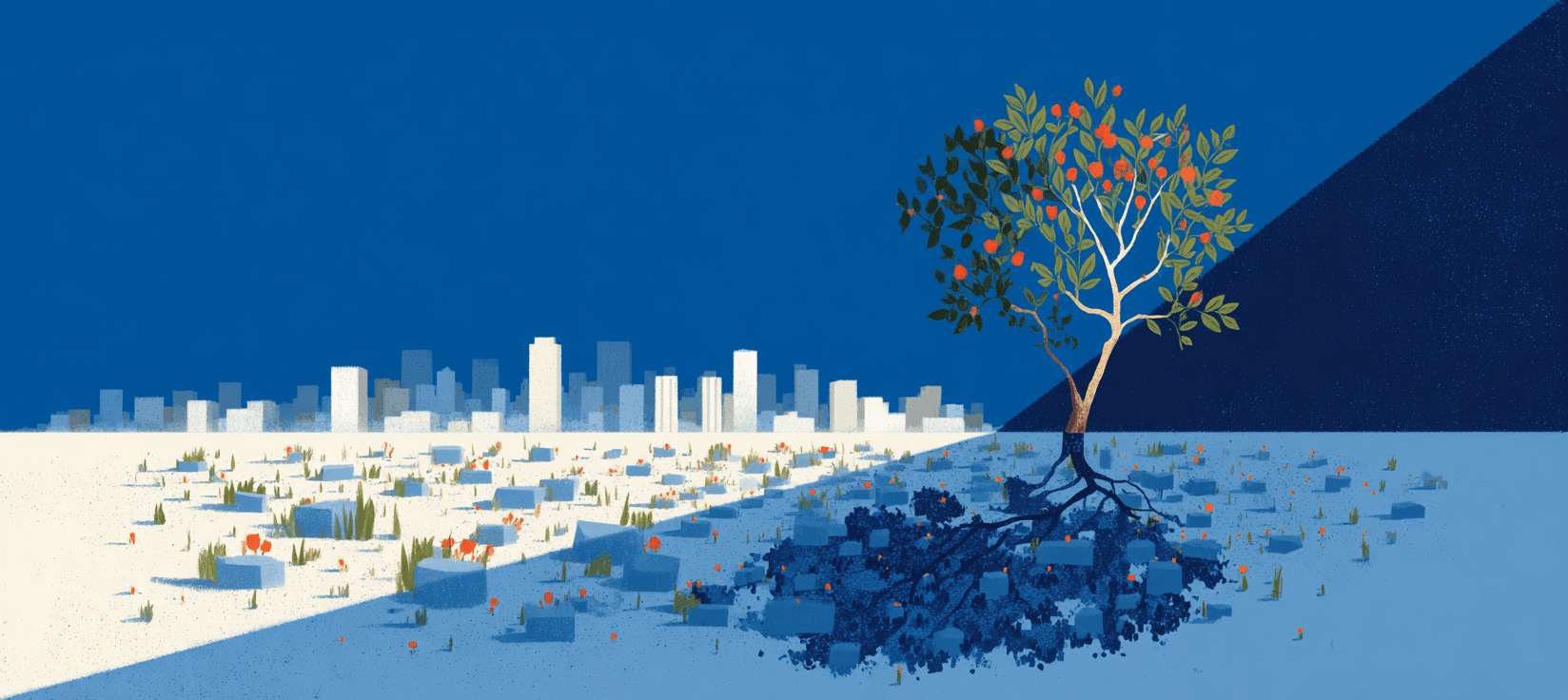
Phoenix got $10 million from the U.S. Forest Service to plant trees. The city's plan calls for $60 million to plant 27,000 new trees. $2,200 per tree.
For that price you could buy a decent air conditioner, install it, and run it for a summer. But air conditioners don't require landscape architects, urban forestry consultants, environmental impact assessments, multi-year maintenance contracts, or coordination across departments and sectors. Trees do. Trees create jobs. Professional jobs. Jobs for people who already have air conditioning.
Trees are planted between October and April. Too hot to plant them in summer. In 2023, more than 900 Arizonans died during a heat wave. The trees that might eventually shade their great-grandchildren weren't in the ground yet. Won't provide meaningful shade for another decade or two, assuming they survive.
Meanwhile, air conditioning works immediately. You turn it on, the room gets cool, people don't die. Been that way since Willis Carrier figured it out in 1902.
The Innovation
Arizona operates two mobile cooling centers called "Cooltainers." Retrofitted shipping containers that fit about 15 people at a time. The Cooltainers served 11,956 visitors in summer 2025.
Do the math. Two containers, 15 people each, serving 12,000 visitors over a summer. In a state where 900 people died in one heat wave two years back.
None of this applies to people with money, of course. They have air conditioning. They've always had air conditioning. The Chief Heat Officer isn't coordinating cooling solutions for them. This entire professional infrastructure exists to manage the deaths of people who can't afford the technology that everyone else takes for granted. We've created a new government position to coordinate alternatives to air conditioning for poor people while the rest of us run our AC all summer and complain about the electric bill.
Medical Necessity
When federal policy addresses heat, air conditioning appears as "cooling devices" available "as a medical necessity." New York provides free air conditioners to "eligible Essential Plan members." Served 23,000 households in 2024.
In a city of 8 million people.
The word "eligible" is doing a lot of work there. So is the word "free"—someone's paying for those units, and someone decided 23,000 was the right number. Not 230,000. Not however many people actually need air conditioning to survive summer in New York. Twenty-three thousand. That's the number that fits the budget for looking like you're addressing the problem.
The Workaround
Phoenix's Chief Heat Officer described his job:
"Being the chief heat officer in a place like Phoenix means coming up with great ideas and realizing they're very hard to pull off within the rules and realities of a city government."
The rules and realities, apparently, include hiring someone to coordinate tree planting and cooling centers but not to say "get air conditioning to everyone before they die." Too direct. Costs too much. Admits that the nature-based solutions and the shipping containers aren't solving the problem.
We've created careers managing heat death with every tool except the one that works—while people die waiting for saplings to grow.
So we've created a new professional class. People whose job is managing heat death using every tool except the one that works. People who coordinate partnerships and implement dashboards and break down silos. People who can say trees are critical infrastructure while people die waiting for saplings to grow.
The Chief Heat Officer is what you get when fixing the problem costs too much but letting people die looks bad. You hire someone to make the dying look managed. Coordinated. Addressed through proper channels.
Four years ago this position didn't exist. Now it's spreading to cities worldwide. Call it what you want—the professionalization of failure, the bureaucratization of death management, the creation of middle-class jobs in the business of not solving problems. We're building careers around heat death instead of preventing it. Next summer, when the temperature hits 115 in Phoenix, someone will be in an air-conditioned office coordinating the response while people die in apartments that are too hot to survive in.
The trees will be watered, though. The ones that are still alive.
Things to follow up on...
-
Cool pavement experiments: Phoenix sealed 100 miles of roads with special coating that reflects rather than absorbs heat, though a section peeled off after heavy rains in 2022.
-
Heat death tracking: Maricopa County's heat-health system is widely recognized as a national best practice for tracking both heat-caused and heat-contributed deaths, with deaths increasing considerably since 2014.
-
Philanthropic funding concerns: Chief Heat Officer positions are currently funded by the Adrienne Arsht-Rockefeller Foundation, raising questions about whether cities will institutionalize these roles and give them actual regulatory and budgetary authority.
-
Tree canopy inequality: Miami-Dade found that areas with low tree canopy have four times the rates of heat-related emergency visits compared to zip codes with high tree canopy, with the most vulnerable areas concentrated in historically poor neighborhoods.