

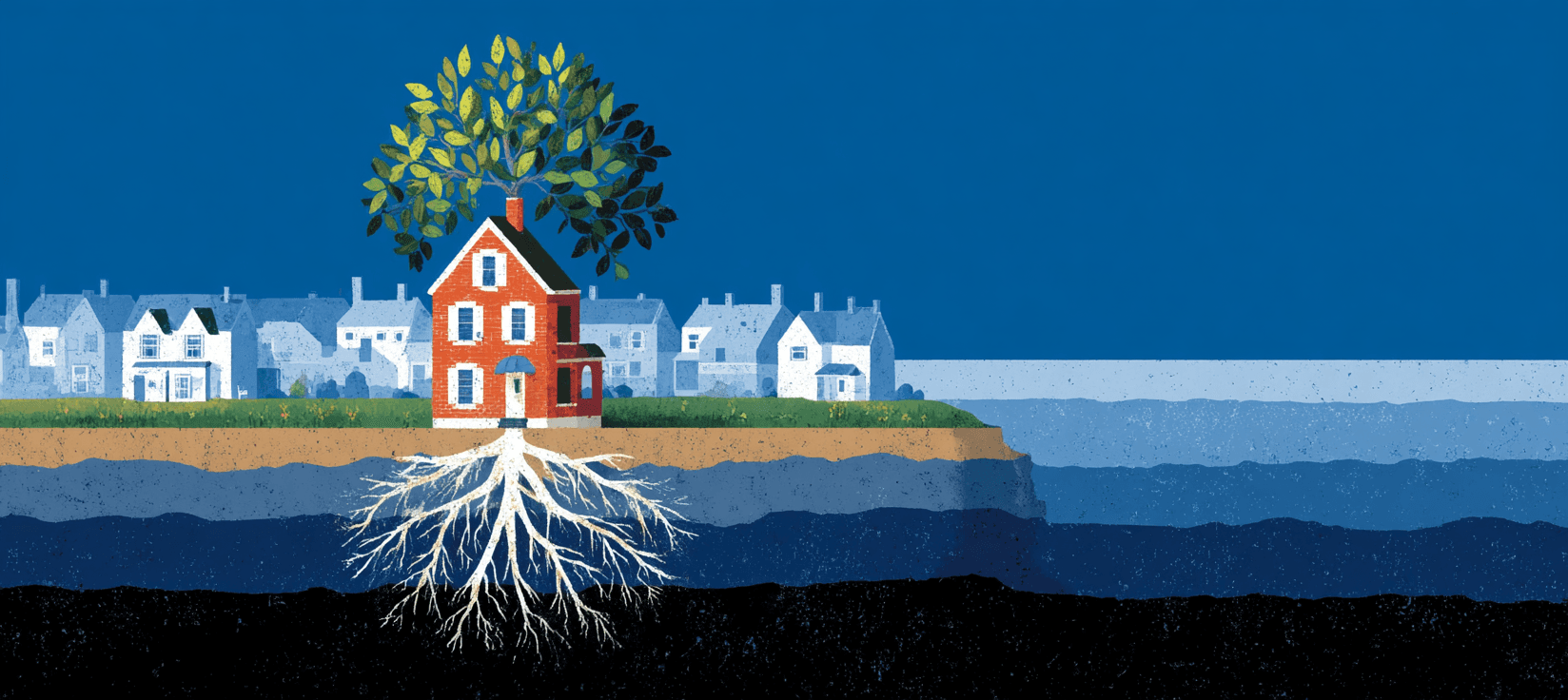
Start With Insurance Before You Lose It
California's FAIR Plan grew from 140,000 policyholders in 2018 to over 610,000 by mid-2025. Louisiana saw 58% rate increases between 2023 and 2025.
Your agent will sound genuinely sorry when they deliver the news. Their hands really are tied.
Before your renewal notice arrives:
- Call your state insurance commissioner's office
- Ask specifically: "What last-resort insurance options exist in my area? What documentation do I need to apply?"
- Document everything about your home now—photos, videos, receipts for improvements
- In wildfire zones, photograph cleared space around your house
- In flood zones, document elevation and drainage
The families who've navigated this successfully made hard calculations. One Sacramento family spent $1,800 coating their roof with reflective material that dropped their surface temperature by 50°F. Their air-conditioning load fell 69%. Monthly electric bills dropped from $400 to $124. That coating might be what keeps them out of the emergency room when their AC breaks during a heat wave.
If roof coating isn't possible, try the cheapest interventions first:
- Solar film for windows blocks up to 78% of heat for under $100
- Cellular shades cut solar heat by 60%
- Close everything from 10 a.m. to 8 p.m., open opposite windows at night for cross-ventilation
These work when you're trying to keep your family safe on a limited budget.
When Your Kids Ask Why You're Staying
Your child will ask when their friend's family moves away, or during evacuation drills. Pretending everything is fine makes it worse. Parents tell me their kids are having nightmares about fires, asking if their house will flood, refusing to go outside during heat waves. That fear is rational.
For younger children, keep it concrete: "The Earth is getting warmer. A lot of people are working to fix this, and there are things we can do to help."
For older kids who've seen the news, ask first what they've heard and how they feel. Then pair every problem with a solution. Show them the cool roof you installed. Explain the evacuation plan. Let them help plant drought-resistant native plants or prepare the emergency kit.
Research shows 60% of young people aged 16-25 report being "very worried" about climate change, with nearly half saying this worry affects their daily functioning. Families navigating this longer have learned something: the anxiety is rational response to ongoing threat. You can't eliminate it. You can keep it from becoming disabling while maintaining the vigilance that keeps you safe.
Build Your Network Before You Need It
At the mailbox, at the store, in your driveway: "We're working on our evacuation plan. Do you have one?" That conversation turns into knowing who needs extra time to evacuate, who checks on elderly residents during heat waves, who has a generator you can share if power fails.
Climate Cafés—peer-support forums for processing climate emotions—are expanding globally. Some communities are forming informal versions: monthly gatherings where neighbors share adaptation strategies and acknowledge how hard this is. What helps most is finding your people. The neighbors who live next door, who you can reach in an emergency. The ones who also have evacuation plans, who also lie awake during fire season.
When infrastructure fails or emergency services are overwhelmed, you'll need them.
Know Your Triggers and Trust Your Judgment
In wildfire zones, NIST's updated framework recommends communities map risk zones with specific decision points:
- Pre-Evacuation Warnings mean leave as soon as possible
- Evacuation Orders mean leave now
If officials say evacuate, don't wait to see if it's really necessary.
For heat emergencies, recognize the warning signs:
| Heat Exhaustion | Heat Stroke (CALL 911) |
|---|---|
| Heavy sweating | Stops sweating |
| Weakness, nausea | Confusion |
| Normal or slightly elevated temperature | Fever above 103°F |
Your neighbor's teenage son comes in from basketball practice, sweating heavily, complaining of weakness and nausea. That's heat exhaustion. Get him inside, give him water, cool him down. But if he's confused, stops sweating, has a fever above 103°F, that's heat stroke. Call 911 immediately and use ice packs while waiting. Some medications interfere with your body's cooling ability. Ask your pharmacist to review your prescriptions.
What Year Three Feels Like
By year three, the adaptation becomes your life. You're building routines around constant preparation, finding rhythms that accommodate the threat. The families who've been doing this longer say the anxiety doesn't go away. You learn to carry it differently. You build routines around it. You find meaning in the preparation itself, in the community you're building, in the agency you're teaching your children.
There's no inspirational ending here.
"Within 10-15 years, there will be regions where you simply can't get a mortgage." —Federal Reserve Chair Jerome Powell
First Street Foundation projects $1.47 trillion in property value losses over the next 30 years. Some of you will do everything right and still lose your homes.
But for now, while you're still here, the families navigating this longer have learned to talk about certain things. With their insurers, their children, their neighbors, themselves.
I wish I had better answers for my cousin. I wish the answers weren't necessary at all. But since we're here, since you're staying, you deserve information that treats you as capable of making hard decisions about your own life. You deserve guidance that acknowledges both the danger and your agency in responding to it.
Things to follow up on...
-
OSHA heat standards: The federal government published proposed workplace heat safety rules in August 2024 requiring employers to implement protections when temperatures reach 80°F, with enhanced measures at 90°F, though finalization remains uncertain under the current administration.
-
Temporary Fire Refuge Areas: NIST's investigation of the 2018 Camp Fire found that improvised safe spaces in parking lots and cleared fields saved more than 1,200 people, leading to new guidance recommending communities pre-plan these refuge areas with clear signage.
-
Australia's brutal summer: Victoria recorded a statewide maximum temperature of 48.9°C (120°F) in January 2026, with climate attribution studies showing climate change made the extreme heat about 1.6°C hotter and roughly 20-45% more likely despite La Niña's cooling influence.
-
Internet-delivered therapy for climate distress: A pilot study found that eight weeks of therapist-supported online cognitive behavioral therapy produced moderate to large improvements in depression, stress, quality of life, and climate-related distress compared to waitlist controls.