
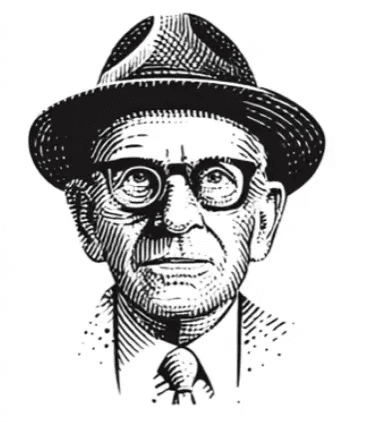
In 1878, a one-armed Civil War veteran and geologist named John Wesley Powell presented Congress with his Report on the Lands of the Arid Region. Drawing on Smithsonian rainfall data, Powell demonstrated that beyond the 100th meridian, annual precipitation averaged less than twenty inches. The traditional 160-acre homestead was badly adapted to arid conditions. The West did not have enough water to support the population levels being promised.
Congress, lobbied hard by the railroads, dismissed his recommendations. They had a better theory.
In 1871, Cyrus Thomas, working for Ferdinand Hayden's geological survey, had studied recent weather in Colorado and concluded that increased rainfall was permanent, caused by cultivation. Samuel Aughey, a professor at the University of Nebraska, observed an unusually wet period from 1878 to 1880 and declared that breaking prairie sod released subsurface moisture into the atmosphere. The soil would absorb rain "like a huge sponge" once the sod had been broken. More plowing meant more rain. In 1881, journalist Charles Dana Wilber published The Great Valleys and Prairies of Nebraska and the Northwest and gave the world a phrase that would ruin a great many lives: "Rain follows the plow."
Others proposed that trees attracted rainfall, that locomotive smoke seeded clouds, that telegraph wires altered atmospheric conditions. Financier Jay Gould, who controlled both the Union Pacific and Western Union, speculated that railroad and telegraph construction was pushing the rain belt westward at twenty miles per year.
The railroad companies had 183 million acres of federally granted land to sell. Whether the theory was true mattered a good deal less than whether people could be made to believe it. The Burlington and Missouri River Railroad paid a stenographer to record Aughey's speeches, printed them as pamphlets, and distributed them in Europe. The Santa Fe Railroad produced a pamphlet depicting a Kansas farmer behind his plow: "Who Killed the Great American Desert." Railroad agents carried these materials abroad to recruit immigrants.
Politicians preferred the theory of Cyrus Thomas to the data of John Wesley Powell. Thomas told them what the land grants needed to be true. Within a decade, nearly two million people had sunk roots into the prairie soil. The historical record preserves the names of the men who sold the theory. The families who bought it are mostly anonymous. Solomon Butcher's photographs from Custer County, Nebraska, show us their faces, their sod houses, their children standing in front of claims that the rain was supposed to make permanent. The photographs survive. The claims are long gone.
For several years it seemed to work. The 1870s and 1880s brought genuinely wet weather to the Plains. The settlers hadn't lived there long enough to know that such variation was normal. Then the droughts of the 1890s arrived. Between 1888 and 1892, half the population of western Kansas and Nebraska retreated east. Geographer David Wishart documents that some parts of the high plains were settled and abandoned by three or more waves of homesteaders. Some diehards suggested the plowing simply hadn't been deep enough.
Then came the second wave. In the 1910s and 1920s, war-inflated wheat prices lured a fresh generation onto the same ground their parents had fled. This time they brought gasoline tractors that could rip through thick native grassland the old plows had barely scratched. Tens of thousands of families plowed up millions of acres of the deep-rooted grasses that had evolved over millennia to hold soil through drought. When wheat prices collapsed after the war, farmers with large mortgage payments responded the only way they could: by tearing up more grass to plant more wheat to service the debt. The logic was airtight and suicidal.
The drought that settled in around 1930 seared for a decade. Summer temperatures passed 115 degrees. When hot prairie winds met stripped earth, they kicked up the black blizzards. Historian Wallace Stegner draws a through-line from Congress's rejection of Powell's report to the Dust Bowl. These storms really did follow the plow.
Seventy years separated the frozen fields of Vermont from the broken plains of Kansas. The Vermonters understood nothing about their crisis and moved fast. The Kansans had a theory endorsed by professors and promoted by railroads, and it pinned them to ground that couldn't support them. The confident model, backed by money and credentials, did more lasting damage than ignorance ever managed. The families who trusted it broke the land itself.
We have better models now. We also have industries with strong financial interests in which conclusions get acted upon. Whether that makes us more like the pragmatists of 1816 or the believers of 1885 is a question nobody alive today can answer from sufficient distance.