
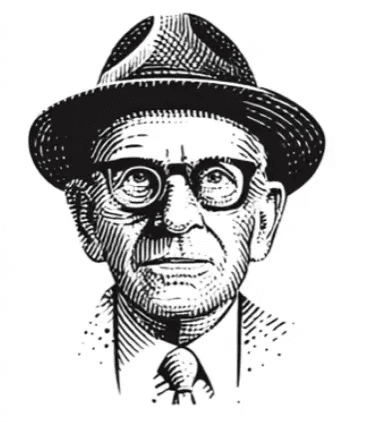

On August 4, 1937, a group of farmers in the Brown Creek watershed of North Carolina organized the first soil conservation district in the United States. It was Hugh Hammond Bennett's home state, which was not a coincidence. Bennett had built the Soil Conservation Service from nothing, had famously timed his congressional testimony to coincide with a dust cloud rolling over Washington, and understood one thing about government programs with absolute clarity: they survive only if the people they serve believe they own them.
So he made the districts local. Roosevelt sent Bennett's model law to every governor that year, proposing conservation districts run by five-member boards of supervisors elected by local landowners. The districts would occupy county boundaries but remain independent of county government. Federal technical assistance and cost-sharing would flow through them. The farmers would govern themselves.
It worked. Today nearly 3,000 conservation districts cover almost every county in the country, with more than 17,000 citizens serving on their boards. It is one of the most durable pieces of governance architecture in American history, and Bennett designed it that way because the alternative was federal agents telling farmers what to do with their land, and he had watched that idea die in committee. Local control was the price of passage.
Nobody in 1937 specified which farmers would do the governing. Across the Southern Plains and the Southeast, it was the ones who already held the land. The five-member boards were elected by landowners. In counties where land ownership followed the color line, the boards followed it too. What Pete Daniel documented in Dispossession is the machinery of exclusion running at county level across multiple USDA agencies. Black farmers did not receive notices of conservation committee elections. They were not told about new programs. When they demanded the right to vote, particularly after Brown v. Board, county committees in southern states cut them off from federal services entirely. Cotton and tobacco allotments were reduced and handed to white farmers. The tracks of discrimination, Daniel wrote:
"led from local committees and agriculture offices to state offices, to land-grant schools, to experimental stations, and on to Washington."
The numbers are plain. In 1940, there were 681,790 African American farmers in the United States. By 1974, there were 45,594. A 93 percent decline. The USDA called it mechanization, economies of scale, progress. A decline that thorough had more specific machinery behind it: a federal benefits system designed to operate through local governance and captured by whoever already controlled local governance. Bennett's conservation districts were one piece of that architecture. The ASCS county committees were another. The extension service a third. All locally run. All following the same pattern.
Pigford v. Glickman settled in 1999, covering USDA discrimination from 1981 to 1996. Nearly a billion dollars paid to fewer than 20,000 farmers. More than 70,000 others were ruled to have filed late, their claims never heard.
Bennett designed the districts to survive. Survival meant handing control to local power, and local power belonged to whoever already held it. Architecture is harder to fight than malice, and harder to see.
That architecture is still running. When FEMA's Building Resilient Infrastructure and Communities program distributed hazard mitigation grants before its cancellation in April 2025, the money went through competitive applications requiring engineering consultants, grant writers, and matching funds that small towns don't have.
BRIC's final round left more than $4.7 billion in community requests unfunded. Low-capacity counties received nineteen times less funding than high-capacity ones.
BRIC is gone now, its $3 billion returned to the Treasury. FEMA's Hazard Mitigation Grant Program has stopped approving new allocations. What remains operational, at the state level, are programs like the conservation cost-sharing funds that still flow through county conservation district boards, where funding and eligible projects vary by county, dependent on those same five-member boards Bennett designed in 1937.
Federal money for local resilience has to flow through some structure, and every structure has an owner. Local structures get captured by whoever already has capacity. Bennett knew that federal control was dead on arrival in Congress, so he chose the version that would last. Ninety years later we are still living inside that choice. The resources still flow toward the people who need them least, through programs whose survival depends on the same power imbalance that built them.