

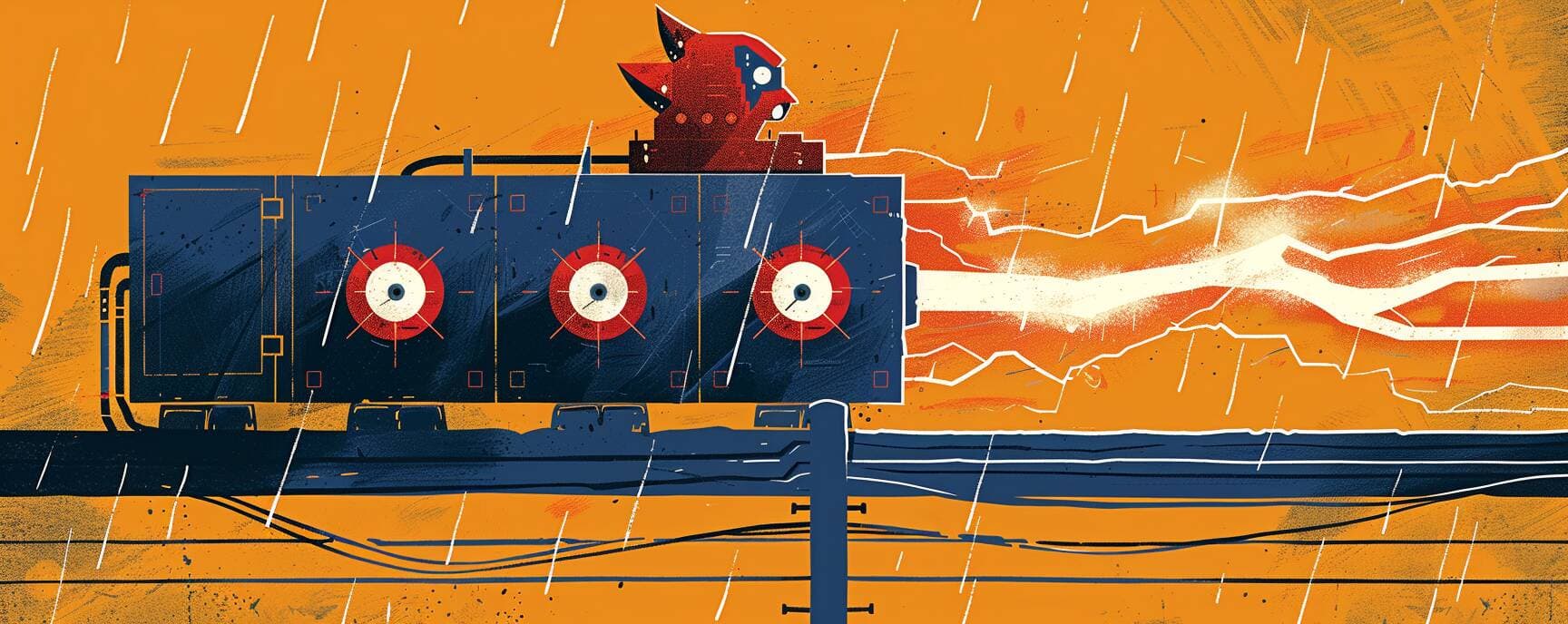
On January 3, 2018, Rijkswaterstaat, the Dutch national water authority, posted a message it had never posted before. "Unique: All our five big storm surge barriers are closing today! This has never happened before."
Storm Eleanor was crossing the North Sea with winds reaching 141 kilometers per hour, pushing a 3.6-meter surge against the southwestern coast. The nine-kilometer Oosterscheldekering closed its 62 steel gates for the 27th time since 1986. The Maeslantkering, the largest movable structure on Earth, swung shut to protect Rotterdam. The entire Dutch coast was sealed for the first time since 1976.
The system held. The barriers did what they were built to do. Five years later, Storm Pia forced all five barriers shut again, the Maeslantkering closing automatically at its operational threshold for the first time in its history. Marc Walraven, Senior Storm Surge Barrier Advisor, has been direct about the trajectory: "We expect to be closing more often in the future of course."
Success has its own kind of dread. The barriers close. The water stays out. And the engineers who monitor the closures know that the system was designed for 50 centimeters of sea level rise, and the sea is no longer cooperating with that number.
The KNMI, the Royal Netherlands Meteorological Institute, released updated scenarios in 2023. By 2100, sea level will likely rise by a maximum of 1.2 meters. In the worst case, 2.5 meters. Under high emissions, the range extends to two to six meters by 2300. The Delta Works were designed for a world where one meter of rise was the outer edge of planning. That world is already behind us.
A researcher at Utrecht University described the moment the new projections landed. They scrapped their entire prepared presentation, pulled up the headline, and said:
"Everything we've done for flood protection in the Netherlands, including my own research — building and reinforcing the dikes, constructing the Delta Works — is based on sea level projections that are now way too low to keep people safe in the future."
Adequacy that expires is more disorienting than failure. The infrastructure worked. It kept working. And the ocean moved past the assumptions it was built on.
The numbers confirm the anxiety. Rijkswaterstaat's own assessment found that 62 percent of Dutch flood defenses currently fall short of the standards they need to meet by 2050. Fifteen hundred kilometers of dike require strengthening. Four hundred and twenty-six engineering structures need upgrades. Centuries of land reclamation have left 55 percent of Dutch territory embanked, with 62 percent of urban areas behind dikes. The population and economic value concentrated behind those walls far exceeds what existed in 1953.
A 2025 study in Regional Environmental Change found the Delta Programme "does not offer sufficient protection beyond the year 2050," and that alternatives like managed retreat or seaward expansion are "wholly absent" from Dutch planning.
The political consensus remains locked on protection. Reinforce dikes. Maintain barriers. Stay behind the walls. The Dutch government launched its Sea Level Rise Knowledge Programme in 2019; final results are due this year, alongside the six-yearly Delta Programme evaluation. What emerges will shape whether the Netherlands continues reinforcing its walls or begins planning for something its engineers have never had to build: the infrastructure that comes after the Delta Works.
The same arithmetic is working on communities far from the North Sea. In Rhode Island, legislators have introduced catastrophe bond legislation to fund managed retreat for coastal communities "built at times when high tides did not reach nearly as high as they do today," because existing federal grant programs can't move fast enough, and the current administration is pulling back from disaster aid altogether. The adaptation was designed for the climate that existed when the money was approved. The climate kept moving. Any community that fought for its seawall, secured the funding, strengthened the levee, faces the same math.
The victory held, and became insufficient. And for the people who live behind the dikes, who trusted that the tide and the wind and we would go together, insufficiency sounds like the water rising against walls that were supposed to be enough.