

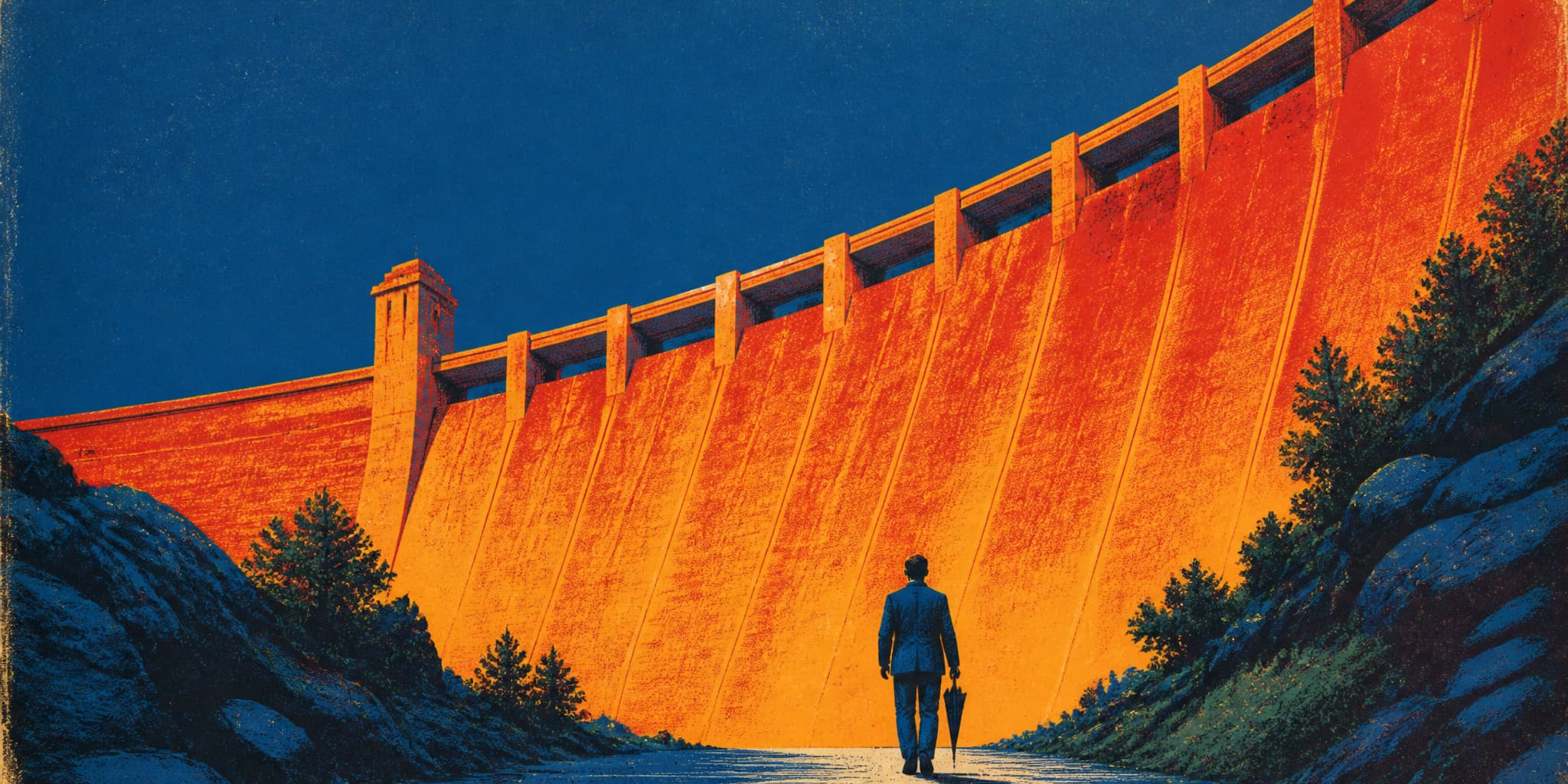
The Dam Safety Initiative expired in 2022. For twenty-three years it had funded the unglamorous work of keeping MCD's century-old system standing: relief wells, seepage barriers, concrete rehab. Then it ended, and nothing replaced it. Assessments had been flat since 2012, collecting about $4.3 million annually against $140 million in identified capital needs.
When the Conservancy Court finally approved a rate increase in 2024, Hamilton City Council members said the district was "trying to ruin" the local business climate. Eighteen state lawmakers demanded a pause. One sports complex faced an assessment jump from $8,800 to nearly $477,500.
Storage events behind those dams have increased 228% over eighty years. Annual precipitation is up 14%. The system works harder every decade, and the political reward for a century of keeping people dry is that nobody can quite remember why they're paying for it.
Protects: 1M+ people, $10B in property across the Miami Valley
Collected annually, 2012–2024: ~$4.3M
Needed annually through 2032: ~$11.5M in maintenance alone
2024 rate increase: Roughly doubles assessments, generating ~$9.8M/year. Still short.
Unresolved: A multi-year benefit assessment study is underway to determine who pays and how much. No timeline for a permanent funding framework.
Design margin still holding: The dams can handle 40% more runoff than the 1913 flood. In the system's biggest test (1959), it used just 16% of total storage capacity.