
Roger Holmes did the math before the January meeting in Plains even started. One inch of water produces about fifteen bushels of corn. Lose three inches to pumping cuts, and that's fifty fewer bushels per acre, up to $200 gone from every acre you farm.
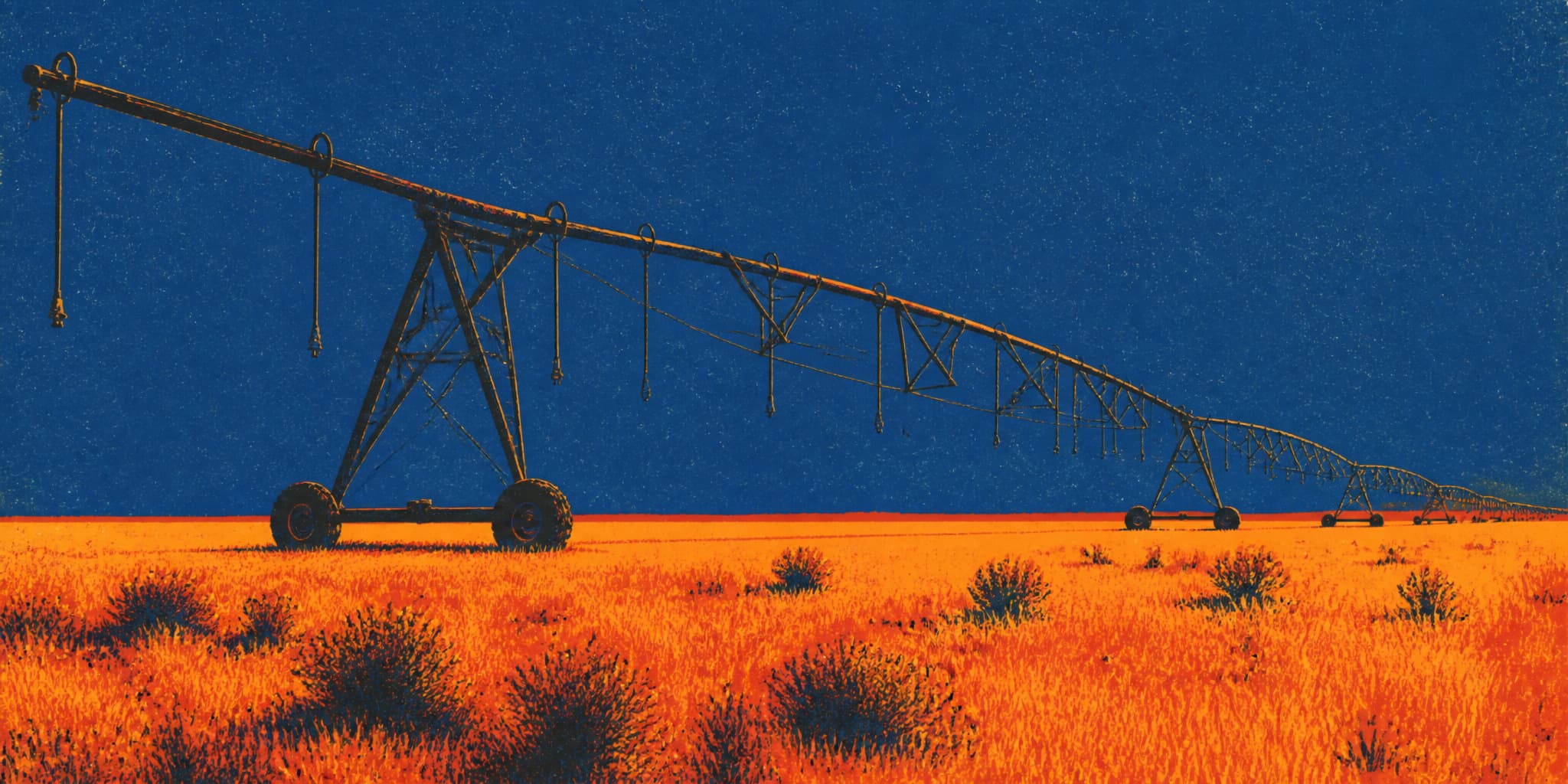
GMD3's proposed plan would reduce pumping 5% a year over twenty years. The district calls it stabilization. But what Holmes and the two hundred farmers sitting in that room already know is that skipping a season of irrigated corn doesn't feel like skipping. Center pivots lose calibration sitting idle. Buyer contracts lapse. Equipment service windows close, and the people who run them find other work. More than half of Kansas irrigation systems already operate below peak efficiency, and that's with regular use. Everything that makes planting possible requires planting to stay possible.
"It doesn't affect me," Holmes said. "I'll be dead in ten years. It's going to affect my son."
The proposal: GMD3's draft LEMA targets a 27.7% pumping reduction over 20 years at 5% annual cuts. Individual wells capped at 10% reduction. If adopted, the plan binds water users for 25 years.
The timing mismatch: Kansas required GMD action plans by July 1, 2026. GMD3's LEMA was still in draft as of June 1. The Chief Engineer then has 90 days to review. Farmers making fall planting decisions can't wait for the answer.
Idle costs: A 10 PSI pressure drop in a center pivot can reduce water uniformity by 30%. Systems that sit unused don't hold calibration between seasons.
Without irrigation: K-State researchers estimate roughly 56% of GMD3 land would convert to rangeland without irrigation. Not dryland crops. Rangeland.
The conservers' penalty: Holmes's other objection at the meeting: cuts based on historical use punish farmers who already pumped less. The district's response was that it must prioritize its goals over individual fairness.
