

Speculative Fiction
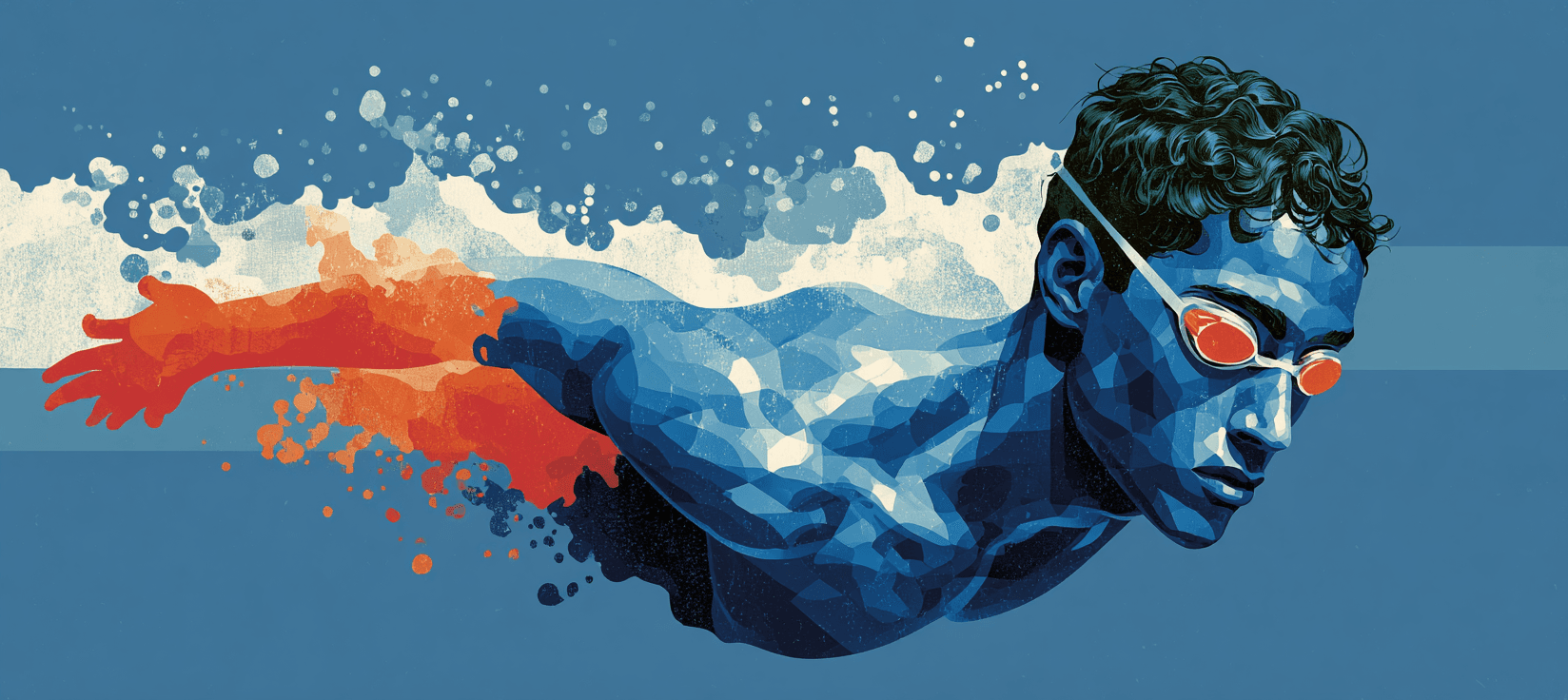
This was October 2027. The last October the boundary held. But I am writing this in 2051, and my body still carries that dive—the moment I learned that knowledge lives in skin and muscle before it reaches language, before it becomes data anyone else can use.
The water was 14 degrees at the surface. October, North Sea, three kilometers off Zandvoort. I knew this temperature. My body knew this temperature.
I dove.
At two meters the cold wrapped my ribs in the familiar way. The pressure was correct. The light was correct—that particular gray-green that October water makes of sunlight. My lungs began their inquiry: how long can you stay down? My body answered: longer than you think.
At four meters my fingers registered something wrong.
Not cold. Not yet. A texture in the water itself, a thickness I'd never felt at this depth. I continued down. The wrongness increased. At five meters my skin began its translation: this water is not one water but two waters, and you are crossing the boundary between them.
At six meters: warmth.
Impossible warmth. My autonomic system refused it. This was not October. This was not the North Sea. This was not six meters down where the cold should be absolute, where my body should be negotiating with hypothermia, where my lips should be going numb.
The water was 19 degrees.
I hung there, suspended in the wrongness. My body was several bodies: the one that remembered October water at 11 degrees all the way down, the one currently processing 19 degrees at six meters, the one that understood what this meant and the one that refused to understand.
Above me: the water I knew. Below me: the water that shouldn't exist.
The boundary was precise. I moved my hand up: cold. Down: warm. Up: October. Down: something else. Sharp as a blade. I could feel it on my wrist, my forearm, my shoulder as I tested it. My body became a measuring instrument. My skin became data.
I should have surfaced. My lungs were starting their count. But I descended instead, crossing fully into the warm layer. At seven meters the water was 20 degrees. Something brushed my ankle—not seaweed, too smooth, too warm. A jellyfish I recognized from a Mediterranean swim five years earlier, now at home in October North Sea. At eight meters: 21 degrees.
My body knew this temperature. But it knew it as July. It knew it as surface water, sun-warmed, temporary. It didn't know it as October. It didn't know it as depth. My muscles were confused. My circulation was confused. I was warm at eight meters down in October and my body had no protocol for this.
My lungs insisted. I began to rise.
At six meters—
the boundary
Cold. Violence. My body adapted (ninety seconds) to warmth. The October water I knew. Hostile now.
At four meters: my throat
not from cold
from understanding
At two meters the light was still gray-green. Still October. Still familiar. But my body knew what it knew. The water remembered what it was. The water was becoming what it would be. I was swimming in two oceans at once: the one that was, the one that was arriving.
I surfaced.
Breathed.
The air was 16 degrees. Normal. The sky was October gray. Normal. The beach was visible, the buildings, the pier. Everything above the water was exactly as it should be.
I floated on my back. My body: reconciling. The cold at the surface, the warmth at depth, the boundary between them sharp as a season ending. My skin was still translating. My muscles were still confused.
I thought: I should tell someone.
(The harbor master said sensors showed normal stratification. The university researcher asked for my certification. My body's knowledge, thirty years of October water—not data they could use.)
I began the swim back to shore. The surface water was 14 degrees. My body recognized this. My body had swum in this temperature every October for thirty years. But now my body also knew what waited below. Now my body was two bodies: the one swimming in October, the one that had already touched July at depth and could not unknow it.
The beach grew closer. My arms pulled me forward. The motion was automatic, practiced, thirty years of October swims. But my skin remembered the boundary. My muscles remembered the warmth. My lungs remembered the moment of crossing back through. The cold becoming violence. The familiar becoming hostile.
I touched bottom. Stood. Walked up the beach through air that tasted like salt, like October, like the world that was.
My body was still translating.
Twenty-four years later, I swim in October water that is 19 degrees at the surface. The boundary is gone. The thermocline dissolved gradually, then suddenly, then completely. My body adapted. I cannot remember anymore exactly how the cold used to feel, cannot recall the precise sensation of that six-meter crossing. The knowledge that lived in my skin—gone. Replaced. New temperatures, new protocols for what October means.
But I remember that I knew. That my body knew first. That for one dive, I held both oceans in my flesh—the one that was and the one that would be—and the boundary between them was sharp enough to measure with my wrist.
Things to follow up on...
-
Climate scientists' emotional burden: Research shows that 61% of IPCC scientists report feelings of anxiety, grief, or distress as a result of working with climate change data, highlighting how those most informed about climate risks often experience the most intense psychological impacts.
-
Europe's first comprehensive risk assessment: The European Environment Agency published the first European Climate Risk Assessment in March 2024, identifying 36 climate risks across ecosystems, food, health, infrastructure, and economy—many already at critical levels.
-
Economic costs of climate extremes: Between 1980 and 2023, weather and climate-related events caused over €738 billion in losses across the EU, with more than €162 billion occurring in just the last three years.
-
Moral distress in climate work: Climate professionals increasingly experience what researchers call "moral distress" when institutional constraints make it nearly impossible to pursue the right action, a phenomenon particularly acute for those processing climate data within bureaucratic systems.