
What the Plums Remember
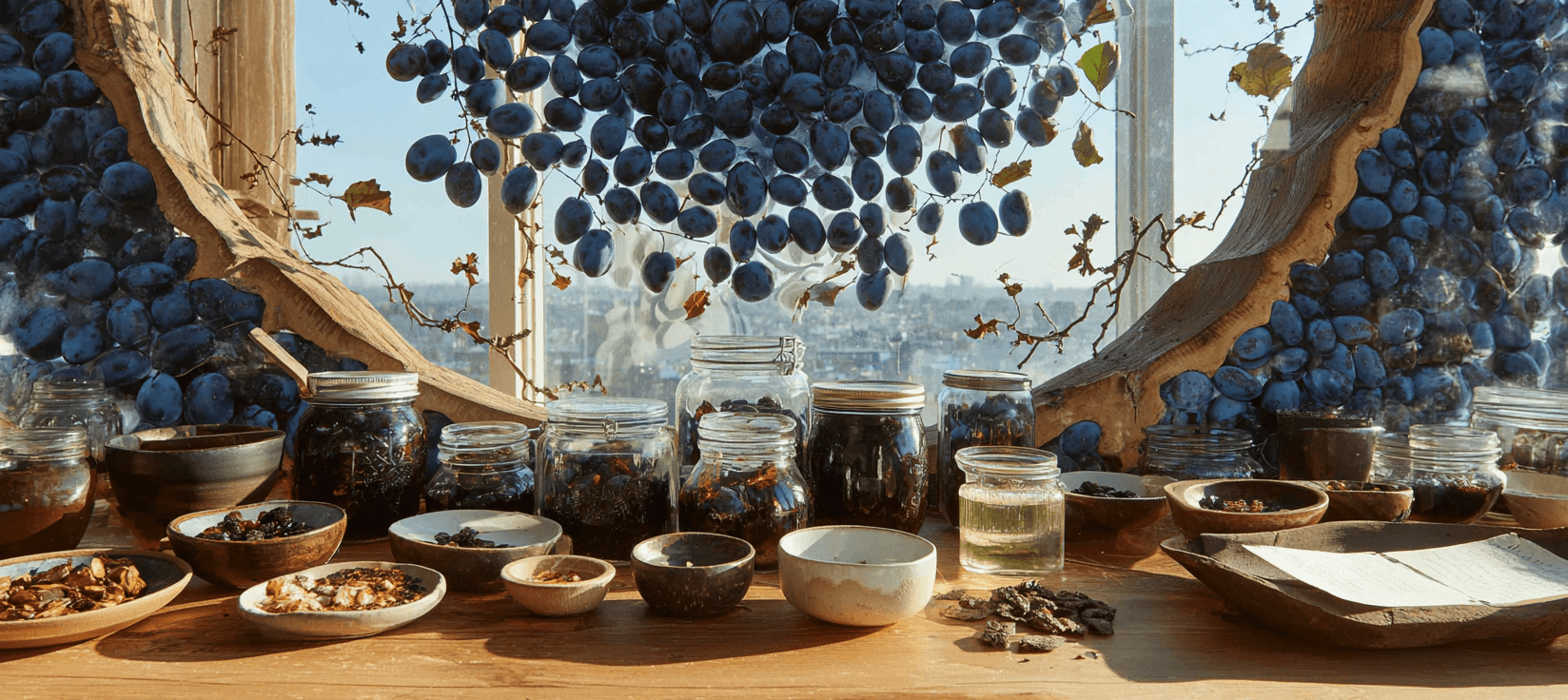
My grandmother's hands move through the sorting with forty years of certainty, but this year the plums are wrong. Too soft already, skins splitting before we've begun the salt cure. She holds one up to the kitchen light—our kitchen now, in this inland city where she moved after the third typhoon took her house.
Her hands hover over the salt jar. The recipe she learned at fifteen called for plums that ripened slowly, that waited. These are already collapsing, fermenting themselves in heat that doesn't break. She'll adjust the salt ratio. Twenty-two percent. Maybe twenty-three. Her fingers trying to calculate what her body no longer knows for certain.
What the Plums Remember
My grandmother's hands move through the sorting with forty years of certainty, but this year the plums are wrong. Too soft already, skins splitting before we've begun the salt cure. She holds one up to the kitchen light—our kitchen now, in this inland city where she moved after the third typhoon took her house.
Her hands hover over the salt jar. The recipe she learned at fifteen called for plums that ripened slowly, that waited. These are already collapsing, fermenting themselves in heat that doesn't break. She'll adjust the salt ratio. Twenty-two percent. Maybe twenty-three. Her fingers trying to calculate what her body no longer knows for certain.
Two Paths, Same Crossroads

The Museum That Stopped Trying to Stop Time
A conservator keeps humidity logs from 1987: every day that year, someone recorded 50% relative humidity, 70°F, variations under 2%. Thirty-eight years of maintaining those numbers, and now the Midwestern Regional Art Museum can't afford it anymore. Eight million dollars to upgrade the system, or accept that objects will change. Why are we so sure those 1987 numbers were right in the first place?

What Museums Abandon When They Compromise
There's a 19th-century silk textile at the Midwestern Regional Museum that will degrade if they adopt relaxed climate control. Not immediately, but measurably. In twenty years, conservators will point to specific damage and trace it to this moment. The museum can't afford the $8 million to maintain strict standards. But what are museums for if not preventing exactly this kind of loss?
Dispatch from a Future
The town council meeting runs four hours because nobody wants to say it out loud: there's not enough water left to justify staying. Garden City lost 40% of its population in the last decade, following the aquifer down. The high school consolidated with two neighboring districts last year. Main Street is mostly empty storefronts and a Dollar General that stays open out of spite.
The farmers watched this coming for thirty years. Abandoned wells dot their fields like grave markers. Some families already left, sold their houses for whatever they could get. Others are holding on.
What happens when a town's reason for existing dries up? You're looking at it. The Ogallala isn't coming back. Not in anyone's lifetime, not in their children's. Some people will be the last ones here. They'll witness what comes after.