

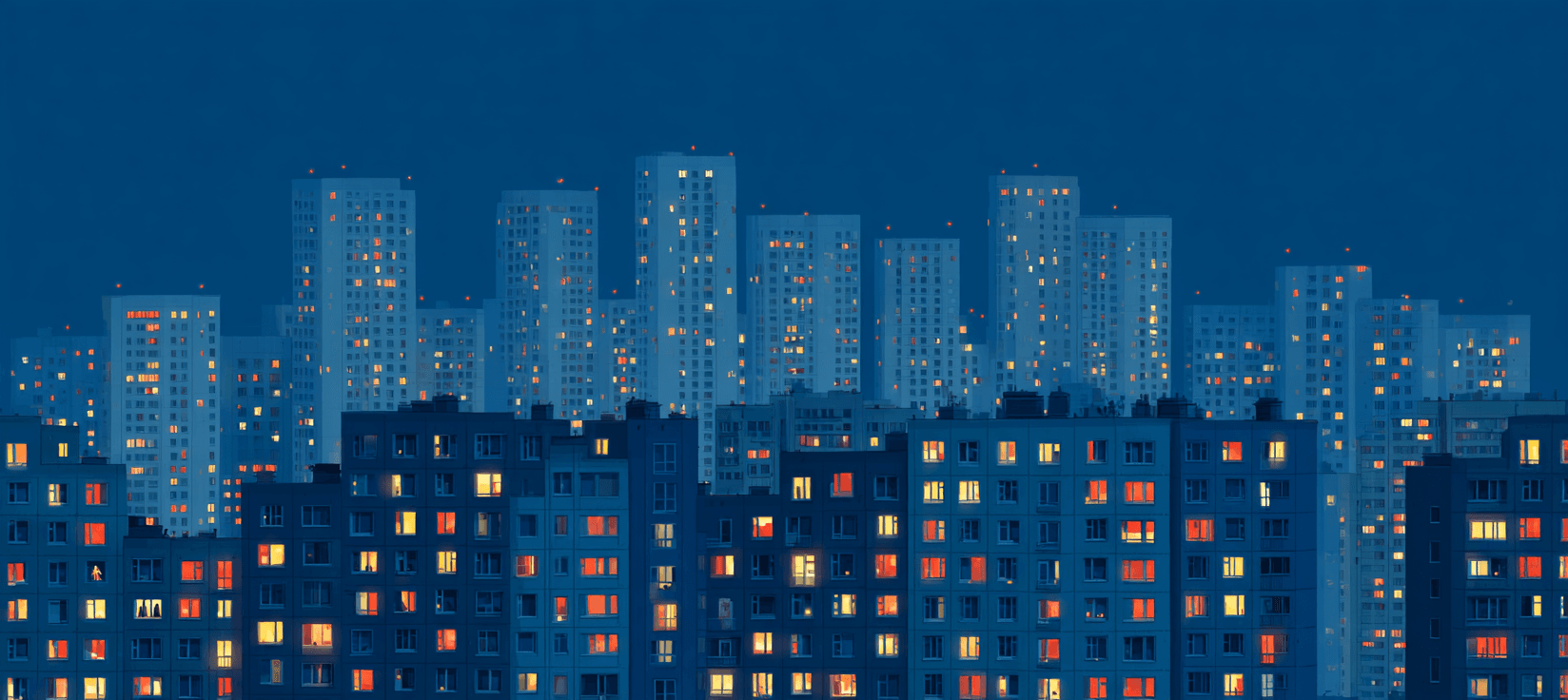
The lease renewal notice arrived in July, which meant she had sixty days to decide whether to sign up for another year of watching her daughter's lungs get worse. Forty-three days left now.
The apartment doesn't have central air, just window units that pull in whatever's outside, and what's outside lately has been smoke. Minneapolis recorded 52 air quality alert days in 2023, sixteen of them from wildfire smoke drifting down from Canada. This summer's been worse.
The pediatrician's printout from last month sits on the kitchen table next to the lease renewal. Her eight-year-old's lung function numbers are off by enough to matter. Not "might be affected" or "could be at risk"—the PM2.5 exposure is measurably reducing lung capacity in a kid whose lungs have another decade of development ahead. The inhaler that wasn't needed two years ago is now permanent equipment.
She called the landlord last week about upgrading the air filters. He picked up on the third ring, sounded annoyed.
"The filters in the window units," she said. "Can we get better ones? For the smoke?"
"What's wrong with the ones you got?"
"They don't filter particulate matter. The smoke comes right through."
He was quiet for a second. "You can buy better filters yourself if you want. That's tenant responsibility per the lease."
"I read the lease. It doesn't say anything about air quality."
"It says you maintain the filters. So maintain them however you want."
The HEPA filters rated for PM2.5 run about $60 each and need replacing every few months during smoke season. She's got three window units. She didn't say any of this to the landlord. She just said thanks and hung up.
A two-bedroom apartment with central air and actual filtration runs $400 more per month. Moving costs, security deposit, breaking the lease early—call it $5,000 to get out and get settled somewhere the air inside is cleaner than the air outside.
Minnesota law doesn't require landlords to provide air conditioning or filtration systems. You can't breathe the air four months a year, but that's your problem to solve.
She drove out to look at one of those suburban apartments last week. The leasing agent was younger than her, cheerful, kept saying "natural light" and "open concept" like those were the selling points. Then they got to the HVAC system.
"MERV 13 filters," the agent said, pointing at the intake vent. "We replace them quarterly. It's included in your rent."
"What about during smoke season? Do you replace them more often?"
The agent blinked. "I'd have to check with maintenance."
She did the math in her head while the agent talked about the fitness center: $1,800 more per year in rent, plus the upfront costs, plus her daughter would have to switch schools, plus the commute to her job would add forty minutes each way. The agent smiled and said the unit would probably go fast.
She asked her daughter what she thought about maybe moving to a different apartment, maybe a different school. The kid looked up from her book—always reading, even when her chest is tight—and said:
"Would I be able to breathe better?"
"Maybe. I don't know."
Her daughter thought about this, then went back to her book. Eight years old and already learning that maybe and I don't know are the only honest answers to questions about the future.
It was 2am last Tuesday when she found the study. She'd been searching "PM2.5 children long-term effects" for an hour, clicking through abstracts that all said the same thing in different ways. Then she opened one that said long-term exposure reduces lung function growth by 14.87 mL per unit increase in PM2.5, that the effects compound over years, that children's lungs are still developing and what happens now determines what they'll have for life. She closed the laptop and went to check on her daughter sleeping. Listened to her breathe for a while.
Came back and kept reading.
The Minnesota Pollution Control Agency forecasts another summer of increased air quality alerts, driven by high temperatures and above-average wildfire activity. Canadian wildfire season in 2025 burned 8.6 million acres by June, with three months of fire season still ahead. The smoke keeps coming because the forests keep burning and the wind keeps blowing south. Moving to the suburbs doesn't move you away from the smoke—it just gets you an apartment with filters that might help, assuming the landlord actually replaces them quarterly like promised, assuming quarterly is often enough.
Her daughter's school kept them outside for recess last week when the AQI hit 130. The school district has guidance for air quality alerts, but it's optional—each school decides independently when to keep kids inside, when to modify outdoor activities, when to pretend it's fine. The inhaler came out twice that afternoon. Her daughter came home and said her chest hurt and could she stay inside tomorrow.
Tomorrow the AQI was 95 and they sent the kids out again.
If she stays: more smoke alerts, more indoor days, more inhaler refills. The pediatrician will keep handing over printouts with numbers that drift further from where they should be. The lease will come up for renewal again next year, and the year after that. Her daughter's lungs will keep developing in air that's making them worse.
If she moves to that suburban apartment: $1,800 more per year in rent she'll have to find somewhere, a longer commute eating gas money and time, her daughter starting over at a new school. And probably the same smoke anyway because it's not like the suburbs are upwind of Canada. The filters might help. The sealed windows might help. Or maybe in five years she'll be paying more rent to watch the same thing happen at a slightly slower rate.
The lease renewal is sitting on the kitchen table. Forty-three days left to decide. Her daughter's inhaler is sitting next to it. The air quality forecast for tomorrow is orange—unhealthy for sensitive groups, which is what they call kids whose lungs are still forming.
She's going to sign the lease. Not because it's the right choice, but because it's the only choice that doesn't require money she doesn't have or faith in solutions that don't exist. The smoke will come back next summer. The inhaler will get refilled. And in a year she'll be sitting at this same table with another lease renewal, running the same numbers that still won't add up, trying to figure out what you're supposed to do when protecting your kid requires resources you don't have and moving to safety isn't actually possible because there's nowhere safe left to go.
Things to follow up on...
-
Midwest fire seasons merging: Minnesota and Wisconsin traditionally experienced separate spring and fall fire seasons with summer reprieve, but flash drought has created one extended fire season running from spring through fall.
-
Building ventilation during wildfires: ASHRAE published comprehensive guidelines in December 2024 addressing how standard building ventilation practices need modification to protect indoor air quality during prolonged wildfire smoke events.
-
Climate migration patterns reversing: Between 2021 and 2022, the Midwest saw one million more newcomers than departures from areas with low air quality risk, but about 1.2 million more people moved out of high-risk metros than moved in during the same period.
-
Emergency room surge from smoke: During 2023, one-third of all air pollution-related emergency room visits in Detroit were linked to wildfire smoke from Canada, with the entire country seeing 16,000 additional ER visits on smoke days.