
The Ambulance Queue
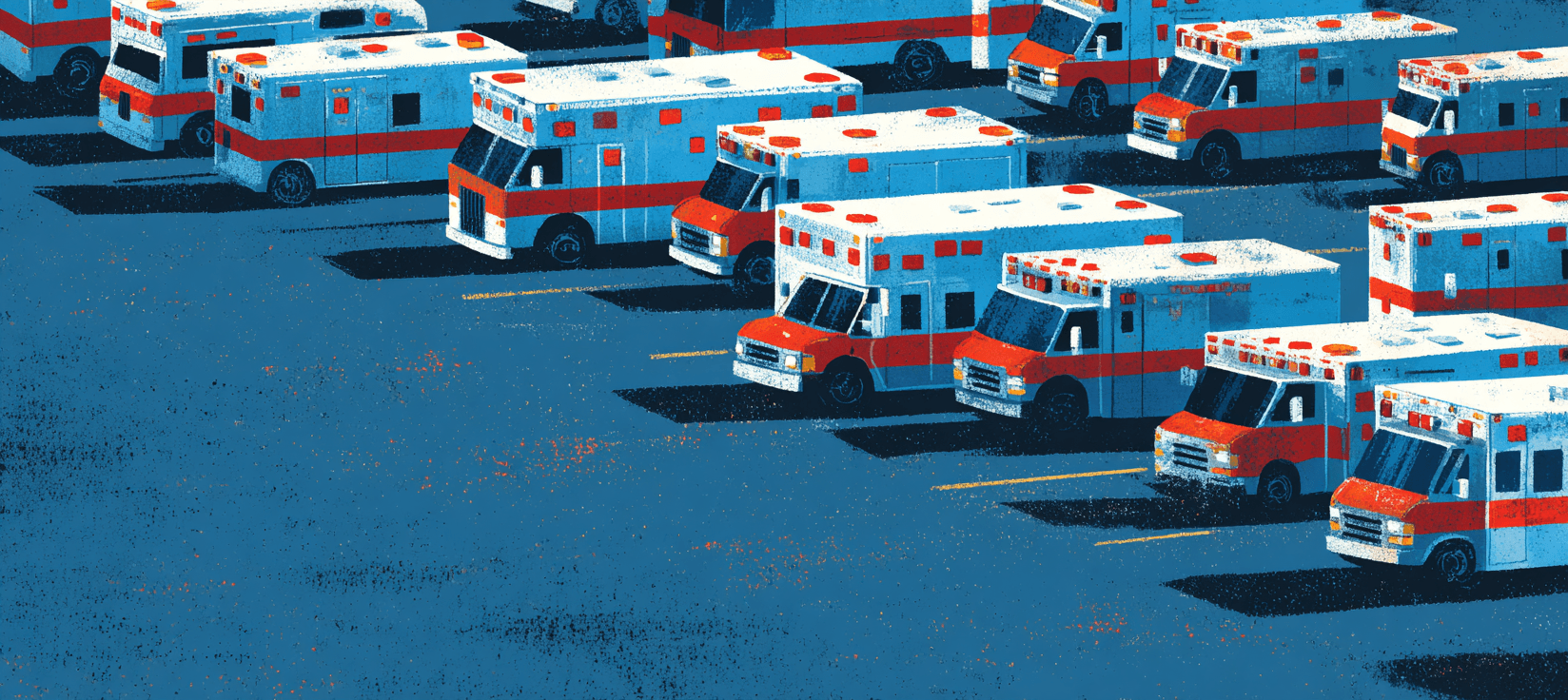
The paramedic had been sitting in his rig outside the Houston hospital for two hours and forty minutes. His patient was stable, breathing, alive—and he couldn't get her inside. Through the glass doors, the lobby packed wall-to-wall. His radio crackled. Chest pain in Channelview. No units available. Possible stroke in Deer Park. No units available. Only 4% of Houston's ambulances were free to respond that morning. The other 96% sat in parking lots across the city, crews waiting to offload patients they'd already rescued. While they waited, people kept calling 911.
The Ambulance Queue
The paramedic had been sitting in his rig outside the Houston hospital for two hours and forty minutes. His patient was stable, breathing, alive—and he couldn't get her inside. Through the glass doors, the lobby packed wall-to-wall. His radio crackled. Chest pain in Channelview. No units available. Possible stroke in Deer Park. No units available. Only 4% of Houston's ambulances were free to respond that morning. The other 96% sat in parking lots across the city, crews waiting to offload patients they'd already rescued. While they waited, people kept calling 911.
This Week's System Shock

The SEC voted in March to stop defending climate disclosure requirements that would have forced public companies to report emissions and climate risks starting this fiscal year. Large firms had spent months building tracking systems. Real estate trusts installed software to monitor tenant energy use. Compliance teams drafted disclosure frameworks.
Now those companies exist in regulatory limbo. Some continue reporting because investors demand it anyway. Others have paused mid-implementation, uncertain whether to abandon systems they've already paid for. The freeze doesn't eliminate investor pressure for climate data. It just makes that data less standardized, less audited, and harder to compare across companies.
If you're trying to understand climate risk in your portfolio or evaluate a company's exposure, you now have less reliable information than you would have had six months ago.