
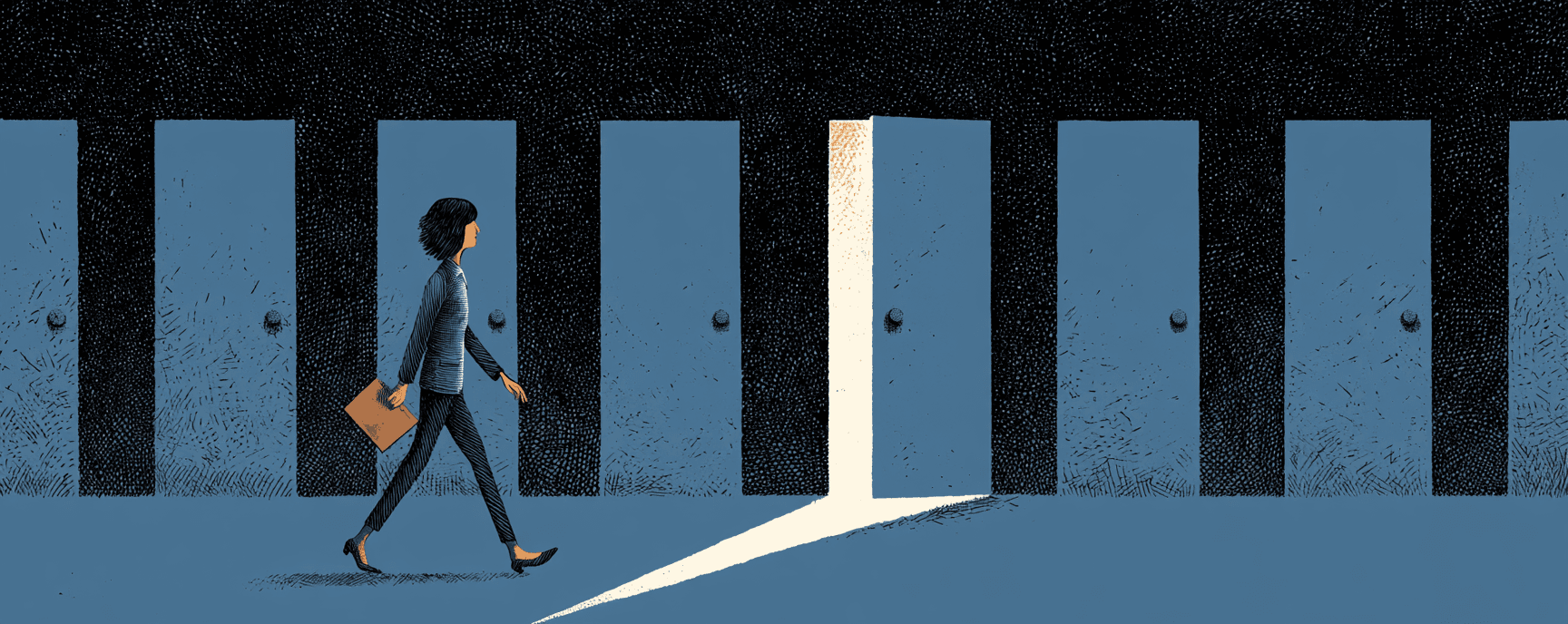
Supervision burden is what happens when a product's users stop executing work and start overseeing agents, exceptions, and automated decisions. Their job becomes watching, verifying, escalating, or deciding from complex system output. The cost of getting that wrong is a compliance event, a failed disbursement, a lost order.
This is the condition that collapses your three published pillars into one story a hiring committee can read in a single pass. Agentic Labs proves you design the oversight surface an agent requires. Alibaba proves you build trust architecture at the enterprise-scale commitment moment. Thermo Fisher and Red Cross prove you design exception-first control in environments where misplaced trust triggers real failures. Three different system boundaries, same discipline.
If you present those as separate narratives about AI, enterprise, and 0→1, the hiring committee has to do the synthesis work themselves. Most won't. Supervision burden does it for them. When you scan a posting, run it through this filter first. The pillars follow.
Activates the filter:
- Posting names oversight, exception handling, escalation, human-in-the-loop, or agent monitoring
- Product requires users to supervise automated output before it ships, commits, or deploys
- Failure mode is regulatory, financial, or operational, not just UX friction
- Role owns the control surface, not just the workflow UI
Does not activate:
- AI in the stack but users still execute manually
- "Responsible AI" or "transparency" without named control surfaces
- Design reports into product or eng with no authority over the human-AI operating contract
- Pure infrastructure with no human operating surface
Quick read on any posting: Is the user's primary job judging what a system already did, or telling it what to do next? If judging, the filter is on.