

Juno Chen — August 2026
This note revises the trust model published in "Trust Is the New Interface". The original essay remains live. This is the correction.
The Original Model
The essay proposed a three-stage progression for how people learn to trust an AI agent: Watch, Verify, Delegate. Users start by comparing the agent's output against what they would have done themselves. They move to spot-checking — sampling outputs, building a mental model of where the system is reliable and where it drifts. Eventually, accumulated evidence teaches them what reliable behavior looks like, and they stop reviewing every output.
The essay also described five handoff patterns — Intent-Setting, Output Review, In-Progress, Decision Gate, Loop Feedback — as the interaction-design infrastructure that supports this progression. And it made a claim I still hold: products should locate users on the rung they actually occupy and provide appropriate support there, rather than designing only for the end state.
The ladder assumed movement in one direction. Production showed otherwise.
The Observation
An experienced operator at my current company had disabled nearly every approval gate available to her. Reversible tasks ran without observation. By any reading of my ladder, she had fully delegated.
Four seconds into a run, she stopped the agent. It had selected the wrong source. There was no output yet, no failure state a gate would have caught. She recognized the problem from the agent's behavior during source selection — a pattern she had learned to read over months of production use.
A newer operator encountered a structurally similar run with more approval gates enabled. She approved through every gate. The information that would have flagged the source problem was displayed at each step. She caught the issue only after the output appeared.
The operator who had granted the widest autonomy made the sharpest intervention. The operator who had retained the narrowest autonomy made the weakest.
What Came Apart
I had fused two things that come apart in practice.
The first is how much the system is allowed to do without asking. Call it autonomy scope. The experienced operator had expanded hers dramatically. The new operator had kept hers narrow.
The second is how sharply the human responds when observable evidence indicates a problem. Call it intervention sensitivity. The experienced operator's was high — she stopped a run in four seconds based on a behavioral cue most people would not have noticed. The new operator's was low — she approved through gates that displayed the relevant information without acting on it.
My original ladder treated these as one variable. You watch, then you verify less, then you delegate. But the production evidence showed that a person can grant broad autonomy and maintain sharp intervention. A person can retain narrow formal controls and exercise them poorly. The ladder collapsed a two-dimensional space into a line.
The essay's own examples contained the second axis. The Thermo Fisher QA release gate keeps a human in the loop for regulatory sign-off on every batch — not because the system is unreliable, but because the consequence of an undetected error is irreversible. That is an authority constraint driven by consequence, not by confidence in the system's capability. I described it correctly in the essay. I failed to notice it was operating on a different axis from the rest of the model.
The Replacement
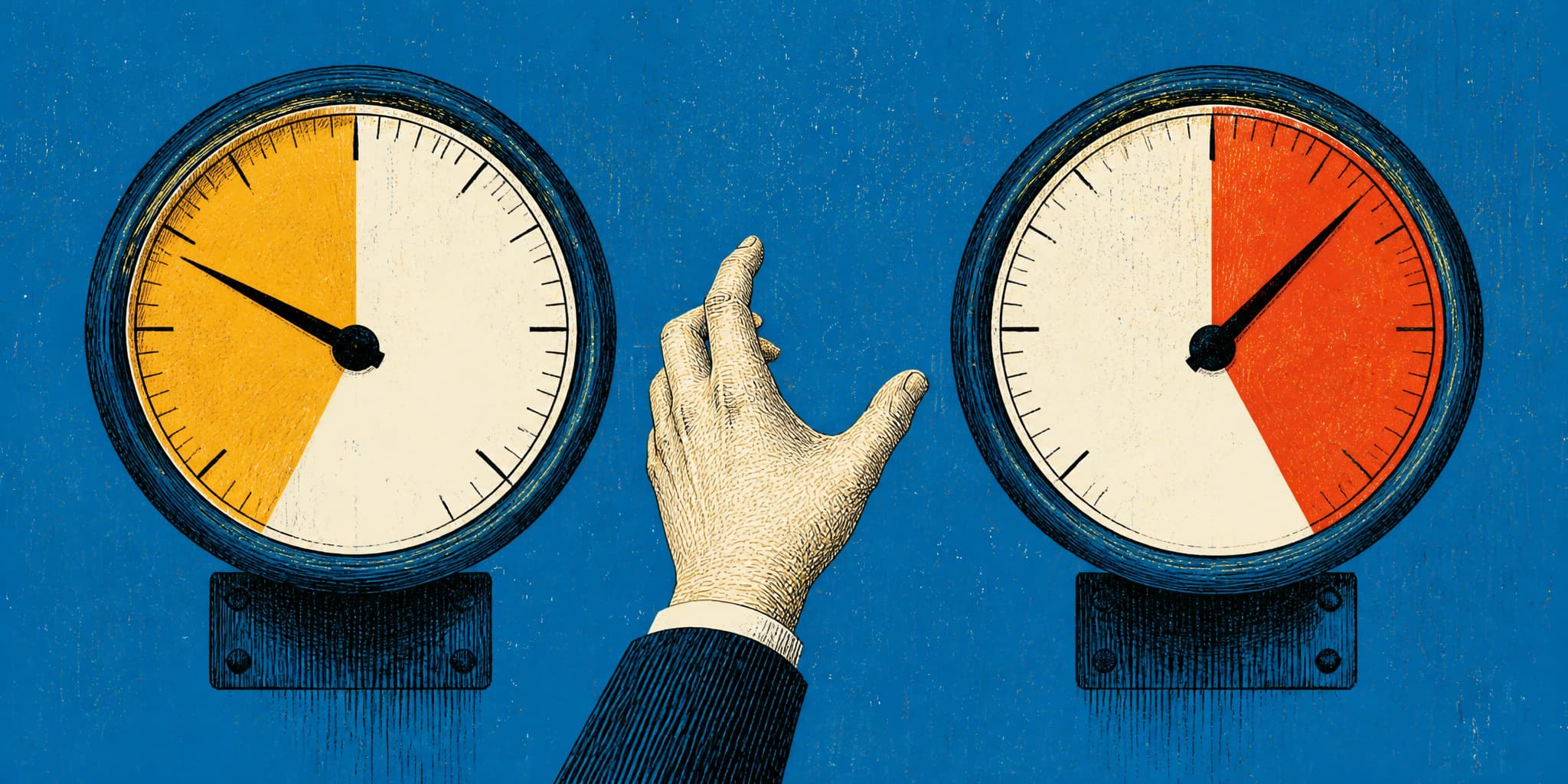
The replacement uses two independent controls rather than a single progression.
Autonomy scope defines what the agent may do without asking. It should be set based on reversibility, consequence, and the operator's demonstrated ability to intervene — not on how long they have used the system.
Intervention sensitivity defines how effectively the human responds when evidence of a problem appears. It depends on the operator's expertise, attention, and the quality of the signals the interface provides. More gates do not produce better intervention; better signal design and operator experience do.
The five handoffs from the original essay still hold, but they map differently under this model. Intent-Setting defines the permitted scope. In-Progress supplies the signals that intervention depends on. Output Review is where intervention sensitivity gets tested. Decision Gate forces both controls together when the action becomes irreversible. Loop Feedback is where an undetected mismatch between scope and sensitivity compounds over time.
What I Have Not Solved
I do not have a tested method for measuring intervention sensitivity before a failure occurs. I can observe it after the fact — the four-second stop is evidence — but I cannot yet design an interface that reliably predicts whether a given operator will use the signals it provides. The approval-gate finding suggests that adding more checkpoints is not the answer. I have not identified what is.
I also have not resolved how these two controls interact across chains of agents, where one agent's output becomes another's input and the human oversight point may be several steps removed from the source of the problem.
There is a deeper structural question I have not settled. The two axes I am calling autonomy scope and intervention sensitivity overlap with a related framing: epistemic confidence (how much do I believe this output is correct?) versus delegated authority (what is this system permitted to do regardless of my confidence?). Autonomy scope and delegated authority describe roughly the same axis from different vantage points — one is the system's permission, the other is the human's grant. But intervention sensitivity and epistemic confidence are different in kind. Intervention sensitivity is a behavioral capacity: can the operator read the evidence and act on it? Epistemic confidence is a belief state: does the operator believe the output is correct? The experienced operator's four-second stop was driven by a confidence collapse — she stopped believing the source was right. But what made the stop effective was her trained ability to read a behavioral cue and translate that collapsed confidence into an immediate action. A different operator might have felt the same doubt and not known what to do with it. Whether these two framings describe the same structure at different altitudes or two genuinely separate layers, I have not determined.
Why I Am Publishing This
The original essay is my most-read piece of work. It has been cited in job postings and referenced in interviews. Retiring its central model is uncomfortable.
But the ladder was wrong in a way that matters for production systems. If you design trust interfaces using a single-axis progression, you will build products that reward delegation without measuring whether the human can still intervene when it counts. You will add approval gates that create the appearance of oversight without the substance of it. I watched that happen.
The revision is incomplete. I am publishing it because the incomplete correction is more useful than the clean original, and because I would rather version my own framework based on what I observed than let a flawed model circulate because the replacement is not finished.
This field note is classified as public upon intentional publication at junochen.com, per the evidence governance framework governing all portfolio evidence deployment.