

Objection Dossier — The Head of Product Transition


You have eight true things to say about TinyFish. Saying all of them is what costs you. This dossier applies claim-budget discipline to the Head of Product transition — the objection you will hit inside the first ten minutes at every tier. The over-explained version tells the room you are still arguing the decision with yourself. The budget version is one sentence, then a portfolio case. Also reclassified from perception gap to hybrid: your homepage currently leads selected work with TinyFish in design-pattern language, which creates a screening problem before you speak.
Objection Dossier — The Head of Product Transition
You have eight true things to say about TinyFish. Saying all of them is what costs you. This dossier applies claim-budget discipline to the Head of Product transition — the objection you will hit inside the first ten minutes at every tier. The over-explained version tells the room you are still arguing the decision with yourself. The budget version is one sentence, then a portfolio case. Also reclassified from perception gap to hybrid: your homepage currently leads selected work with TinyFish in design-pattern language, which creates a screening problem before you speak.
The Claim Budget — How Evaluators Process What You Assert and When It Costs You

At Director-plus, every finalist has a strong record. When one of them draws skepticism anyway, the cause is rarely a missing artifact — it's too many assertions in sequence without anything the evaluator can check, plus small discrepancies across the portfolio, resume, and interview answers that shift them from listening to auditing. This piece sets the claim budget: a per-message cap on what you assert, a requirement that one outcome be defensible on follow-up, and an explicit statement of what you are not claiming. That last part will feel like leaving money on the table. It's where the credibility actually comes from.
The Claim Budget — How Evaluators Process What You Assert and When It Costs You
At Director-plus, every finalist has a strong record. When one of them draws skepticism anyway, the cause is rarely a missing artifact — it's too many assertions in sequence without anything the evaluator can check, plus small discrepancies across the portfolio, resume, and interview answers that shift them from listening to auditing. This piece sets the claim budget: a per-message cap on what you assert, a requirement that one outcome be defensible on follow-up, and an explicit statement of what you are not claiming. That last part will feel like leaving money on the table. It's where the credibility actually comes from.
Five BCG DV Phrases That Won't Survive a Sharp Interviewer
Your BCG DV work shipped real products into production with measurable outcomes. But phrases like "venture builder," "founding team," and "four products still running" claim a duration and continuity of ownership the engagement model didn't provide — and a sharp interviewer who has run a product past year one will find the gap. Below, five phrases tested against what can be verified: three need replacing, one needs dropping, and one you'll never say out loud, but the interviewer will assemble it from the others.

Alibaba Claim Boundary — What to Say and What to Stop Saying
Your Alibaba work holds up. The metrics are real, the mandate story is strong, and the scope was genuinely senior. But four phrases currently on your site or in your verbal framing pull past what the canonical record supports — and a sharp interviewer who catches one will discount the rest. This piece puts the over-claimed version next to the defensible version, marks the boundary between them, and classifies every claim so you know what's safe, what needs framing, and what to drop before your next screen.

AI Credibility Is Six Different Questions
The AI roles you're targeting all screen for "AI experience." They are not screening for the same thing. A role designing approval gates evaluates for oversight architecture; a role at Midjourney evaluates for taste; a role on Codex evaluates for a commit history. Your evidence is strong for three of these six constructs and absent for the others. This dossier maps each proof object to the specific construct it clears, flags where no honest bridge exists, and gives you a matching lookup to pull up before outreach. Hiring committees that paused over Labor Day are back in active review this week.
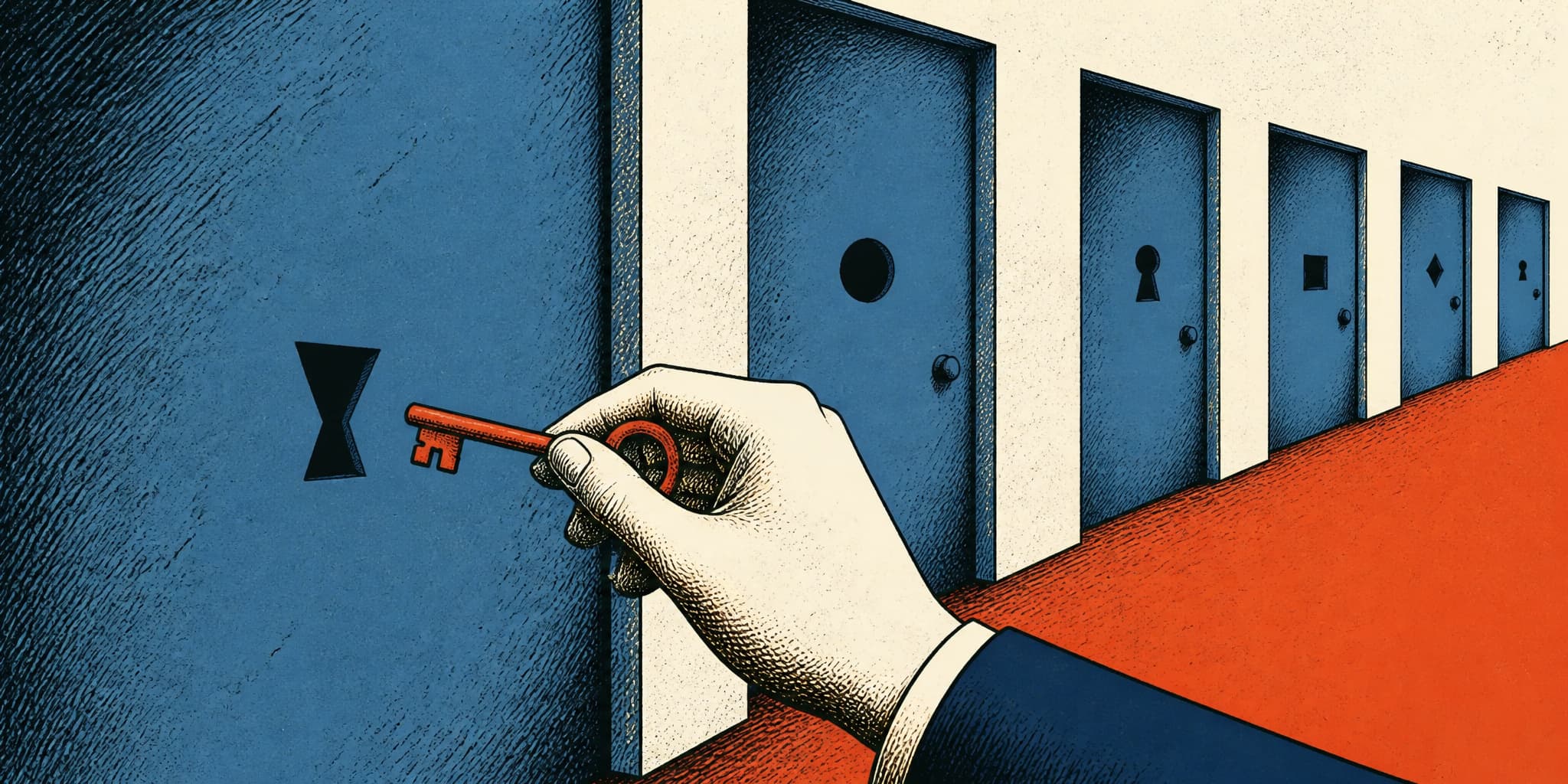
The Speed Objection Answered With One Timeline
You have four zero-to-one timelines. The instinct is to list them all when someone asks about speed. That instinct works against you — it sounds rehearsed and gives the interviewer four threads to pull instead of one answer to believe. This piece maps each of your BCG DV builds to a company constraint type (regulatory, multi-brand, enterprise ecosystem) so you walk in knowing which single timeline to lead with. Response language for the three most common versions of the question is at the bottom, formatted for scanning before you walk in.