

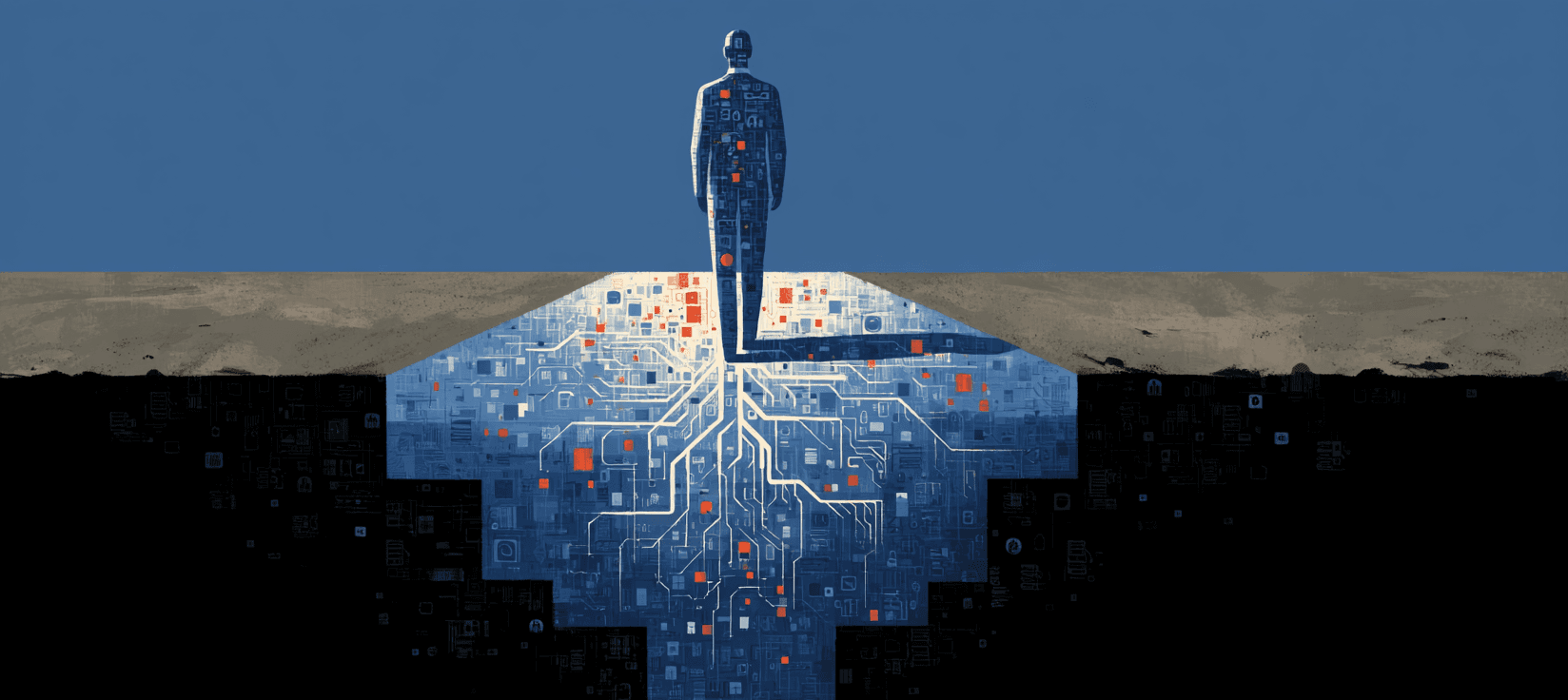
How autonomous security tooling structurally generates the attack surface it was deployed to eliminate
The Move
In March 2026, CrowdStrike made Charlotte AI's autonomous remediation capability generally available across the Falcon platform. The announcement centered on speed: human-approved response cycles measured in minutes; autonomous response measured in milliseconds. The threat landscape doesn't wait for a SOC analyst to finish their coffee. Charlotte AI, CrowdStrike said, would close that gap.
The specific capability: under defined threat conditions — a confirmed ransomware precursor, a lateral movement pattern above a confidence threshold, a credential-stuffing sequence hitting a domain controller — Charlotte AI can now isolate a host, terminate a process, or quarantine a file without waiting for a human to approve the action. The human remains in the loop for review, for audit, for policy configuration. But not for the action itself.
This is a meaningful product milestone. It is also the occasion for a question CrowdStrike's announcement was not designed to answer.
The Puzzle
What does Charlotte AI need in order to act?
Technically. When Charlotte AI decides, under its defined threat conditions, to isolate a host at 2:47 AM on a Tuesday, what does that action require? It requires the Charlotte AI service to hold standing authorization to issue remediation commands to enrolled endpoints. It requires persistent credentials. It requires that the system be authenticated and authorized, continuously, to take privileged actions across the infrastructure it monitors.
Autonomous remediation requires a non-human identity with broad, persistent, high-privilege access to the environment it was deployed to protect.
That is the puzzle. The security platform, in order to act autonomously, must hold the class of access that defines the threat it was deployed to prevent. The tool creates the attack surface.
The rest of this piece unpacks why that's not a criticism of CrowdStrike specifically, why it's a structural condition of autonomous security tooling generally, and why the industry's current framing of this problem is going to look, in retrospect, like it missed the point.
What Autonomous Action Actually Requires
The mechanics are where the argument lives.
The Falcon sensor has always run with elevated privileges on enrolled endpoints. That's not new. Kernel-level access on Windows, system extensions on macOS — this is the price of admission for any endpoint detection tool that wants to see what's actually happening on a machine. CrowdStrike has always held a privileged position on the endpoints it monitors. The question has always been: who controls what that privilege can do?
Until March 2026, the answer was: a human, ultimately. Charlotte AI could surface a recommendation. It could flag a threat with high confidence. It could tell a SOC analyst exactly what action to take and why. But the action itself required a human to click something. That human-in-the-loop was a constraint on speed. It was also a constraint on blast radius.
Autonomous remediation removes that constraint in both directions simultaneously.
The speed gain is real and the marketing is accurate. A ransomware precursor that takes 90 seconds to propagate across a flat network is not meaningfully stopped by a response that takes four minutes to get human approval. If you believe the threat landscape justifies autonomous action — and there are serious arguments that it does — the speed case is legitimate.
But here is what the speed case papers over: in order for Charlotte AI to act without a human in the loop, the authorization to act must be pre-delegated. The system must hold, continuously, the right to issue commands that affect enrolled endpoints. That right cannot be summoned on demand at the moment of a threat detection. The latency of an on-demand authorization request is exactly the problem autonomous remediation is trying to solve. The authorization has to already be there.
Pre-delegated authorization, held continuously, by a non-human system, across thousands of enrolled endpoints. A non-human identity with a blast radius that should make any serious security architect pause.
CrowdStrike's Q4 FY2026 earnings call offered a useful window into how the company is thinking about this. CEO George Kurtz described Charlotte AI's autonomous capabilities in terms of platform consolidation:
"What we're seeing is that customers who deploy autonomous remediation aren't just buying a faster SOC. They're consolidating their response workflow into the platform. The question they're asking isn't 'how do we respond faster' — it's 'how do we make response something the platform handles so our team can focus on what requires human judgment.'"
That framing is honest about the business logic. Autonomous remediation is a consolidation play. When Charlotte AI handles response, the customer's dependency on the Falcon platform deepens. The platform becomes not just the detection layer but the response layer — a stickiness argument, and a good one. CrowdStrike's net revenue retention has historically tracked above 120%, and platform consolidation is the mechanism that sustains it.
But Kurtz's framing doesn't address the authorization structure that makes autonomous response possible. "The platform handles it" describes the outcome. It says nothing about what the platform must hold in order to handle it.
My read is that this is not evasion. I think CrowdStrike's leadership genuinely believes the authorization structure is an implementation detail, not a strategic exposure. That belief is the thing worth examining.
A Detour Through the 2000s (Which Is Actually the Argument)
The structural argument is clearer when you've seen it before, so bear with a detour.
In the mid-2000s, antivirus software was the most privileged code running on most enterprise endpoints. It had to be. To detect malicious files, it had to parse them. To parse them, it needed access to the filesystem at a level most applications never touched. To intercept threats in real time, it needed kernel hooks that put it deeper in the operating system than almost anything else on the machine.
Security researchers started noticing something uncomfortable around 2006 or 2007: antivirus parsing engines were full of vulnerabilities. Parsing untrusted data is hard, and parsing untrusted data with kernel-level privileges is catastrophically hard. A malformed PDF, a crafted archive, a deliberately broken executable — these could trigger memory corruption bugs in the AV engine itself, and because the AV engine ran with SYSTEM privileges, those bugs were immediately exploitable at the highest privilege level on the machine.
The tool designed to protect the endpoint had become, structurally, the highest-value attack surface on the endpoint.
Tavis Ormandy at Google Project Zero spent years documenting this pattern across every major AV vendor. The findings were not subtle: remote code execution through the AV scanning engine, privilege escalation through the AV update mechanism, persistent access through the AV kernel driver. The more capable the protection, the more privileged the code. The more privileged the code, the more valuable the target.
The industry's response was slow and partial. Better sandboxing of parsing engines. More careful privilege separation. Kernel driver signing requirements. These helped. But the structural condition — effective endpoint protection requires privileged access, and privileged access creates privileged attack surface — was never resolved. It was managed.
Charlotte AI's autonomous remediation is the same structural condition at a different layer. The AV engine held privileged access to the local filesystem. Charlotte AI holds pre-delegated authorization to issue commands across thousands of endpoints from the cloud. The privilege is distributed rather than local, which makes it simultaneously harder to exploit from a single endpoint and more catastrophic if the authorization layer itself is compromised.
If an attacker compromises the Charlotte AI service account — or more precisely, the authorization infrastructure that Charlotte AI relies on to issue remediation commands — they don't get one machine. They get the command channel to every enrolled endpoint in the customer's environment.
The SolarWinds compromise in 2020 was, at its core, exactly this: a trusted software update mechanism with broad access to customer environments became the attack vector. The mechanism was trusted because it was the security mechanism. The trust was the vulnerability.
CrowdStrike is not SolarWinds. The architectures are different, the threat models are different, and CrowdStrike has spent considerable engineering effort on the security of its own infrastructure. The post-incident review following the July 2024 sensor update incident, whatever its limitations, demonstrated at least a functional incident response capability. But the structural parallel is real: the more autonomous the security tool, the more standing authorization it requires, and the more standing authorization it holds, the more valuable it becomes as a target.
This is the pattern. It has always been the pattern. We keep being surprised by it.
There is a military concept worth naming here, briefly, because it sharpens the structural point. During the Cold War, both the United States and Soviet Union developed what strategists called "pre-delegated authority" arrangements — conditions under which field commanders could authorize nuclear weapons use without waiting for presidential or general secretary approval. The logic was identical to Charlotte AI's: the threat moves faster than the authorization chain, so the authorization must be pre-positioned. The problem was also identical: pre-positioned authorization, held by a standing system, creates the conditions for catastrophic action without the human judgment that the authorization was designed to preserve. The automation designed to ensure response capability became the mechanism through which accidental response could occur.
The parallel is imperfect — software remediation and nuclear weapons are not the same thing in any dimension that matters practically. But the structural logic is identical, and it has a name in strategic studies: the stability-security tradeoff. The more stable the deterrent (the more reliably it can respond), the less secure the authorization structure that enables it. Charlotte AI is living inside that tradeoff right now, and the industry doesn't have a vocabulary for it yet.
The Protector's Paradox
The structural condition in which a security tool, in order to perform its protective function autonomously, must hold the class of access that defines the threat it was deployed to prevent — so that the more capable the autonomous protection, the more the tool itself resembles what it was built to stop.
A design flaw can be patched. A structural constraint has to be managed. You cannot have autonomous remediation without pre-delegated authorization. You cannot have pre-delegated authorization without a persistent credential. You cannot have a persistent credential without a non-human identity that holds it. And a non-human identity with pre-delegated authorization to take privileged actions across thousands of endpoints is, by any reasonable definition, a high-value target.
The Protector's Paradox has three components worth naming separately, because they tend to get conflated in the conversations I've watched security teams have about autonomous tooling.
The Authorization Trap. Autonomous action requires standing authorization. Standing authorization cannot be scoped to zero when not in use — the whole point is that it's available without human intervention. The trap is that the authorization structure required for autonomous protection is structurally identical to the authorization structure that defines a compromised privileged account. The tool looks like the threat. A security reviewer examining the Falcon platform's service account permissions for the first time, without context, would flag it as a finding.
The Blast Radius Inversion. Traditional security tools are scoped to detection and alerting. Their compromise yields information: logs, telemetry, visibility into the environment. Autonomous remediation tools are scoped to action. Their compromise yields control. The blast radius of a compromised detection tool is measured in what the attacker can see. The blast radius of a compromised remediation tool is measured in what the attacker can do. Autonomous capability inverts the blast radius from informational to operational. This is not a marginal difference. It is a categorical one.
The Consolidation Amplifier. CrowdStrike's business model, as Kurtz's framing makes clear, is a platform consolidation play. The more workflows the Falcon platform absorbs, the stickier the platform and the higher the net revenue retention. Autonomous remediation is a consolidation accelerator — it pulls response into the platform, deepening dependency. But consolidation also concentrates the authorization surface. A customer who has consolidated detection, response, and autonomous remediation into a single platform has also concentrated the authorization structure that governs all three into a single target. The consolidation that makes the platform more valuable to the customer makes the platform's authorization layer more valuable to the attacker.
These three components compound. The Authorization Trap means the tool must hold standing credentials. The Blast Radius Inversion means those credentials are operational, not informational. The Consolidation Amplifier means those operational credentials govern an increasingly broad scope of the customer's environment. A non-human identity that is, by design, one of the most privileged objects in the environments it protects.
To be precise about what I'm claiming: I have no basis for saying Charlotte AI is insecure. What I am claiming is that the structural condition the Protector's Paradox describes is real, that it applies to Charlotte AI's autonomous remediation capability, and that the industry's current framing of autonomous security tooling does not adequately account for it.
The current framing treats autonomous remediation as a speed and efficiency problem with a security solution. The Protector's Paradox suggests it is also a security problem with no clean solution — only tradeoffs that need to be named and managed.
The Incentive Structure
Why is CrowdStrike doing this? The product rationale is obvious. The more interesting question is what their business model forces them to do.
CrowdStrike's FY2026 10-K filing, filed in March 2026, showed platform subscription revenue representing approximately 94% of total revenue, with module attach rates continuing to climb across the customer base. The company's guidance language has consistently emphasized platform consolidation as the primary driver of net revenue retention above 120%. The economics are straightforward: each additional module a customer adopts increases switching cost and increases revenue per customer. Autonomous remediation is a module. It is also, as Kurtz's framing suggests, a workflow consolidation play that pulls response into the platform in a way that is structurally harder to reverse than adding a detection module.
There is also a margin argument. Autonomous remediation, once the model is trained and the authorization infrastructure is built, scales at near-zero marginal cost. A human SOC analyst costs roughly $90,000 to $130,000 per year in fully-loaded compensation, handles a finite number of incidents, and requires management overhead. Charlotte AI handling the same remediation actions costs CrowdStrike essentially nothing incremental per action. The customer pays for the capability; the delivery cost is fixed. That is a very good margin structure, and it shows up in CrowdStrike's subscription gross margins, which have been expanding steadily toward 80%.
So: CrowdStrike's business model pushes toward autonomous remediation because autonomous remediation is a consolidation play that increases switching cost, a margin play that improves unit economics, and a differentiation play that separates Falcon from platforms that still require human approval for response actions. The incentives all point the same direction.
None of that makes the Protector's Paradox go away. It makes it more durable. The structural condition that creates the paradox is also the structural condition that makes the product commercially compelling. CrowdStrike cannot resolve the paradox without undermining the product's value proposition. The authorization structure that creates the risk is the authorization structure that enables the capability.
Worth sitting with. The Protector's Paradox is a condition CrowdStrike must manage, and the question is whether the management is adequate and whether it is visible to the customers who are accepting the tradeoff.
My read — and I want to be clear this is inference, not something the public filings establish — is that most enterprise customers deploying Charlotte AI's autonomous remediation have not had an explicit conversation about the authorization structure it requires. They have had a conversation about speed, about SOC efficiency, about the threat landscape. The authorization structure is an implementation detail that lives in the deployment documentation, not in the sales conversation or the procurement review.
That gap between what the product requires and what the conversation covers is where the Protector's Paradox lives in practice.
Where This Goes
By the end of Q4 2026, CrowdStrike will announce a capability it will call something like "just-in-time remediation authorization" or "ephemeral action credentials" — a mechanism by which Charlotte AI's remediation actions are authorized through a short-lived credential issued at the moment of a confirmed threat detection, rather than through a standing pre-delegated authorization. The announcement will be framed as an enhancement to the autonomous remediation capability, positioned around compliance and governance requirements for regulated industries.
The actual driver will be procurement friction in federal and regulated accounts. Federal civilian agencies and regulated financial institutions will have raised the authorization structure as a concern during security reviews — not because they read this piece, but because the security architects at those organizations will have asked the same question I'm asking: what does this system hold, continuously, and what happens if that holding is compromised? CrowdStrike will have encountered enough of those conversations to conclude that a just-in-time authorization model reduces procurement friction without meaningfully reducing the speed advantage of autonomous remediation.
The just-in-time model will not resolve the Protector's Paradox. It will shift the attack surface from the standing credential to the authorization issuance mechanism. But it will make the authorization structure more legible to security reviewers, which is a different and more tractable problem. Legibility is not security, but in a procurement context, legibility often functions as a proxy for it.
I could be wrong about the timing. I could be wrong about the specific framing. What I am confident about is the direction: the authorization structure of autonomous remediation will become a first-class concern in enterprise security reviews within the next 18 months, and CrowdStrike will respond to that concern with a product capability rather than a positioning change. That is what their business model forces them to do. When the market raises a concern about a platform's security posture, a platform company's answer is always another module.
There is a version of this argument that ends with a list of recommendations — what security teams should do, what questions they should ask, what controls they should put around autonomous remediation deployments. I am deliberately not writing that version. The Protector's Paradox resists a clean mitigation checklist. It is a structural condition that deserves to be understood before it is managed.
The antivirus industry took roughly a decade to develop adequate responses to the privileged-code-as-attack-surface problem, and those responses were partial. The autonomous remediation industry is earlier in that cycle. The gap between what Charlotte AI requires and what the conversation about Charlotte AI covers is, right now, wide enough to matter.
Naming the gap is the first step. The Protector's Paradox is the name.
On Signal publishes The Outer Ring as a framework-level companion to its field-facing coverage. The views here are analytical, not advisory.