The Statutory Orphan
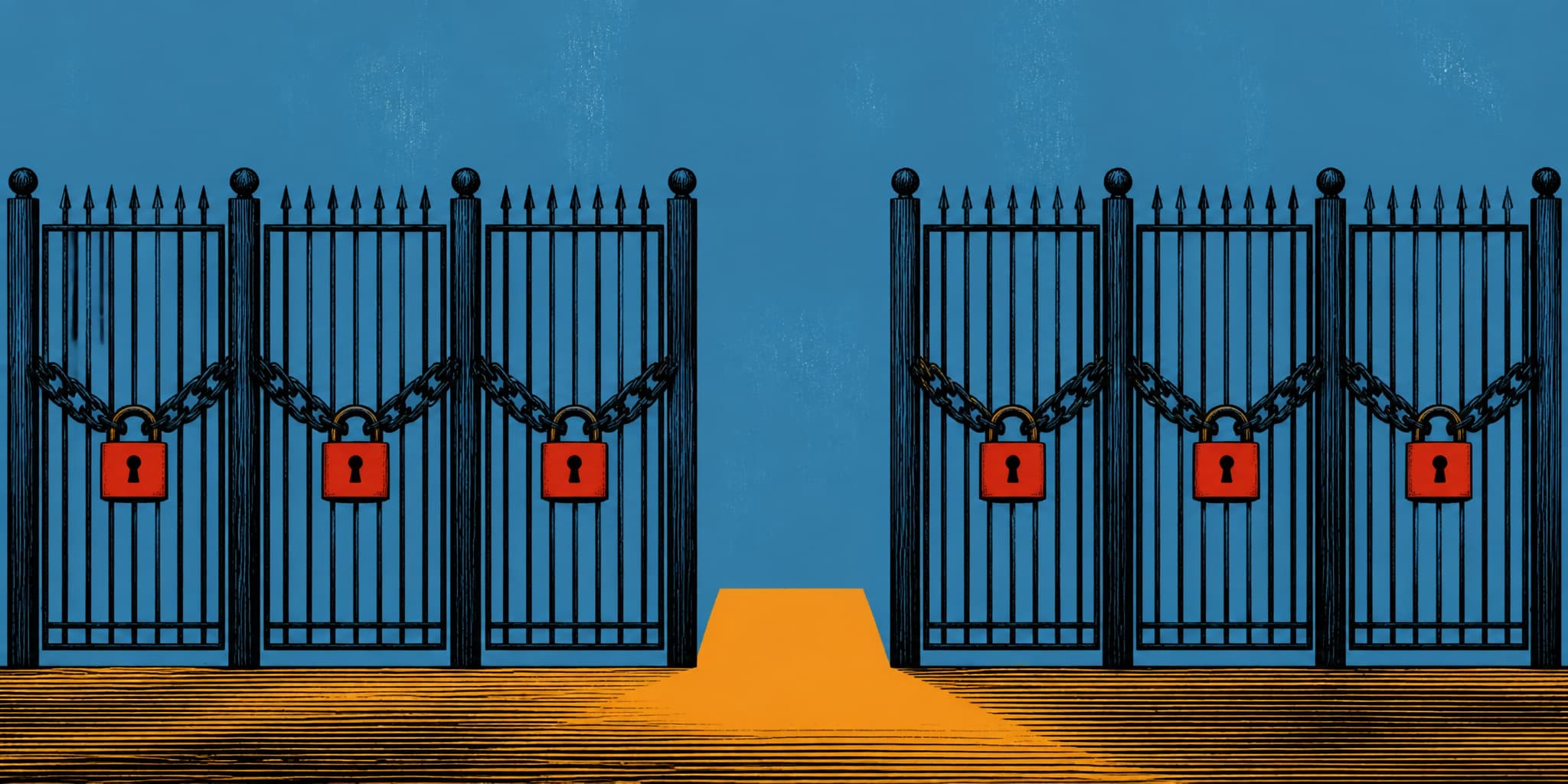
Section 836 of the FY2026 NDAA directs DoD to stand up a compliance repository by January 2027 for sourcing restrictions in its own subchapter: standardized attestation, unique product identifiers, False Claims Act liability on supplier representations. The covered requirements are listed by section number. Berry Amendment metals (§4862), specialty metals (§4863), miscellaneous procurement restrictions (§4864), and the Buy American Act are all included. §4865 batteries are not. Congress enumerated the sections individually; this is an itemized omission, visible in the statute's definition of "covered sourcing requirement."
The downstream consequence is procedural and immediate. Contracting officers verifying §4865 battery compliance have no standard attestation form, no repository to query, no FCA-backed representation from the offeror. Each prime contractor is building its own compliance questionnaire. A battery configuration assessed as compliant under one prime's framework may be unassessable under another's until DFARS supplies a common verification mechanism.
Section 4865's 95% Threshold Moves With a Cost Method Nobody Has Written


Section 4865's 95% functional-component-cost threshold applies to new acquisition programs starting January 1, 2028, 484 days out. The DFARS rule that would define how suppliers demonstrate compliance missed its June 2026 deadline and no proposed text has appeared. The consequence runs past scheduling. Because the statute requires 95% of cost to originate from non-FEOC sources without naming a cost convention, commodity price movements, yield-loss allocation, and transfer-pricing treatment can each move a physically unchanged cell across the threshold. Supplier activity is accumulating against a test that has no arithmetic yet.
Section 4865's 95% Threshold Moves With a Cost Method Nobody Has Written
Section 4865's 95% functional-component-cost threshold applies to new acquisition programs starting January 1, 2028, 484 days out. The DFARS rule that would define how suppliers demonstrate compliance missed its June 2026 deadline and no proposed text has appeared. The consequence runs past scheduling. Because the statute requires 95% of cost to originate from non-FEOC sources without naming a cost convention, commodity price movements, yield-loss allocation, and transfer-pricing treatment can each move a physically unchanged cell across the threshold. Supplier activity is accumulating against a test that has no arithmetic yet.
What Defense Demand Instruments Fail to Buy
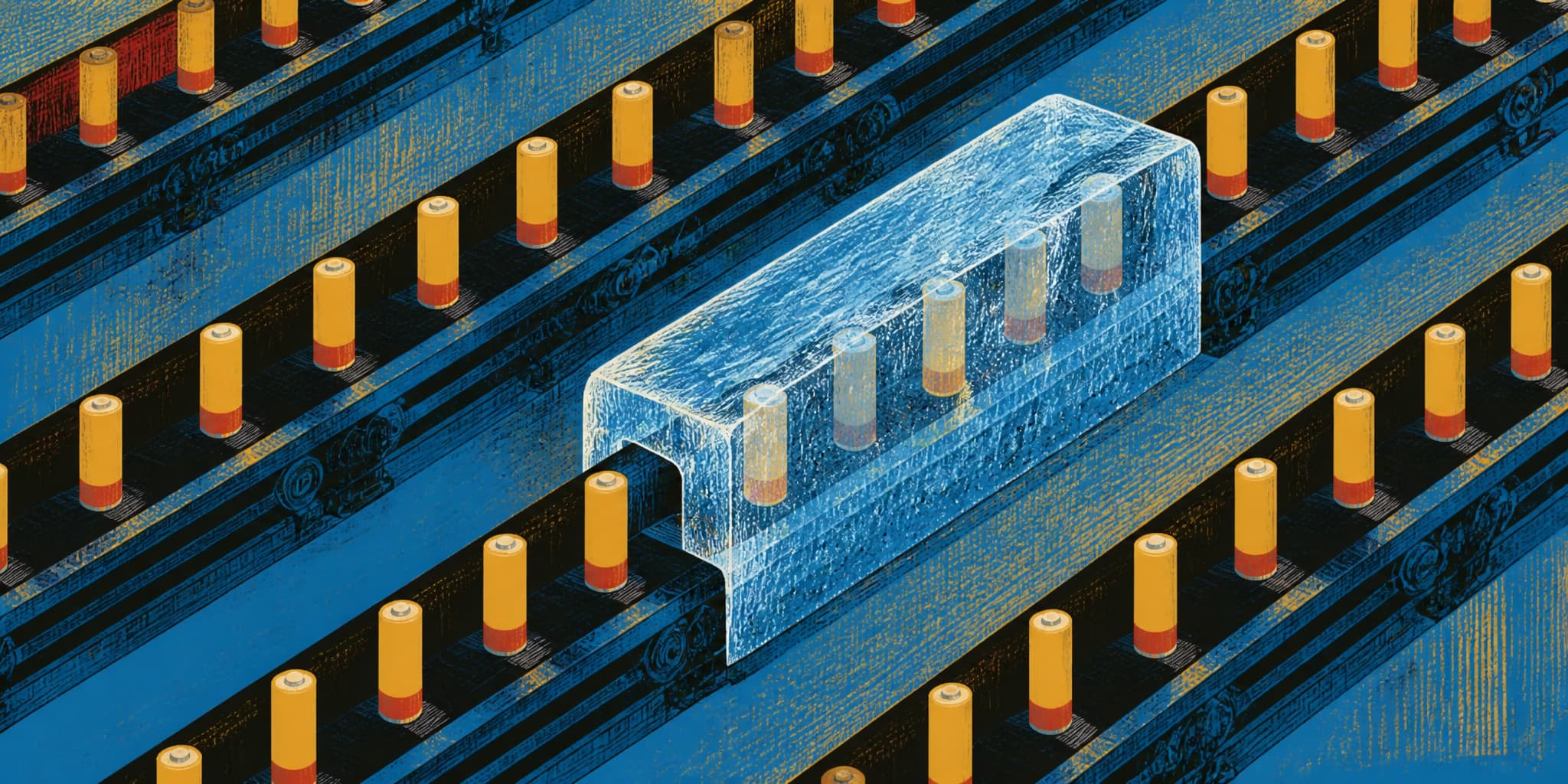
The DIBC's BES-26-01 solicitation, 10 USC §4817 purchase-commitment authority, and Packet Digital's Navy SBIR orders are the most concrete demand signals in defense batteries. None of them pays a cell manufacturer for freezing a qualified configuration while the rest of the factory keeps optimizing. Public electrode-processing cost models and cell-maker earnings commentary establish that this cost is material and compounds with hold duration. The statutory authority to price it exists and has not been exercised.
What Defense Demand Instruments Fail to Buy
The DIBC's BES-26-01 solicitation, 10 USC §4817 purchase-commitment authority, and Packet Digital's Navy SBIR orders are the most concrete demand signals in defense batteries. None of them pays a cell manufacturer for freezing a qualified configuration while the rest of the factory keeps optimizing. Public electrode-processing cost models and cell-maker earnings commentary establish that this cost is material and compounds with hold duration. The statutory authority to price it exists and has not been exercised.