

Trajectory Line
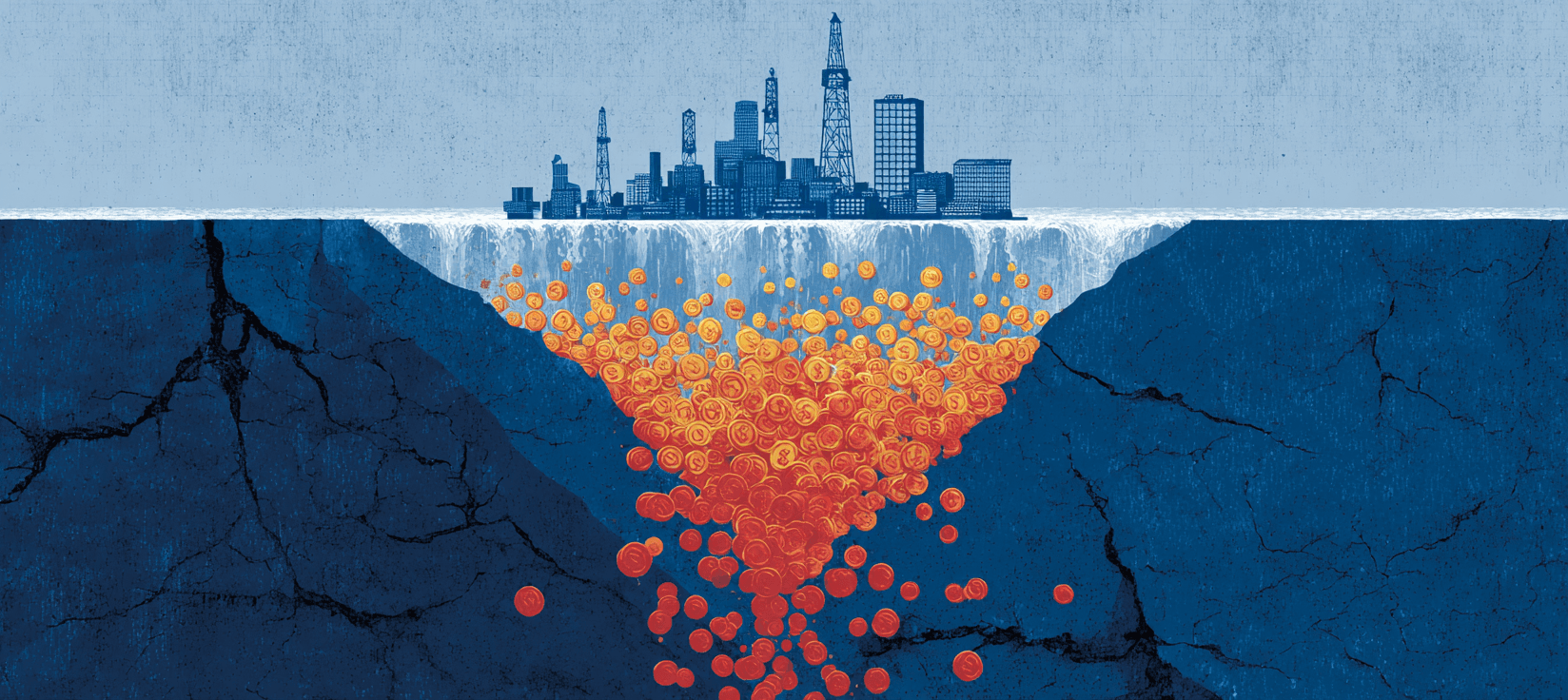
Downstream cell prices have absorbed only a fraction of the lithium carbonate surge since mid-2025; that suppression rested on low-cost inventory buffers now exhausting themselves, and new production runs at current lithium levels will force BESS cell spot higher over the next 60–90 days.
Application Grid
EV cells. No new publicly accessible spot assessment this week. Direction: ASP compression continuing. All three Korean majors (LGES, Samsung SDI, SK On) reported Q1 2026 operating losses, confirming margin erosion on EV cell shipments. LGES Q1 results showed QoQ revenue growth on 46-series cylindrical ramp but consolidated operating loss driven by EV pouch mix deterioration. No $/kWh ASP disclosed by any Korean maker. Last assessed: BNEF 2025 benchmark placed NMC pack prices at $128/kWh; no 2026 update publicly available.
BESS cells (Chinese domestic). CEEC 7 GWh tender shortlist (May 7) bids summarized below. These are shortlisted bids, not final awards. InfoLink 314Ah spot at 0.363 RMB/Wh average (March 20); April 20 headline: "prices stay stable." No May assessment publicly accessible. Direction: flat to down from the March peak, when top-tier quotes approached 0.40 RMB/Wh per SMM and Mysteel (March 11).
Defense-relevant formats. No update this week. Cylindrical and specialty prismatic not covered by CEEC or InfoLink ESS assessments.
Pack / system level. InfoLink DC-side liquid-cooled containerized ESS (2h) at 0.48 RMB/Wh average (March 20), up from 0.45 RMB/Wh in early January. Rate of increase decelerated from +3.3% (Jan 20 to Feb 6) to +1.1% (Feb 6 to Mar 20). April 20 InfoLink: "stable." Integrator margins compressing; InfoLink's April assessment noted:
"Rising lithium carbonate and cell prices have significantly compressed system integration margins" since Q4 2025.
The Synthesis
Lithium's second derivative turned. Downstream hasn't repriced.
Lithium carbonate hit RMB 200,500/MT on May 13, a two-year high, then pulled back approximately 5% intraweek to RMB 191,000 (approximately $26,500/ton at 7.2 RMB/USD). That retracement is the sharpest single-week reversal since the February limit-down events. The level remains extraordinary. From the 2024–2025 trough below RMB 80,000/MT, the May 13 peak represents appreciation of roughly 150%. The brief for this issue frames the move as ~200% from the June 2025 low; I cannot independently confirm the precise June 2025 baseline on publicly available data, but the order of magnitude is consistent.
Velocity profile: early December through late January 2026 delivered roughly 95% appreciation in under two months, per SMM. January to mid-May added approximately 50% YTD per Trading Economics. First derivative still positive. Second derivative negative and steepening. On the supply side, Trading Economics attributed the post-peak easing partly to producer restarts, including Mineral Resources' Bald Hill resumption after 18 months offline. InfoLink's April 20 assessment flagged Zimbabwe export normalization as a further potential easing signal, though with the caveat that supply gaps from earlier restrictions are "unlikely to be fully bridged in the near term."
The seaborne CIF spread cannot be resolved this week. Fastmarkets CIF was not publicly accessible; the most recent substitute is IMARC's April 2026 assessment placing Northeast Asia CIF at $18,210/ton. IMARC is not a tracked source for this publication and the figure is at least three weeks stale. Against Chinese domestic at approximately $26,500/ton, the implied domestic-to-CIF premium is roughly $8,000–9,000/ton. I flag this spread as directionally informative but not precisely quantifiable on current public data.
The CEEC tender spread
The 54-basis-point spread between Rongjie Energy's low bid and EVE Energy's high bid within Package 1 is the more revealing number from the CEEC 7 GWh tender. A 15.9% range within a single procurement event.
| Package | Format | Low Bid (RMB/Wh) | High Bid (RMB/Wh) | Spread |
|---|---|---|---|---|
| Pkg 1 | ≥314Ah | 0.340 (Rongjie Energy) | 0.394 (EVE Energy) | 15.9% |
| Pkg 2 | ≥500Ah | 0.360 (Pengcheng Infinite) | 0.383 (EVE Energy) | 6.4% |
This validates what Energy-Storage.News reported in March: a two-tier market where second-tier suppliers quote around 0.35 RMB/Wh while top-tier names approach 0.40. The structure persisted into May. Rongjie and Pengcheng Infinite (Package 2 low bidder) are not top-tier cell makers.
Against the prior CEEC tender in 2025, where SMM reported winning bids averaging 0.2764 RMB/Wh (Package 1) and 0.3182 RMB/Wh (Package 2), the May 2026 bids represent a 23–43% increase depending on bidder. Lithium carbonate more than doubled over the same period.
Lithium carbonate roughly doubled from the 2025 CEEC tender to the May 2026 tender. Cell bid increases of 23–43% imply only 30–50% of the upstream move has passed through to procurement pricing.
Stress-test the low bids. SMM's January 2026 theoretical cost model placed 314Ah cell cost at 0.3683 RMB/Wh when lithium was approximately RMB 117,000/MT. Lithium has since risen roughly 63% from that level. No post-January SMM cost update is publicly available. Editorial inference, clearly labeled: at RMB 191,000 lithium, Rongjie's 0.34 bid is almost certainly below current theoretical production cost. This is inventory-cost arbitrage or a loss-leader. Neither is sustainable at prevailing lithium prices.
The inventory buffer is the clock
Through Q1 and into Q2, Chinese cell makers produced against lithium inventories accumulated during the 2024–2025 trough, when battery-grade carbonate traded below RMB 80,000/MT. That cost basis, roughly 60% below current spot, is what allowed the pass-through ratio to compress to 0.3–0.5x without destroying cell-maker margins entirely.
That buffer is exhausting itself. InfoLink's April 20 assessment noted rising input costs compressing system integrator margins since Q4 2025. The MIIT's April 9 symposium, convening four ministries, explicitly reinforced anti-price-war measures at cell and system levels. Policy and cost pressure now push in the same direction.
New production runs face current input costs. The 60–90 day window before this surfaces in spot assessments reflects the typical lag structure: cathode producers carry 4–8 weeks of lithium inventory before delivering precursor material to cell makers, whose own production cycles add another 2–4 weeks before finished cells reach the market and are captured in assessment windows. If lithium holds in the RMB 175,000–195,000 range through June, theoretical 314Ah cell cost is materially above the January 0.37 RMB/Wh figure. This is editorial inference from the input-cost trajectory, not a published number. The CEEC low bids of 0.34–0.36 become untenable at volume. The top-tier bids near 0.39–0.40 start looking like bare cost reality.
Korean losses as the US-landed margin buffer
Samsung SDI reported a KRW 176.6 billion battery segment operating loss in Q1. LGES posted a consolidated operating loss driven by EV pouch mix deterioration, even as ESS and cylindrical EV shipments grew QoQ. These losses are the margin absorption layer between upstream cost pressure and US-landed pricing. Korean makers are eating the gap to hold customer relationships while pivoting into ESS.
That pivot reshapes US procurement options:
- LGES targets 50+ GWh of North American ESS capacity by end-2026 across five sites, three already operational (Holland MI, Windsor ON, Lansing MI).
- Samsung SDI targets 30 GWh. Mirae Asset projects ESS-related AMPC credits rising from KRW 72B (2025) to KRW 439B (2026) to KRW 1.1T (2027). NH Investment & Securities estimates full-year 2026 ESS shipments at 22 GWh, with ESS sales growing 53% YoY. Management targets a return to battery segment operating profitability in H2 2026.
No Q1 ESS GWh shipment actuals were disclosed by either company; these are analyst projections and management targets, not confirmed volumes.
The AMPC credit structure subsidizes the Korean cost base directly, partially offsetting margin losses and creating FEOC-compliant ESS supply scaling into a US market where Chinese cells face tariff barriers. If those capacity and credit projections hold, US-landed ESS cell pricing from FEOC-compliant sources may decouple further from Chinese domestic spot. The pass-through gap would then operate on different mechanics depending on sourcing geography: Chinese domestic governed by inventory exhaustion and SOE procurement discipline; US-landed governed by Korean margin recovery timelines and AMPC credit flows.
The ceiling holds for now. The inventory buffer that supports it has a visible expiration date. If lithium stays above RMB 175,000 through Q3, the arithmetic forces the gap closed.
Things to follow up on...
-
CATL's upstream lock-in: CATL signed a six-year, RMB 120 billion cathode material procurement agreement with Ronbay New Energy that drew an immediate inquiry from the Shanghai Stock Exchange questioning the contract's feasibility, a structural signal that the world's largest cell maker is pricing in sustained lithium elevation.
-
Cell-share shrinkage in BESS capex: S&P Global's Paola Perez Peña argues that cells and modules now account for only 25–45% of total BESS capex in 2026, down sharply from early-2020s levels, which explains why the lithium surge has had limited impact on all-in system economics so far.
-
EV-to-ESS line conversions: US industry executives describe the EV sales collapse as freeing battery cell capacity for BESS procurement, with Arevon Energy's COO noting that slower EV uptake is redirecting supply into energy storage at a moment when FEOC-compliant cell availability is the binding constraint.
-
China's price-war enforcement gap: Three government symposiums since November 2025 have pledged crackdowns on below-cost battery pricing, yet the April session still prompted a 6.7% rally in CATL shares rather than visible enforcement, and the May CEEC tender attracted bids that likely sit below current theoretical production cost.