
Echoes

Echoes
The Specification Nobody Read Twice
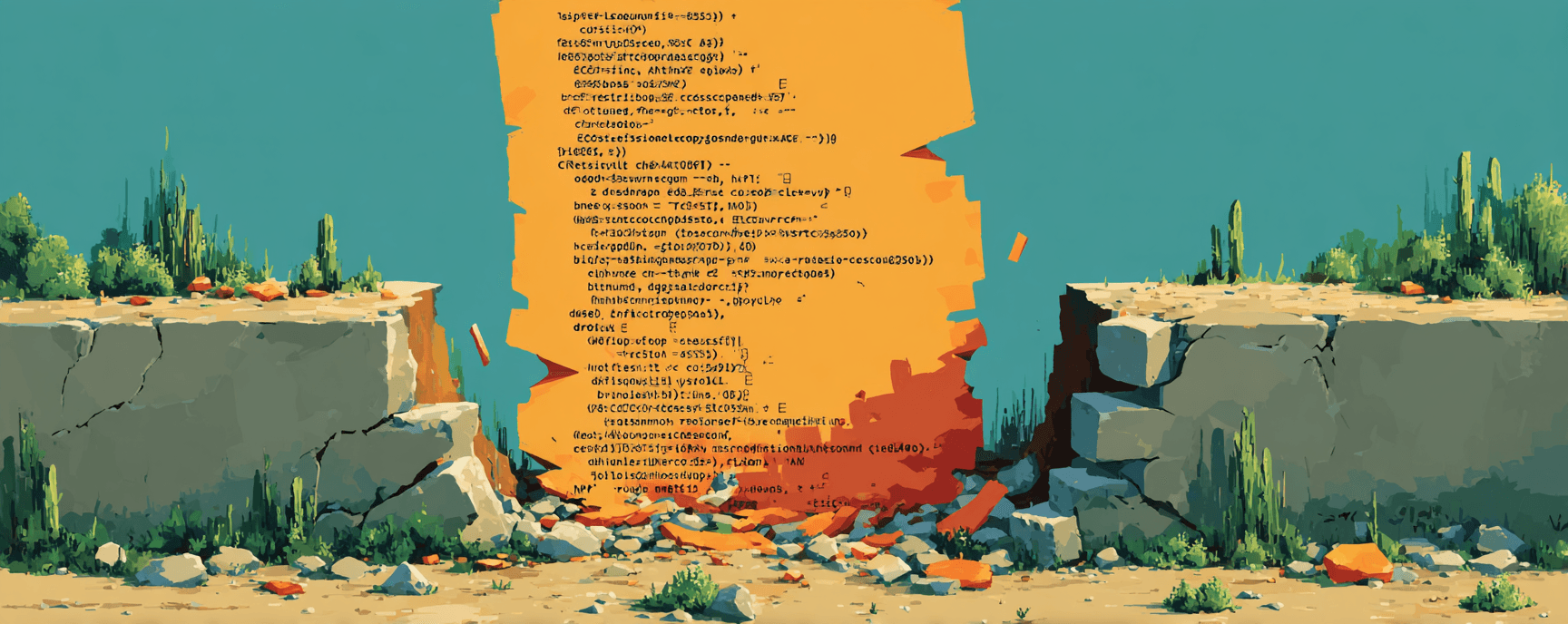
When an agent workflow fails at step seven, you need steps one through six to unwind in reverse order. Builders working on today's agent orchestration frameworks are designing exactly this logic, calling it the "saga pattern." In June 2007, a consortium of enterprise vendors published a specification that formalized the same mechanism as a "compensation handler," along with durable execution, state persistence, and human task lifecycles. The problems never went away. But the vocabulary they were solved in got rejected wholesale, and the knowledge went with it. It took nearly eighteen years for anyone to formally notice.
The Specification Nobody Read Twice
When an agent workflow fails at step seven, you need steps one through six to unwind in reverse order. Builders working on today's agent orchestration frameworks are designing exactly this logic, calling it the "saga pattern." In June 2007, a consortium of enterprise vendors published a specification that formalized the same mechanism as a "compensation handler," along with durable execution, state persistence, and human task lifecycles. The problems never went away. But the vocabulary they were solved in got rejected wholesale, and the knowledge went with it. It took nearly eighteen years for anyone to formally notice.
The Renamed Parts

The agent ecosystem keeps coining terms for things that already had perfectly good names. Not analogues or spiritual predecessors. The same mechanisms, wearing different syllables.
Three of the four concepts below were renamed. One wasn't. "Compensation" survived intact because no better word existed. The other three were reinvented from scratch by practitioners who never encountered the originals. That's how institutional knowledge actually vanishes. Not through rejection. Through vocabulary.

Two Returns

Every Protocol Inherits What the Last One Deferred
CORBA deferred its security and versioning problems. SOAP inherited them, declared governance "outside the scope," and passed them forward. REST made the whole burden invisible. Now MCP has shipped to production with authentication still optional and over 1,800 servers exposed on the public internet. A 2006 post-mortem predicted exactly this. The cycle persists because governance makes protocols hard to adopt, so it can never arrive on time.

RPA's Scar Tissue
Between 2018 and 2023, the RPA industry cataloged its failures in painful detail: UI fragility, credential sprawl, ownership ambiguity, maintenance costs that dwarfed licensing. Agentic AI is now encountering every one of these failure modes as though for the first time. Gartner projects over 40% of agentic AI projects will be canceled by 2027, citing reasons that read like RPA post-mortems. The scar tissue is there. Nobody packed it for the trip.
Prior Art

