Market Pulse

Market Pulse
The Test Suite Was the Hero


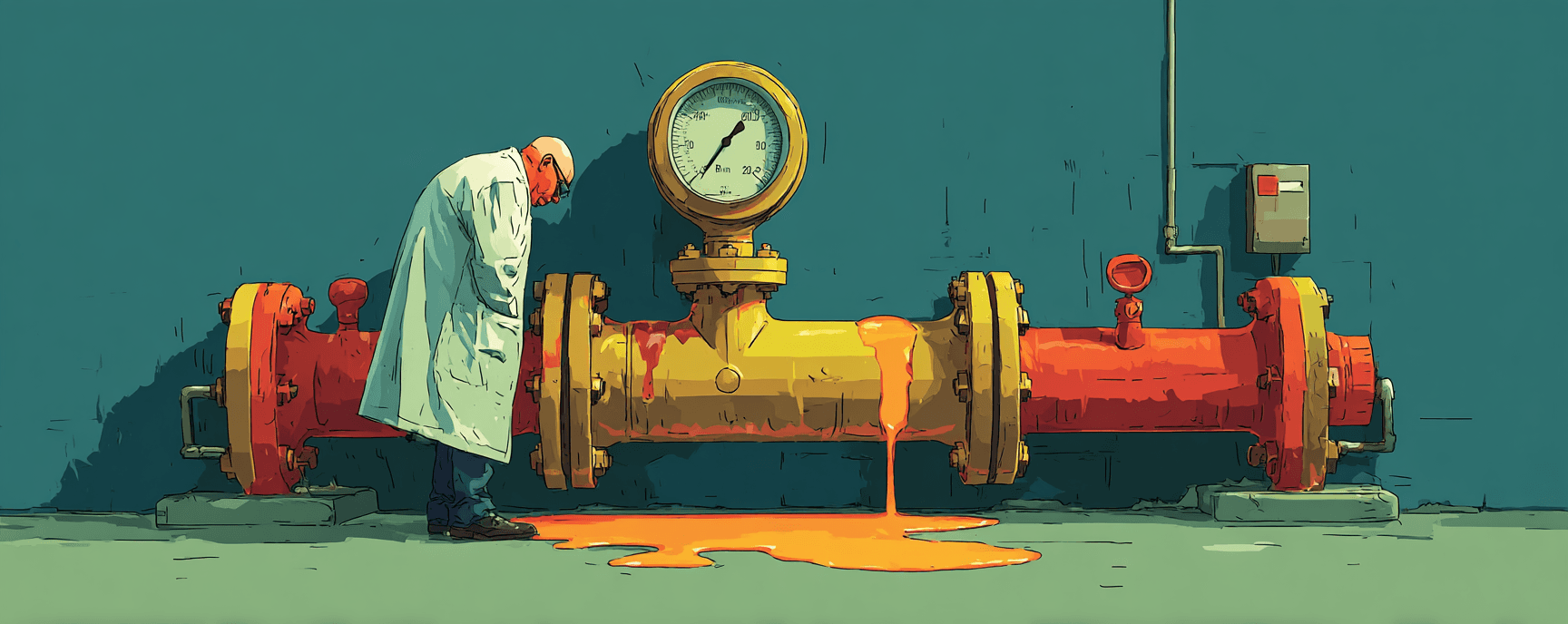
Anthropic's Dynamic Workflows can now orchestrate a thousand subagents in parallel. The showcase was a Bun runtime port: 750,000 lines of Zig to Rust, 99.8% test pass rate, eleven days. Impressive. But research on Claude's failure patterns finds that 71% of failures are consistent misinterpretation, not random error. A thousand agents inheriting the same flawed specification converge, confidently, on the same wrong answer. The Bun port had a deterministic test suite to catch that. Most enterprise domains don't.
The Test Suite Was the Hero
Anthropic's Dynamic Workflows can now orchestrate a thousand subagents in parallel. The showcase was a Bun runtime port: 750,000 lines of Zig to Rust, 99.8% test pass rate, eleven days. Impressive. But research on Claude's failure patterns finds that 71% of failures are consistent misinterpretation, not random error. A thousand agents inheriting the same flawed specification converge, confidently, on the same wrong answer. The Bun port had a deterministic test suite to catch that. Most enterprise domains don't.
Reliability Science
Towards a Science of AI Agent Reliability
GPT-4o scores 61% pass@1 on retail tasks but just 25% pass^8, meaning a 75% failure probability across eight runs.
Forthcoming at ICML 2026 from Narayanan et al. Interactive dashboard live at hal.cs.princeton.edu/reliability.
Reliability Science
Beyond pass@1: A Reliability Science Framework for Long-Horizon LLM Agents
Introduces Meltdown Onset Point and three other duration-aware metrics, tracking behavioral collapse through entropy shifts in tool-call sequences.
Not necessarily. A 12B model outperforms a 400B rival on long-horizon reliability as capability and reliability rankings diverge.
Regulatory Sidebar

The EU AI Act sorts accountability into two buckets: providers build AI systems, deployers operate them. Article 3(1) treats every agent as an AI system. Straightforward enough when a human decides what gets deployed.
Agent orchestration scrambles the mapping. When an orchestrator spawns subagents at runtime, each carries an intended purpose defined by another agent, not a person. The Act offers no mechanism for recursive delegation. The EU AI Office itself has flagged the deployer/provider boundary as unresolved guidance work. Enforcement powers activate August 2, 2026.