
When Farmers Started Watching Their Neighbors' Dirt
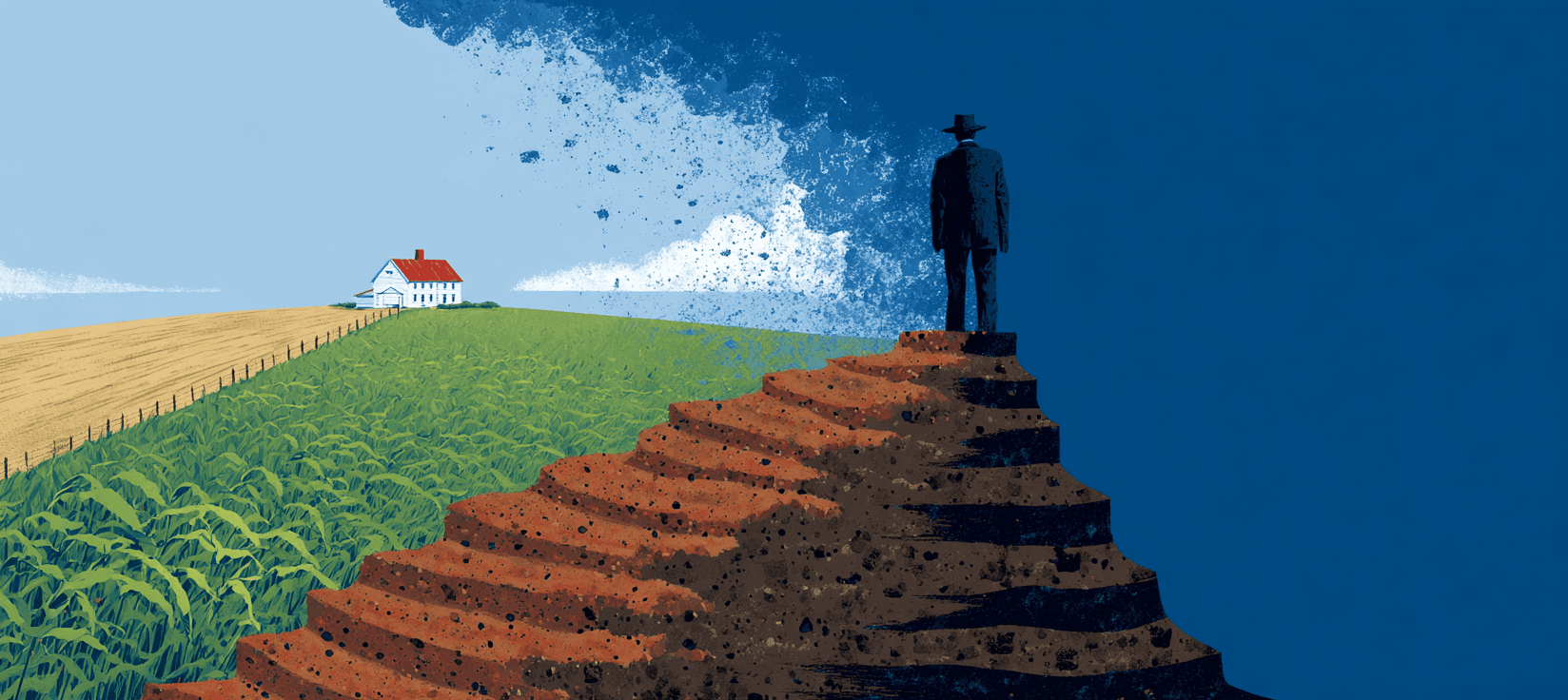
During the dust storms of 1935, farmers across the Texas Panhandle kept noticing the same thing at their fence lines: while their own topsoil lifted off in black clouds, those government demonstration plots with the strange contoured rows stayed put. You could watch the difference with your own eyes.
They'd ignored the expert reports for years. Fifty-nine reports over a decade, documenting these exact techniques. But standing at that fence line, watching your neighbor's dirt hold while yours blew past your window—that changed how adaptation actually spreads when your livelihood is disappearing into the next county.
When Farmers Started Watching Their Neighbors' Dirt
During the dust storms of 1935, farmers across the Texas Panhandle kept noticing the same thing at their fence lines: while their own topsoil lifted off in black clouds, those government demonstration plots with the strange contoured rows stayed put. You could watch the difference with your own eyes.
They'd ignored the expert reports for years. Fifty-nine reports over a decade, documenting these exact techniques. But standing at that fence line, watching your neighbor's dirt hold while yours blew past your window—that changed how adaptation actually spreads when your livelihood is disappearing into the next county.

An Interview with the Village Elder Who Chose Who Might Live
CONTINUE READINGHistory Echoes This Week
Buenos Aires in January 1871 had no drainage system, no running water, cesspools contaminating groundwater. Colonial infrastructure meeting industrial-era density.
Yellow fever arrived from Paraguay. Daily deaths peaked at 583 on April 10. The city owned forty funeral carriages. Garbage carts became hearses. Mass graves opened in what had been parks. By June, roughly 13,500 people were dead—eight percent of the population gone in five months.
English engineer John Bateman started building water and sewerage networks in 1874. Wealthy residents who fled San Telmo for northern districts never came back. The epidemic didn't just kill people. It permanently rewired the city's geography, its class structure, its relationship to basic services.
American cities average a billion-dollar climate disaster every fifteen days now. Infrastructure built for different weather keeps meeting weather it wasn't designed for.