

UNITED STATES DEPARTMENT OF AGRICULTURE Natural Resources Conservation Service
Map Unit FoB — Forgan fine sandy loam, 1 to 3 percent slopes NW¼ Sec. 14, T3N, R26ECM, Beaver County, Oklahoma
Field Assessment — March 2026
Assessment initiated in response to Ranger Road Fire, February 17–24, 2026. Burn area: 283,283 acres, Beaver and Harper Counties, OK; Clark, Comanche, and Meade Counties, KS. USDM classification at ignition: D3 (Extreme). USDA-FSA disaster designations on file, Beaver County: 2023, 2024, 2025. Emergency Conservation Program activation pending.
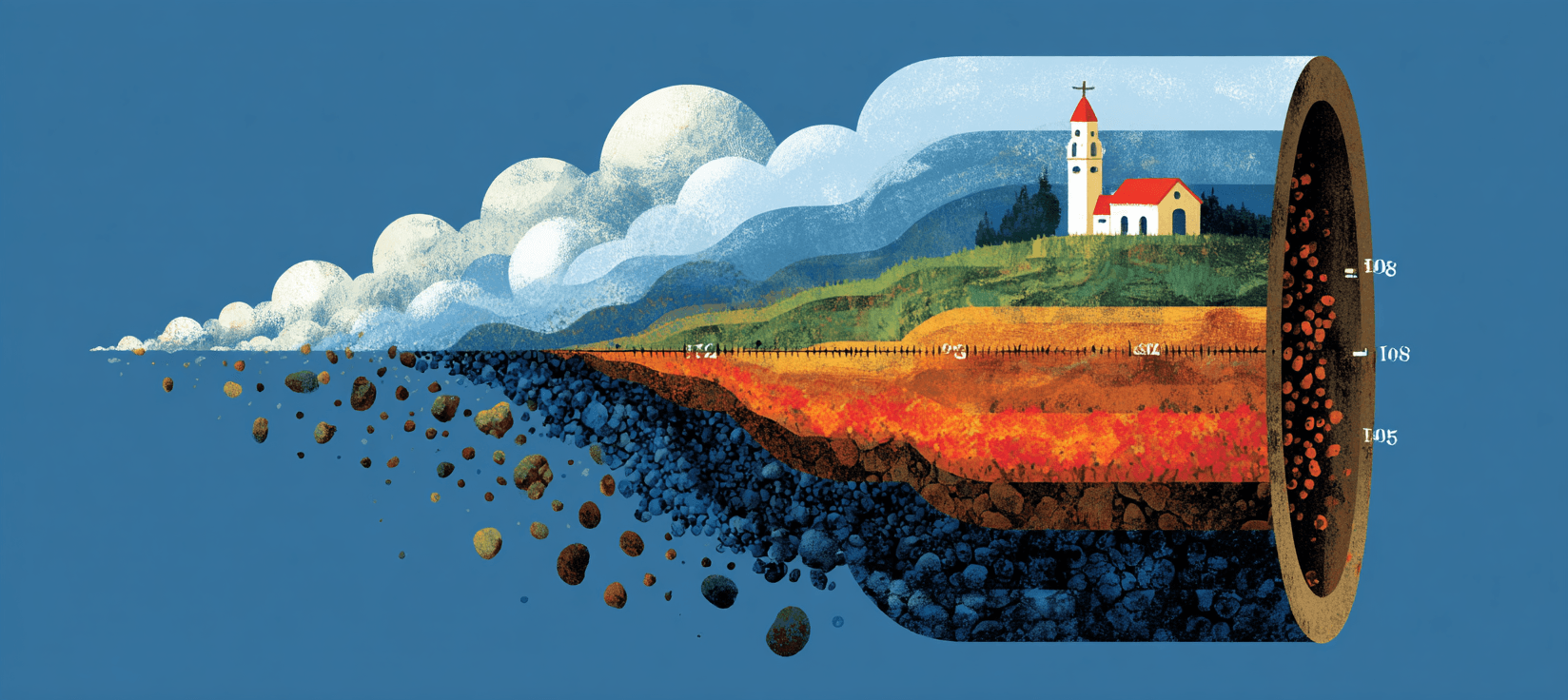
A — 0 to 8 cm (0 to 3 in); yellowish brown (10YR 5/4) fine sandy loam, dark yellowish brown (10YR 4/4) moist; structureless to weak fine subangular blocky; soft, very friable; no roots observed; surface charred; biological soil crust absent; strongly alkaline, pH 8.6. Abrupt smooth boundary.
Bt — 8 to 46 cm (3 to 18 in); brown (7.5YR 5/4) sandy clay loam, brown (7.5YR 4/4) moist; weak medium prismatic structure; slightly hard, friable; few faint clay films on vertical ped faces; noneffervescent; moderately alkaline, pH 8.2.
Drainage class: Somewhat excessively drained. Available water capacity: Low (0.10–0.14 in/in). Runoff class: High. Estimated soil organic carbon, 0–30 cm: 0.3%.
Land capability classification: VIIe. Wind erodibility group: 2.
Ecological site: Loamy Tableland (R077CY025OK). Current community phase: Bare/Eroded State. Vegetative cover: None observed. Surface litter and duff consumed. Annual production: Not determined. No seed bank viability assessment conducted.
Revised Entry — 2024
USDM classification D2–D3 continuous April through October. USDA-FSA disaster designation, Beaver County, contiguous.
A — 0 to 14 cm (0 to 6 in); brown (10YR 4/3) fine sandy loam, dark brown (10YR 3/3) moist; weak medium granular structure; slightly hard, very friable; few fine roots; noneffervescent; moderately alkaline, pH 8.0. Clear smooth boundary.
Bt — 14 to 51 cm (6 to 20 in); brown (7.5YR 5/4) sandy clay loam, brown (7.5YR 4/4) moist; moderate medium prismatic structure parting to moderate medium subangular blocky; hard, friable; common faint clay films on ped faces; noneffervescent; moderately alkaline, pH 8.2.
Drainage class: Well drained. Available water capacity: Low (0.12–0.16 in/in). Runoff class: Medium. Estimated soil organic carbon, 0–30 cm: 0.6%.
Land capability classification: VIe. Wind erodibility group: 3.
Ecological site: Loamy Tableland (R077CY025OK). Current community phase: Shortgrass Sod State. Dominant species: blue grama (Bouteloua gracilis), buffalograss (Buchloe dactyloides). Cool-season midgrasses absent. Annual production: 475 lbs/acre air-dry (38% of reference). Biological soil crust: Discontinuous, degraded.
Revised Entry — 2012
A — 0 to 23 cm (0 to 9 in); dark grayish brown (10YR 4/2) fine sandy loam, very dark grayish brown (10YR 3/2) moist; moderate medium granular structure; slightly hard, very friable; common fine and medium roots; noneffervescent; slightly alkaline, pH 7.8. Clear smooth boundary.
Bt1 — 23 to 56 cm (9 to 22 in); brown (7.5YR 5/4) sandy clay loam, dark brown (7.5YR 4/4) moist; moderate medium prismatic structure parting to moderate medium subangular blocky; hard, friable; common distinct clay films on ped faces; noneffervescent; moderately alkaline, pH 8.0.
Drainage class: Well drained. Available water capacity: Moderate (0.14–0.18 in/in). Runoff class: Low. Estimated soil organic carbon, 0–30 cm: 1.1%.
Land capability classification: IVe. Wind erodibility group: 4.
Ecological site: Loamy Tableland (R077CY025OK). Current community phase: Mixed Grass State, trending toward Shortgrass Sod. Dominant species: blue grama, buffalograss, sideoats grama (Bouteloua curtipendula), western wheatgrass (Pascopyrum smithii). Annual production: 850 lbs/acre air-dry (68% of reference).
Original Survey — 1977
Forgan series established, Beaver County, Oklahoma.
A — 0 to 30 cm (0 to 12 in); very dark grayish brown (10YR 3/2) fine sandy loam, very dark brown (10YR 2/2) moist; moderate medium granular structure; slightly hard, very friable; many fine and medium roots throughout; noneffervescent; neutral, pH 7.2. Gradual smooth boundary.
Bt1 — 30 to 64 cm (12 to 25 in); brown (7.5YR 5/4) sandy clay loam, dark brown (7.5YR 3/4) moist; moderate coarse prismatic structure parting to moderate medium subangular blocky; hard, firm; many distinct clay films on ped faces and in pores; noneffervescent; slightly alkaline, pH 7.6.
Drainage class: Well drained. Available water capacity: Moderate (0.16–0.20 in/in). Runoff class: Low. Estimated soil organic carbon, 0–30 cm: 1.8%.
Land capability classification: IIIe. Wind erodibility group: 5.
Ecological site: Loamy Tableland (R077CY025OK). Current community phase: Reference State. Dominant species: blue grama, buffalograss, sideoats grama, western wheatgrass, little bluestem (Schizachyrium scoparium), sand dropseed (Sporobolus cryptandrus). Forbs 10%, including prairie clovers (Dalea spp.) and dotted gayfeather (Liatris punctata). Annual production: 1,250 lbs/acre air-dry.
Things to follow up on...
-
Heat triggers drought now: A new study in Science Advances found that compound extremes where heat arrives first and triggers drought have increased from 2.5% to 16.7% of Earth's land since the 1980s, with a "change point" around 2000 eerily coincident with rapid Arctic warming.
-
Forty percent under drought: More than 40% of the U.S. is experiencing drought heading into spring 2026, and the Southern Plains fire season that produced the Ranger Road Fire is compounding with warm-winter conditions that shattered Oklahoma temperature records by nearly 9°F in February.
-
Livestock relief, final payments: The USDA Farm Service Agency issued final Emergency Livestock Relief Program payments totaling $1.89 billion for 2023–2024 flood and wildfire losses, while Beaver County ranchers affected by the Ranger Road Fire navigate a new round of the same paperwork.
-
FEMA cuts during fire season: Emails obtained by the Washington Post outline plans to slash thousands of FEMA disaster response roles in 2026, a gutting that arrives as the Oklahoma Cattlemen's Association stands up its own relief fund for fire-affected producers because the federal backstop is disappearing.