
When the Sky Made the Case


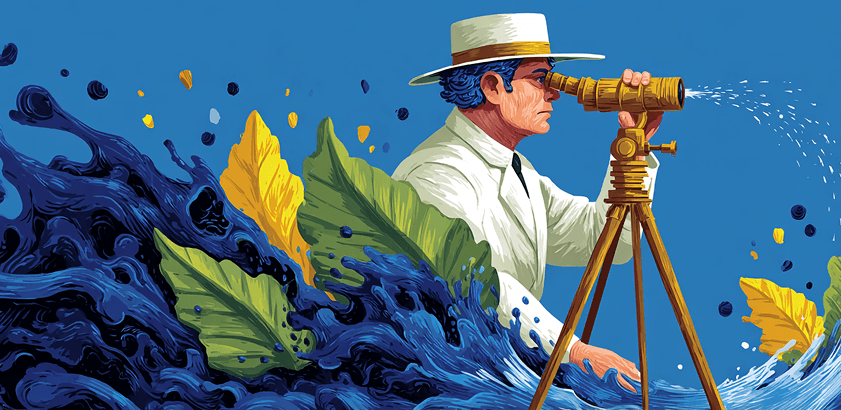
My mother tracked storm systems days out—pressure gradients, trajectory calculations, knowing when weather would hit before anyone felt the first drops. Bennett had the same erosion data in 1928 that he showed Congress in 1935. Same measurements, same projections. What changed was a dust storm arrived mid-testimony and senators had to breathe Kansas topsoil. He'd been stalling, waiting for it.
That convergence—technical evidence meeting physical experience—moved policy in weeks after decades of documented crisis. But it also set a template we're still stuck in: waiting for disaster to make the case instead of acting on projections. Most climate impacts won't cooperate that way. They're building in systems we can measure but not yet feel, and by the time they're undeniable enough to move policy at scale, we'll be responding to conditions we could have prevented.
When the Sky Made the Case
My mother tracked storm systems days out—pressure gradients, trajectory calculations, knowing when weather would hit before anyone felt the first drops. Bennett had the same erosion data in 1928 that he showed Congress in 1935. Same measurements, same projections. What changed was a dust storm arrived mid-testimony and senators had to breathe Kansas topsoil. He'd been stalling, waiting for it.
That convergence—technical evidence meeting physical experience—moved policy in weeks after decades of documented crisis. But it also set a template we're still stuck in: waiting for disaster to make the case instead of acting on projections. Most climate impacts won't cooperate that way. They're building in systems we can measure but not yet feel, and by the time they're undeniable enough to move policy at scale, we'll be responding to conditions we could have prevented.

History Echoes This Week

Scientists can now calculate something we rarely see quantified: the actual price of environmental hesitation. If researchers had discovered the Antarctic ozone hole just five to ten years later than 1985, the UK alone would face 300 additional skin cancer cases every year by 2030. That's £550 million annually in today's money. The ozone hole is healing because the Montreal Protocol banned CFCs within two years of discovery.
This week brought different math. None of the 45 indicators tracking climate action are on pace for 2030 targets. Atmospheric CO2 jumped 3.5 ppm from 2023 to 2024—the largest single-year increase since measurements began in 1957.
The ozone precedent matters not because climate action should be easy, but because it's one of the few times we can point to a spreadsheet and say: here's what waiting costs in pounds sterling and human skin. The Montreal Protocol worked because the threat was visible, the solution was clear, and industry alternatives existed. Climate action has none of those advantages, which makes the current stall both predictable and expensive in ways we're only beginning to calculate.
Historical Climate Insights
Five Thousand Years of Adaptation Data
Past success stories involved climate shifts orders of magnitude smaller than what we're navigating now.
Whether technological dependence creates hidden vulnerabilities that historical analysis can't predict.
Historical Climate Insights
The Language We Inherited Constrains What We See
The frameworks we use to discuss climate response aren't neutral tools but inherited structures that enable or foreclose possibilities.
Historical communities had resilience concepts that modern terminology has obscured or eliminated from consideration.
Historical Climate Insights
Ancient Drought Collapses Show Flexibility Beats Resources
Centralized, inflexible empires with elaborate infrastructure collapsed fastest when climate shifted suddenly.
Social flexibility mattered more than technological sophistication or resource abundance when conditions changed.
Historical Climate Insights
Archaeologists Mine Climate Crises as Natural Experiments
Material evidence of risk management strategies and visible changes in settlement patterns after climate stress.
Political and economic conditions when the crisis hits matter more than the magnitude of environmental change.