

Both of these stories involve disaster programs that exist on paper, funded with money Congress has already appropriated. The question in each case is who has to do what, and in what order, before any of it reaches the person standing in the wreckage.
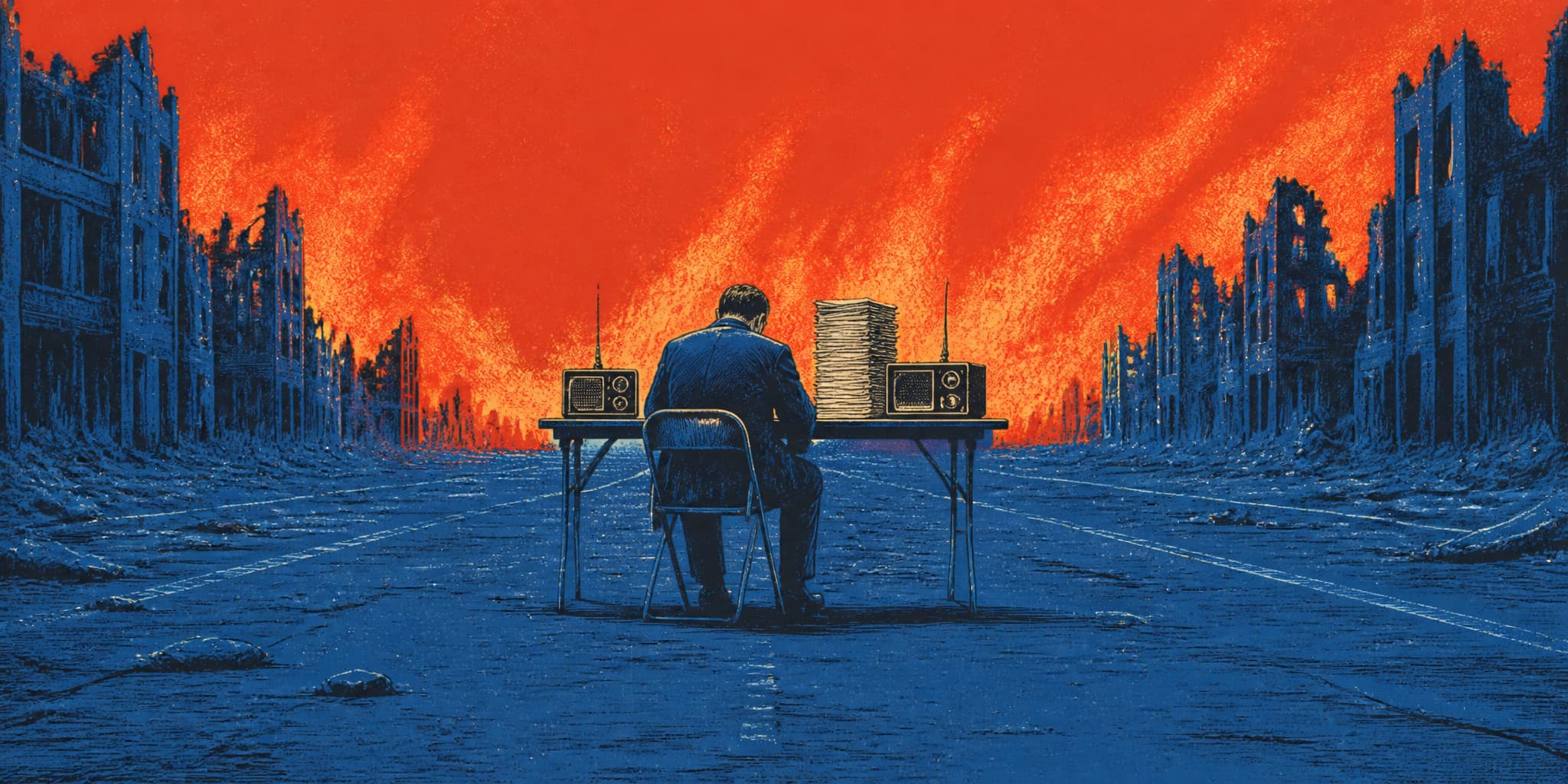
A reporter found William "Whitty" Whitmer behind a folding table in Ravenswood on August 29. He'd been there about two weeks by then. He had a couple of radios. Nobody had appointed him, nobody was paying him, and he'd missed close to two weeks at the job that does pay him. In front of him was a neighborhood along the White River where three to four feet of water had come through the main floors of dozens of houses, and somebody had to coordinate the volunteers, the public-health workers, the supply trucks, and the daily calls about what got torn out and what got saved.
So he sat there and did it.
Ravenswood is an Indianapolis neighborhood on the White River. Rocky Ripple, just upstream, is a tiny unincorporated town with its own council, its own marshal, and its own evacuation plan, sitting in a floodplain surrounded by the city. Both got hit when the river came up on August 14 and 15. By August 21, city inspectors had documented flood damage at 552 residences. Two hundred thirty-six were classified structurally unsafe.
The first thing that went wrong in Rocky Ripple, though, had nothing to do with how high the water got.
The gate
Around 12:30 a.m. on August 15, residents got an emergency alert telling them to evacuate because the Department of Public Works would be "closing the flood gates." Rocky Ripple has two of them, one at 52nd Street and one at 53rd. The 53rd Street gate is the town's primary way out. Firefighters came through with sirens and loudspeakers. What residents understood from all this was that the city was about to seal them inside a flooding town.
It wasn't. DPW later said it never ordered the 53rd Street gate closed. Its own messages, sent at 1:01 and 1:44 a.m., specified only the 52nd Street gate. A city-county councilor eventually got on the phone and sorted out which gate was actually closing. But for a stretch of that night, the people most at risk from the flood believed the government was locking them in with it.
Town Marshal Mike Kiefer said the river reading that night ran about three feet below the threshold DPW had historically given for gate closure. DPW acknowledged that its flood response plan contains water-level triggers for more than a hundred structures, but it hasn't released the plan or the gate-specific numbers. A multi-agency after-action review was promised. As of this writing, it hasn't appeared.
So whatever the real margin was that night, and how close the 53rd Street gate came to its trigger, sits in a document nobody outside the agency can read. Residents have the night they lived through. The agency has the numbers. Nobody has put the two on the same page.
The mold clock
While the institutional side was working out which gate was closing and who had the authority to say so, residents organized their own response. In Rocky Ripple, they gutted at least 30 houses by the Tuesday after the flood, hauling out possessions, cutting wet drywall, bleaching what was left. This is demolition work on a mold-prevention deadline. Wet drywall that sits becomes a health hazard, and mold is measured in days. Formal assistance is measured in weeks.
In Ravenswood, Methodist disaster response teams rotated through from August 19 into September, mucking and gutting. Dozens of homes across Ravenswood and nearby New Castle still needed cleaning and salvage three weeks after the water went down. By September 2, a resident named Becca Panyard, herself displaced to an Airbnb, was running a donation hub at Riverwood Park, handing out food, water, cleaning supplies, and protective gear. She told Indianapolis Monthly that the city was sending garbage trucks daily for debris, but that basic needs and organization still came down to residents.
That word "residents" does a lot of heavy lifting. It means people doing skilled, unpaid, physically brutal work on an emergency schedule while trying to figure out their own wrecked houses, lost income, and scattered families.
The federal clock
FEMA's disaster declaration, DR-4933, came on August 25, eleven days after the river crested. By September 9 the state reported $47.7 million in Individual Assistance paid or allocated statewide, with 3,631 applications approved across 21 eligible counties. Those are statewide figures. How much reached Marion County, or Ravenswood in particular, isn't broken out anywhere public.
Frank Gounder lives in Ravenswood. The flood took his HVAC, his hot water, his appliances, and the furniture and equipment he used for a home-based business. In early September he was sleeping on an air mattress and cutting out his own walls to save on contractor costs. No flood insurance. His child and pregnant girlfriend were staying elsewhere. He told WRTV he was focused on getting the house livable enough for his family to come back, and that air conditioning would have to wait.
Ken Klingenmeier, another Ravenswood resident, wrote on September 8 that nineteen days after his house sat in river water, it had been emptied, dried, and re-walled. Painting, flooring, and moving back were still ahead of him. He figured four days to two weeks before he could go home.
The trouble with competent people
Earlier this year I wrote about Philadelphia schools sending kids home on heat days, and the hours of unpaid work one institutional decision hands to the families who absorb it. Ravenswood and Rocky Ripple are the same handoff at a larger size. The institution finishes its part, whether that's an alert, a declaration, or an application portal, and the neighborhood covers the whole distance between that and a house somebody can sleep in.
The trouble with competent people is that they make a broken system look like it works. There won't be a mold crisis to investigate in Rocky Ripple, because the drywall came out before the mold came in. No distribution failure will show up in Ravenswood, because Panyard was running supplies out of a park while living in a rented room. Whitmer covered the coordination from a folding table with two radios.
Labor Day was three days ago, a holiday set aside for honoring people who work. Whitmer gave up two weeks of paid work to do work nobody was paying for, and Gounder is cutting out his own walls because a contractor is out of reach. The after-action review that might show what the official system actually did and didn't do that night is still unpublished.
The work got done. What nobody in a position of authority seems interested in asking is who did it, what it cost them, and what happens the next time if those particular people aren't around.