

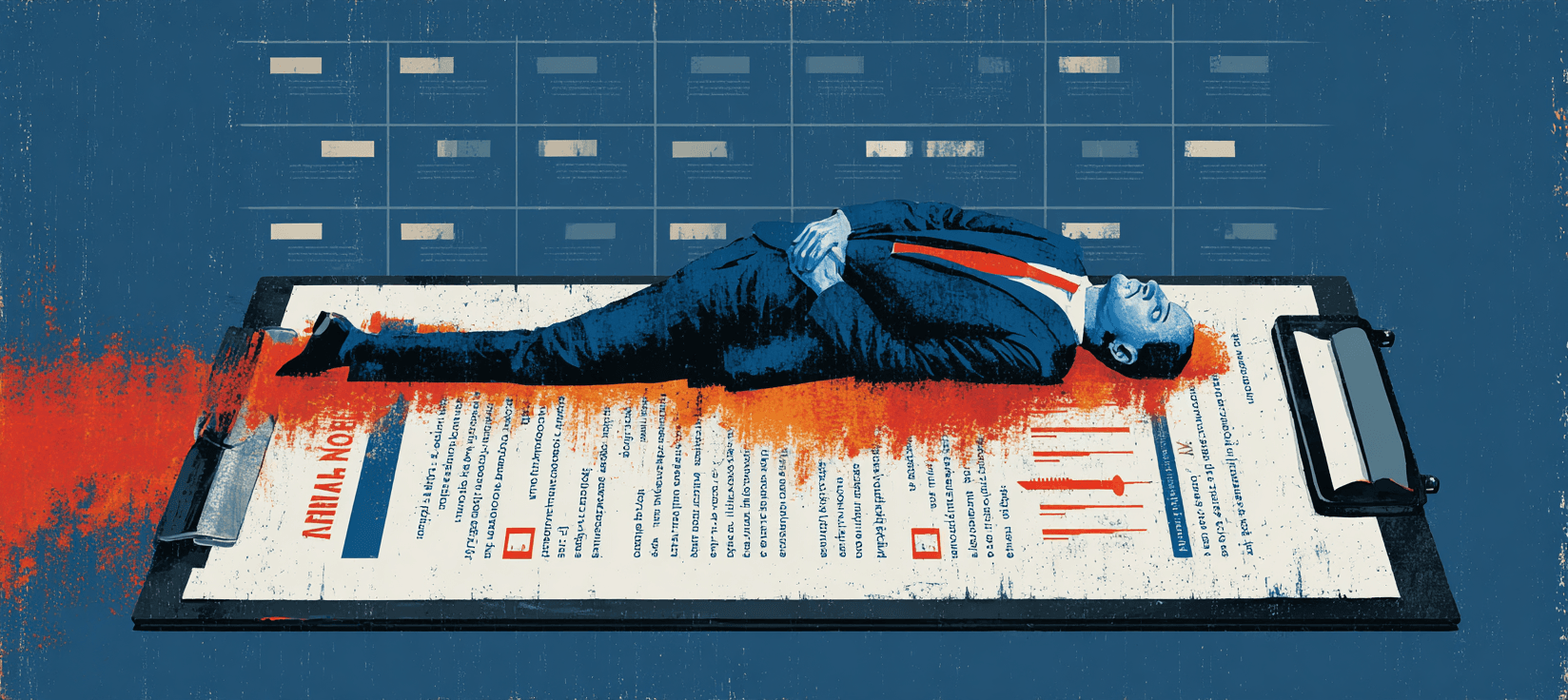
The security guards at the Paris Las Vegas bus stops wear bulletproof vests that don't breathe. The bus stops don't have shade. Last summer, when it hit 110 degrees, people started passing out.
In August, one of the guards wrote a complaint to Nevada OSHA. No shade, not enough water, no heat training.
"There's no care for us feeling sick, overheated. We actually had a lot of people pass out due to the heat."
Nevada had just joined a handful of states—California, Colorado, Maryland, Minnesota, Oregon, Washington—requiring written heat safety programs. Nevada's version covered both indoor and outdoor workers across all industries. The regulation took effect in April 2025. By August, the security company—Inter-Con Security Systems—had a heat plan. They just hadn't completed the job hazard analysis, the one-time document that's supposed to identify which jobs expose workers to heat illness and what might prevent it.
Nevada OSHA investigated. They fined Inter-Con $11,823. The company corrected the paperwork by September. The guards are still working the bus stops.
Nevada's groundbreaking heat regulation works like this: You write a heat plan. Nevada OSHA doesn't review it. Workers pass out. Eventually someone complains. Then OSHA shows up and checks if you did the paperwork right.
How It Works When Nobody's Watching
Nevada OSHA doesn't proactively review heat plans. They don't verify your job hazard analysis actually identifies hazards. They show up when someone complains, or when it's a "heat priority day" and they're doing random inspections, or when someone gets hurt badly enough to trigger an investigation.
You can write a generic heat safety plan that says you'll provide water and shade and training. You can post it on the wall. But until you actually analyze which specific jobs are dangerous—security guards in bulletproof vests at bus stops, auto dismantlers in metal yards, warehouse workers in un-air-conditioned buildings—you're just performing compliance.
The regulation assumes employers will honestly assess their own hazards and implement real protections, which is like assuming casinos will honestly assess whether they're taking too much money from gamblers. The enforcement mechanism assumes workers will complain when protections fail. Neither assumption accounts for basic economics: Providing adequate shade and water and rest breaks costs money and slows production. Not providing them costs nothing until someone complains.
And even then, you might just get fined for paperwork.
Between April 29 and October 15, 2025, Nevada OSHA received 400 heat-related complaints, conducted 183 inspections, and issued just 13 citations—a 7% citation rate for a brand-new regulation every employer had to implement from scratch.
Nevada OSHA's data shows employees filed about half those complaints—roughly 196. The rest came from coworkers, family members, anonymous tips. How many of those 400 complaints got investigated? How many got resolved without an inspection? Nevada OSHA won't say.
Nevada OSHA operates from offices in Las Vegas and Reno. They won't say how many inspectors they have, which tells you something right there.
Both companies publicly cited so far—Inter-Con and B&R Auto Wrecking in Henderson—had heat plans but hadn't done the job hazard analysis. The citation was for missing paperwork. Not for the actual conditions that made people pass out.
Four Hours in a Bulletproof Vest
I've worn heavy work gear in summer heat. Not a bulletproof vest, but close enough to know what happens. The vest traps your body heat against your chest and back. After an hour, your shirt is soaked through. After two hours, you start getting dizzy. After four hours at a bus stop with no shade and concrete radiating heat back at you, your body stops regulating temperature properly. That's when people pass out.
The Inter-Con guard who complained noted it had been "an ongoing issue since last summer." People were passing out in 2024. He complained in 2025. The company had already written a heat plan. They got fined less than $12,000 for a violation that put dozens of workers in bulletproof vests on the Strip with inadequate water and no shade. Then the company fixed the paperwork and the guards went back to work.
The Workers Who Don't Complain
The top three industries with complaints were:
- Accommodation and food services (25%)
- Retail (19%)
- Transportation and warehousing (10.5%)
Agriculture is missing. Nevada has thousands of agricultural workers laboring in fields during summer. They're covered by the regulation. They don't show up in the top complaint categories.
Either Nevada farms have figured out heat safety better than Las Vegas hotels and retail stores, or agricultural workers aren't complaining. Agricultural workers aren't in a position to take that risk. The regulation only works if workers are willing to risk their jobs by filing complaints.
Employees filed 49% of the complaints. The other 51% came from somewhere else—coworkers, family members, anonymous tips. Roughly half of heat complaints come from people who aren't the ones suffering, which means the actual number of violations runs higher than the complaint rate indicates. Many workers who need protection aren't asking for it.
Next Summer at the Bus Stops
The security guards at Paris Las Vegas are still working the bus stops. Inter-Con corrected its job hazard analysis. Next summer, when it hits 110 degrees again, they'll be wearing bulletproof vests in the heat. The difference is now there's a document somewhere that identifies this as a hazard.
Nevada's regulation was supposed to be a model. Federal OSHA started writing heat rules in 2021, published draft language in August 2024, and still hasn't finalized anything. Nevada approved its rule in November 2024 and started enforcement five months later. Other states are watching.
Nevada's demonstrating how complaint-driven enforcement creates a two-tier system: Workers who complain get investigations. Workers who don't complain get heat plans that nobody verifies. And even workers who do complain might just get their employer fined for missing paperwork while the actual conditions that made them sick stay the same.
In three years, when summer temperatures in Las Vegas are regularly hitting 115 degrees, the security guards will still be working bus stops in bulletproof vests. More companies will have completed their job hazard analyses. Whether those documents change anything depends on whether anyone complains, whether OSHA investigates, whether the citation is for actual conditions or just paperwork, and whether the fine is large enough to matter.
The system protects workers who are willing to risk their jobs to report violations, can wait months for an investigation, and are satisfied with their employer correcting paperwork while they keep working in conditions that made them pass out. For everyone else, there's a heat plan on the wall that nobody reads and a job hazard analysis that nobody checks.
The guards are still at the bus stops. Summer's coming. People will pass out again. Someone might complain. OSHA might investigate. The paperwork might get corrected. And the guards will go back to work in bulletproof vests that don't breathe, at bus stops with no shade, when it's 110 degrees outside.
That's how the system works.
Things to follow up on...
-
Federal OSHA's stalled rulemaking: The federal agency published draft heat regulation language in August 2024 but still hasn't finalized rules, leaving workers in 27 states without heat protections while Nevada demonstrates the limitations of complaint-driven enforcement.
-
Construction industry's early start workaround: Nevada enacted a new law in July 2025 allowing construction crews to start work earlier to avoid peak heat, a legislative fix that acknowledges the heat regulation alone isn't protecting workers adequately.
-
The complaint surge that prompted action: Heat-related complaints to Nevada OSHA jumped from an average of 118 annually (2015-2020) to 344 in 2021, then reached a record 467 by 2024, revealing how long workers suffered before the state acted.
-
Industry pushback during rulemaking: Companies like American AVK Company and Civil Werx opposed the regulations during the 2024 rulemaking process, arguing about increased costs and worrying employees would exploit the rules—concerns that look different now that enforcement shows most violations are just missing paperwork.