The Pest That Made Some People Rich

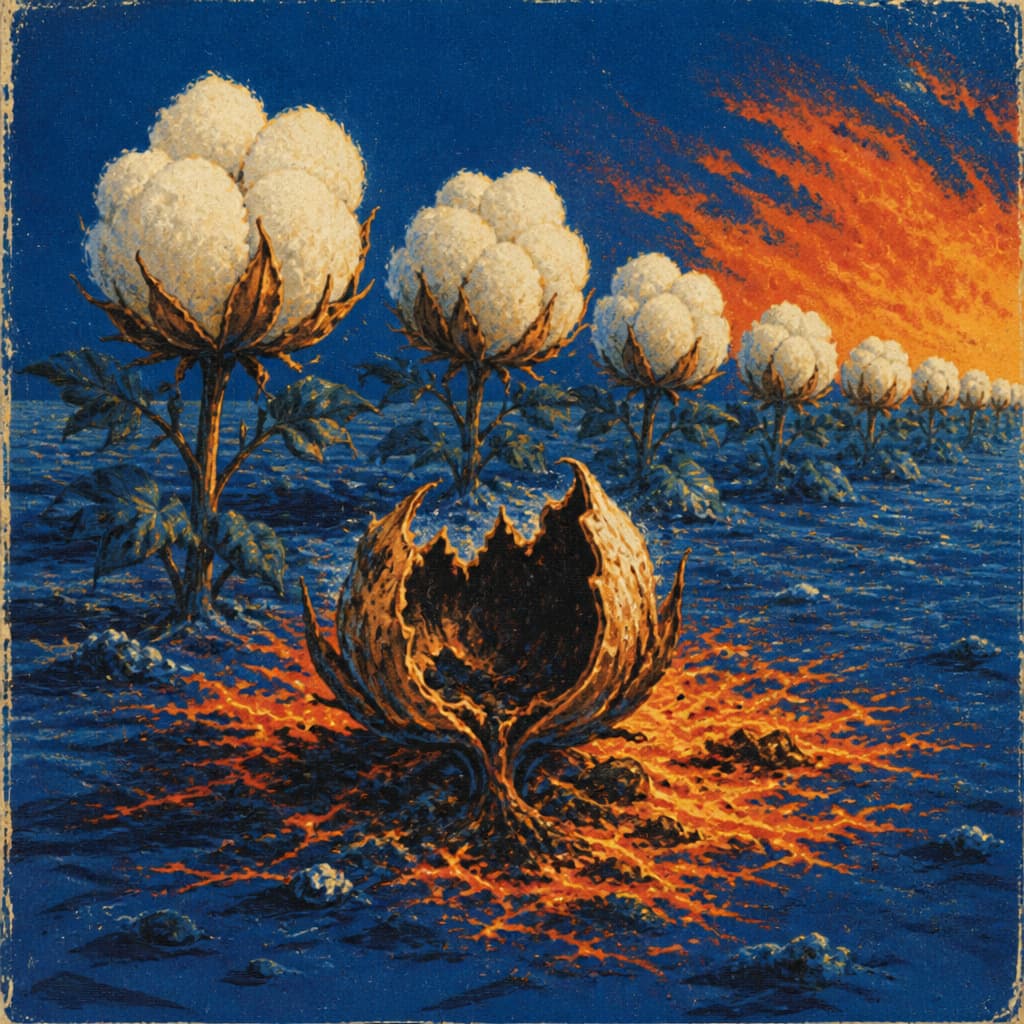
When the boll weevil destroyed Coffee County's cotton between 1915 and 1918, farmers there pivoted to peanuts, and Enterprise eventually built a monument to the pest that forced the change. It's one of American agriculture's favorite adaptation stories. The agricultural census tells a more specific version. By 1920, 88 percent of the county's Black farm operators were tenants, planting what their landlords chose and settling advances before keeping anything. Pivoting took land and credit, and the record that survives was built to track the people who had both.
The Pest That Made Some People Rich
When the boll weevil destroyed Coffee County's cotton between 1915 and 1918, farmers there pivoted to peanuts, and Enterprise eventually built a monument to the pest that forced the change. It's one of American agriculture's favorite adaptation stories. The agricultural census tells a more specific version. By 1920, 88 percent of the county's Black farm operators were tenants, planting what their landlords chose and settling advances before keeping anything. Pivoting took land and credit, and the record that survives was built to track the people who had both.
The Monument

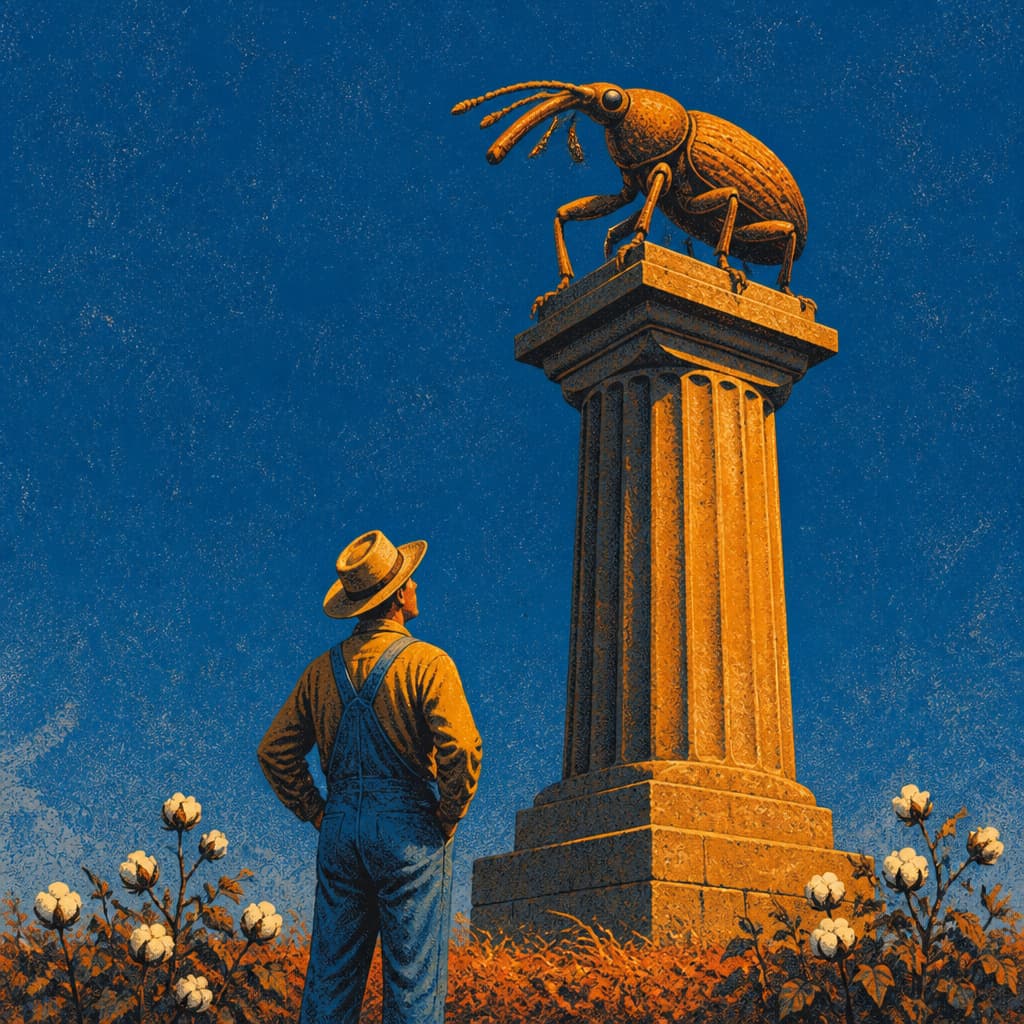
The plaque reads: "In profound appreciation of the Boll Weevil and what it has done as the Herald of Prosperity." Enterprise, Alabama, thanking the insect that wiped out its cotton economy. The weevil forced diversification into peanuts, the town survived, and somebody decided gratitude was the right response.
The monument was bankrolled by Bon Fleming and H.M. Sessions, white businessmen with capital to change course. The inscription credits "the Citizens of Enterprise" but doesn't mention George Washington Carver, the Tuskegee agronomist whose peanut research made diversification viable. Fleming invited Carver to speak at the 1919 dedication; washed-out railroad tracks kept him away. His name appears nowhere on the stone.
Black sharecroppers, trapped in debt to white landowners, couldn't diversify. Cotton's collapse hit them hardest. Many left, part of the Great Migration that reshaped American cities. The inscription calls what followed "prosperity."
The object at Main and College today is a polymer replica. The original, stolen and vandalized until unsalvageable, sits in a gift shop nearby. Enterprise keeps rebuilding the monument. Whose adaptation it celebrates was decided in 1919.

The Bug Had the Decency to Show Itself — An Interview Across from the Boll Weevil Monument
CONTINUE READINGDivergent Outcomes

Two Cotton Towns
When the boll weevil crossed into Houston County, Alabama, a farmer could sell a hog to the Moultrie packing plant's Dothan buyers, store peanuts at the Brandon elevator, and ship vegetables by rail. In Sunflower County, Mississippi, 95% of farms were worked by tenants who didn't choose what to plant. Both counties saw the insect coming. Only one had the holdings — land, credit, buyers, the right to decide — to do anything about it.
The Forty-Acre Plan and Who Could Farm It
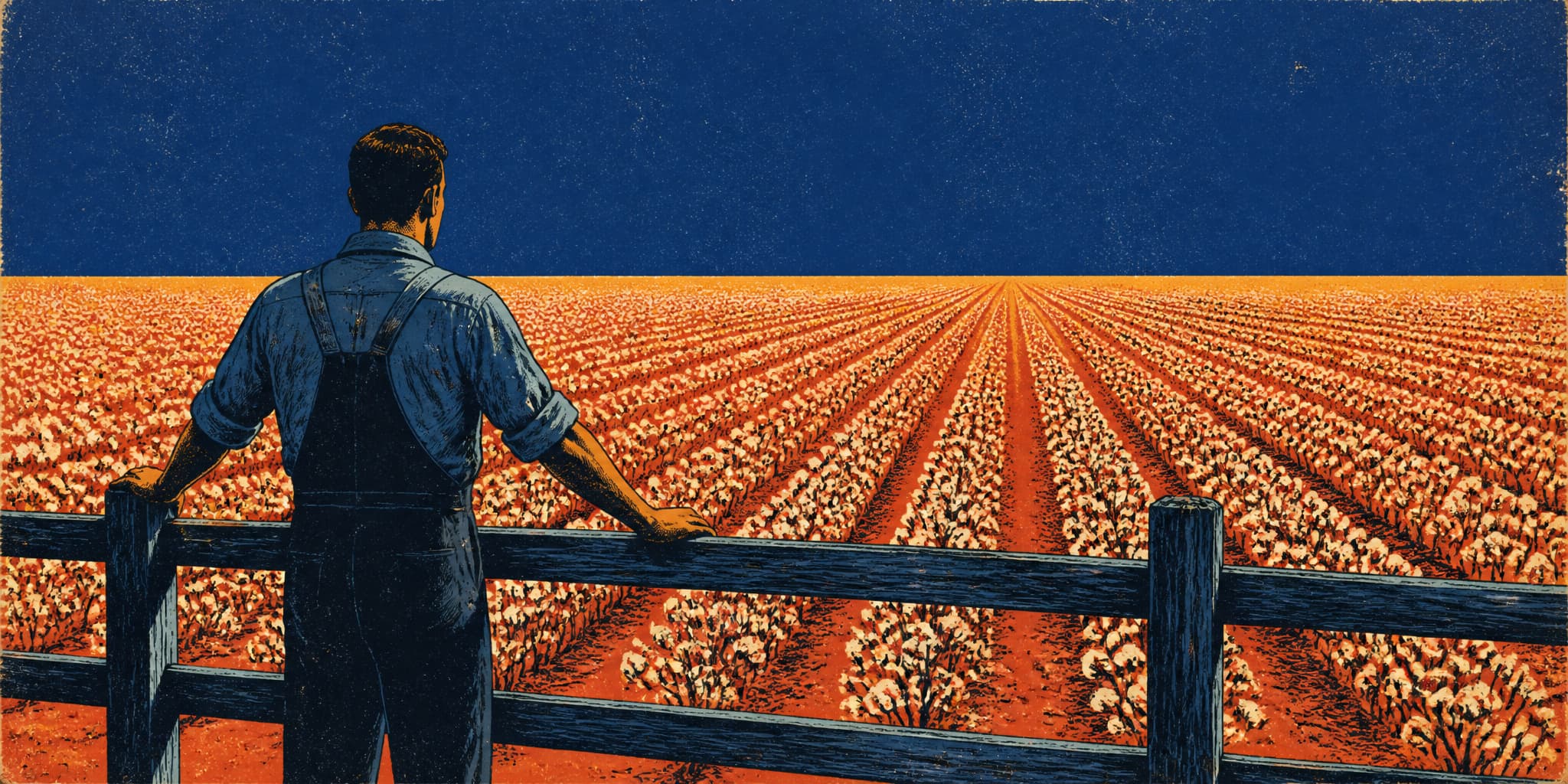
In 1920 a conference in Dothan, Alabama, drew up the ideal forty-acre farm for surviving the boll weevil: six acres of cotton, six of peanuts, brood sows, a milk cow, a garden, an orchard, each piece feeding the next. Working it assumed a farmer with the authority to decide, season by season, what went where — and most Black farmers in the cotton South had the knowledge without the authority.
Further Reading