The Corals Moved North. The Heat Followed.
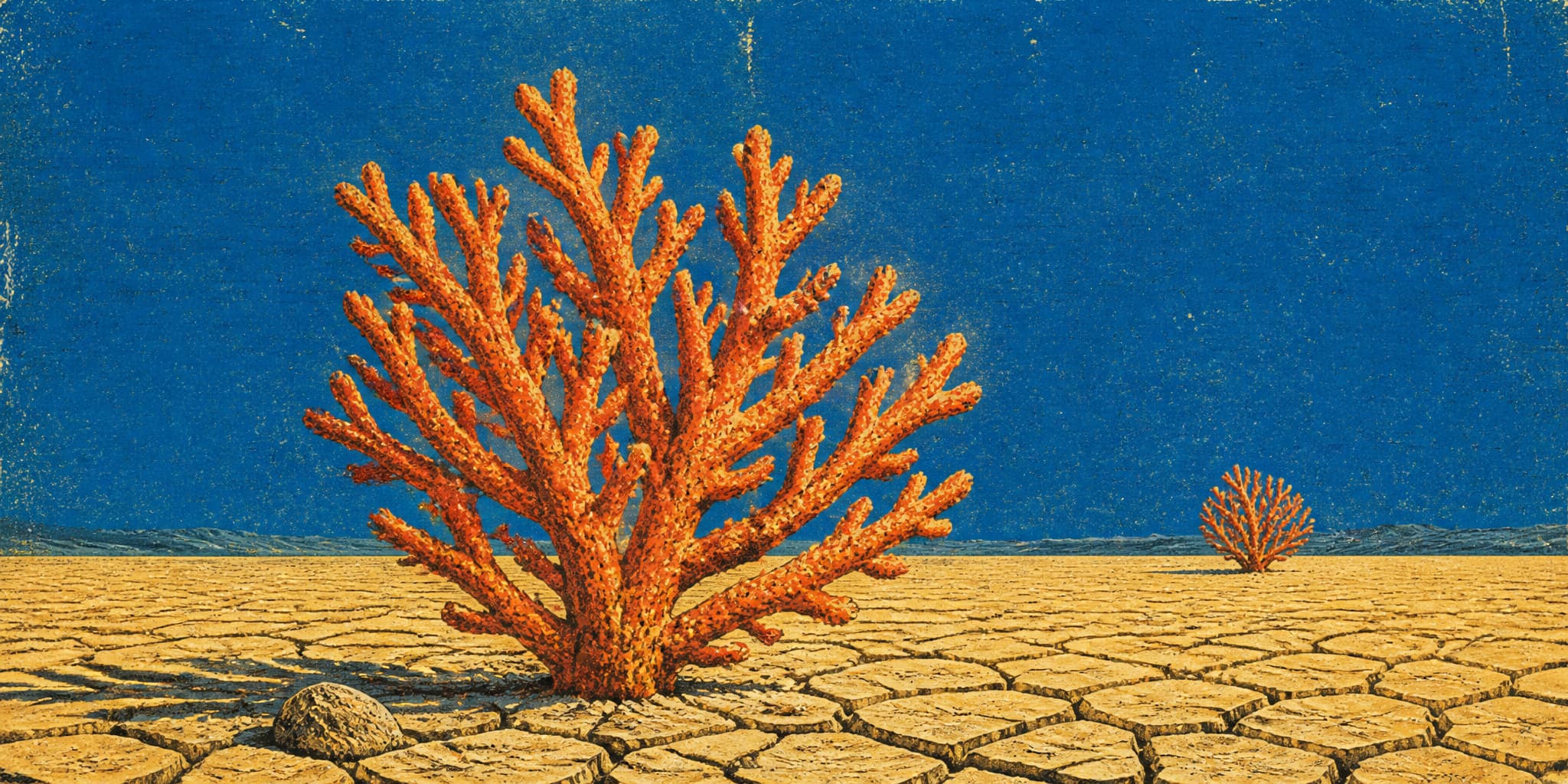
For more than a decade, coral science worked from a premise: as tropical reefs cooked, corals migrating poleward could colonize warming temperate waters and persist there. Several Japanese species did exactly that, expanding north across eighty years of documented records. During the 2024 marine heatwave, those transplanted populations bleached and died at their new high-latitude sites. A study in Scientific Reports documents the most severe heat-driven bleaching yet recorded in Japan's temperate coral communities, along with the reason it happened: the destination has been warming at nearly twice the rate of the place the corals left.
The Corals Moved North. The Heat Followed.
For more than a decade, coral science worked from a premise: as tropical reefs cooked, corals migrating poleward could colonize warming temperate waters and persist there. Several Japanese species did exactly that, expanding north across eighty years of documented records. During the 2024 marine heatwave, those transplanted populations bleached and died at their new high-latitude sites. A study in Scientific Reports documents the most severe heat-driven bleaching yet recorded in Japan's temperate coral communities, along with the reason it happened: the destination has been warming at nearly twice the rate of the place the corals left.
Geographic Safety Papers
Widespread Coral Bleaching Across Subtropical and Temperate Japan Under Record Marine Heat Stress
Survey methods differed across locations, and the 2024 heatwave was a single extreme event with no baseline for recurrence.
Temperate Japanese sites accumulated more heat stress than subtropical ones, inverting the expected latitudinal gradient.
Geographic Safety Papers
Recent Strengthening of Eastern Pacific ENSO Is Unprecedented in the Last Millennium Paleorecord
Michael Mann says instrument records at the same location show declining El Nino variability, directly contradicting the coral proxy result.
Stronger El Ninos amplify the marine heatwaves, drought cycles, and wildfire seasons that reshape life across the Pacific basin.
Geographic Safety Papers
The Price of Paradise: How Communities Tolerate Chronic Coastal Flooding in Rural North Carolina
The study couldn't reach people who already left, and its convenience sample skews older, more educated, and more rooted.
Residents manage water on roads through routine workarounds, but health decline and infrastructure failure resist the same flexibility.
Geographic Safety Papers
Quantifying the Sea Level and Estuary Contributions to Changing High Water Levels in Four Major Australian Estuaries
Estuary geometry reshapes tides internally, so the flood trend at your dock may diverge sharply from the nearest tide gauge.
A companion study found some Australian estuaries could shift to tide-only flooding regimes with less than ten centimeters of further rise.
Counterexample Sidebar
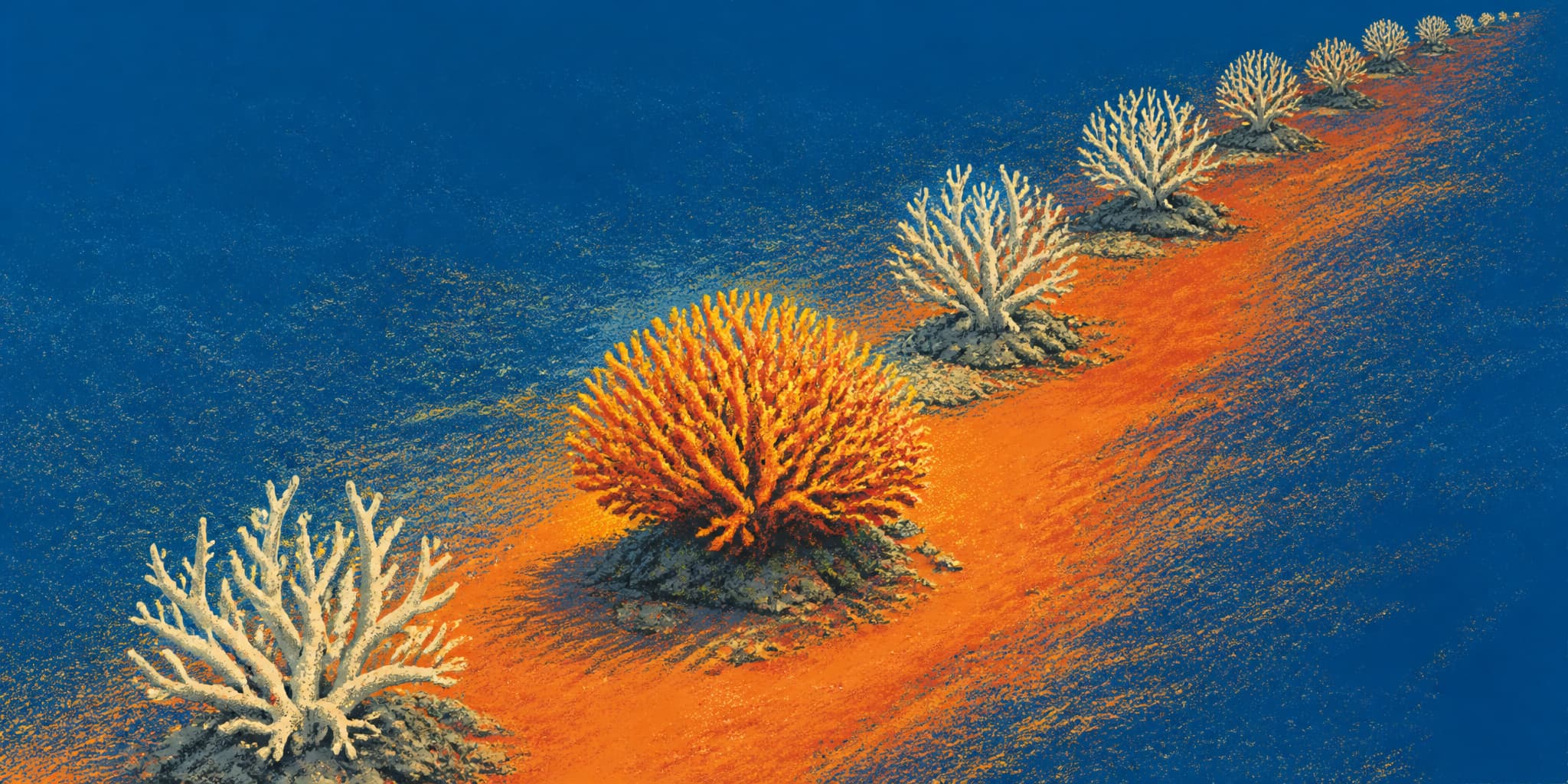
Every monitored coral site along Japan's coast bleached during the 2024 marine heatwave except Tateyama, at the northern edge of the country's coral range. By Degree Heating Weeks, the standard bleaching-prediction metric, Tateyama scored 12.9. NOAA expects mass mortality above 8.
Tateyama's historical peak water temperature runs around 27.9°C, lowest of the eight sites studied. The 2024 departure from baseline was record-breaking, but unpublished lab work suggests local species don't bleach until roughly 28°C. The anomaly was extreme by the site's own history, but relative to what the biology could handle, apparently not enough.
DHW measures cumulative heat above a site's historical peak — how unusual conditions are, not whether they cross the temperature where corals die. That threshold varies by species and geography, and the metric can't see it. Without site-level biological data, which barely exists, anomaly-based maps will misread sites in both directions. For refuge planning, heat-stress scores alone aren't sufficient. You need the biology of what's living there, and for most reefs worldwide, nobody has collected it.
Higher-latitude Japanese sites are warming at roughly twice the subtropical rate. Tateyama's buffer is shrinking.