Manus and the Product-Layer Cost of Reversing an Agent Acquisition

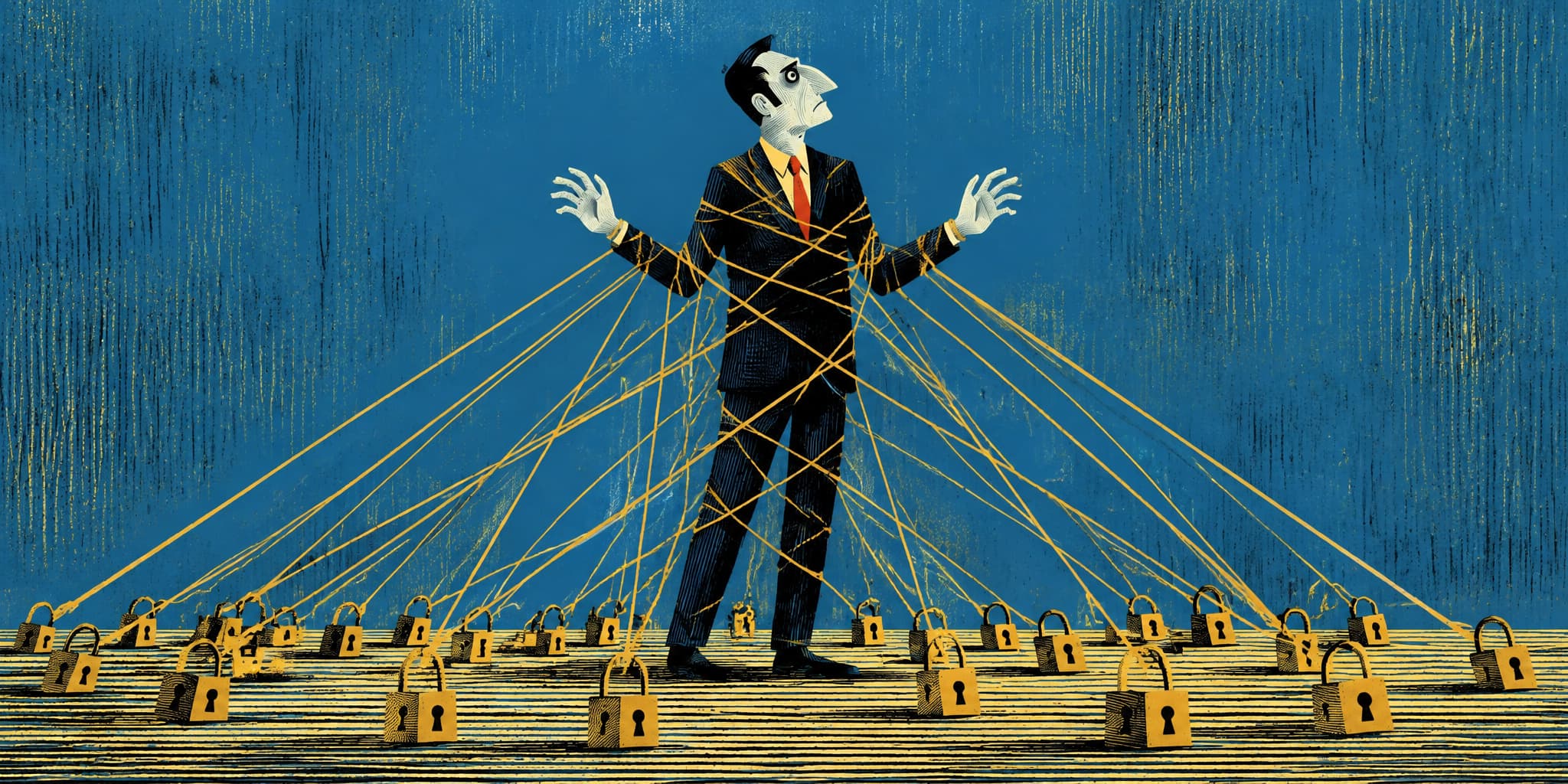
In April, China ordered Meta to reverse its completed acquisition of Manus. Over the next five months, Manus's help center documented what that meant for users: OAuth grants that couldn't transfer, accounts deleted because they were created under Meta's ownership, hosted deployments that went dark during the deletion window. It is the most detailed public record of what unwinding an agent acquisition costs at the product layer. That cost scales with integration depth, and it is already changing how agent deals get structured.
Manus and the Product-Layer Cost of Reversing an Agent Acquisition
In April, China ordered Meta to reverse its completed acquisition of Manus. Over the next five months, Manus's help center documented what that meant for users: OAuth grants that couldn't transfer, accounts deleted because they were created under Meta's ownership, hosted deployments that went dark during the deletion window. It is the most detailed public record of what unwinding an agent acquisition costs at the product layer. That cost scales with integration depth, and it is already changing how agent deals get structured.
Capital Pattern

The structure of an acquisition tells you what the buyer thinks can be pulled apart. AMD buying World Labs outright for $8.2B says the research team, the spatial-intelligence models, and the workload feedback into chip design have to stay together. Apple licensing Huxe's IP and hiring its people while the product shuts down says the talent is worth extracting and the product itself is not.
Three other forms showed up in the same period. The carve-out: Blackford survives without Bayer. The strategic-to-financial transfer: same Blackford asset, different commercial thesis under Sopris. And the forced unwind: Manus, where regulators proved the buyer's coupling assumption wrong and the separation cut through user accounts, billing, and artifact provenance.
When the next deal lands, start here: what did the buyer believe could not be separated? Track whether the product confirms it.
Trajectory Read

Twenty-four days from a $40M seed to an $870M Series A at $7.5B. No revenue diligence was possible in that window. a16z and Sequoia priced an option on a new model category — structured decision inference that bypasses text generation — and the valuation reflects conviction about the category, not evidence of a business.
The option has signal behind it. Jev dominated Hacker News on launch day, Vercel and Netlify integrated immediately, the founder's post cleared four million views. More telling: OpenAI and AWS shipped surface-level clones within two weeks. If hyperscalers replicate the API surface that fast, the defensibility lives somewhere else — the unpublished calibration method, the pricing efficiency (TypeSafe acknowledges it can't prove prices are unsubsidized), or the outcome-data flywheel from production deployments.
Casado joining the board frames this as infrastructure, Jev as a stack primitive. Watch whether TypeSafe publishes the architecture. Until they do, $7.5B prices a closed box.
Two Deals, One Lens
What SAP Is Actually Buying with TechWolf
SAP is acquiring TechWolf, a live graph of what employees actually do, inferred from work tools rather than HR records. The asset gives SAP's Joule agents organizational context they couldn't generate internally. It may also take that context away from Workday and Oracle, who were already using it. One of two acquisitions in eight days that show where enterprise agents are headed.

Why Salesforce Paid a Strategic Premium for Listen Labs
Salesforce paid ~$2B for Listen Labs, an AI-moderated interview engine that captures why customers behave the way they do. The asset gives Agentforce behavioral context that CRM records can't supply. The strategic logic matches SAP's TechWolf deal, announced eight days apart, but the intelligence differs: customer motivation instead of organizational structure. Reading them together clarifies both.