

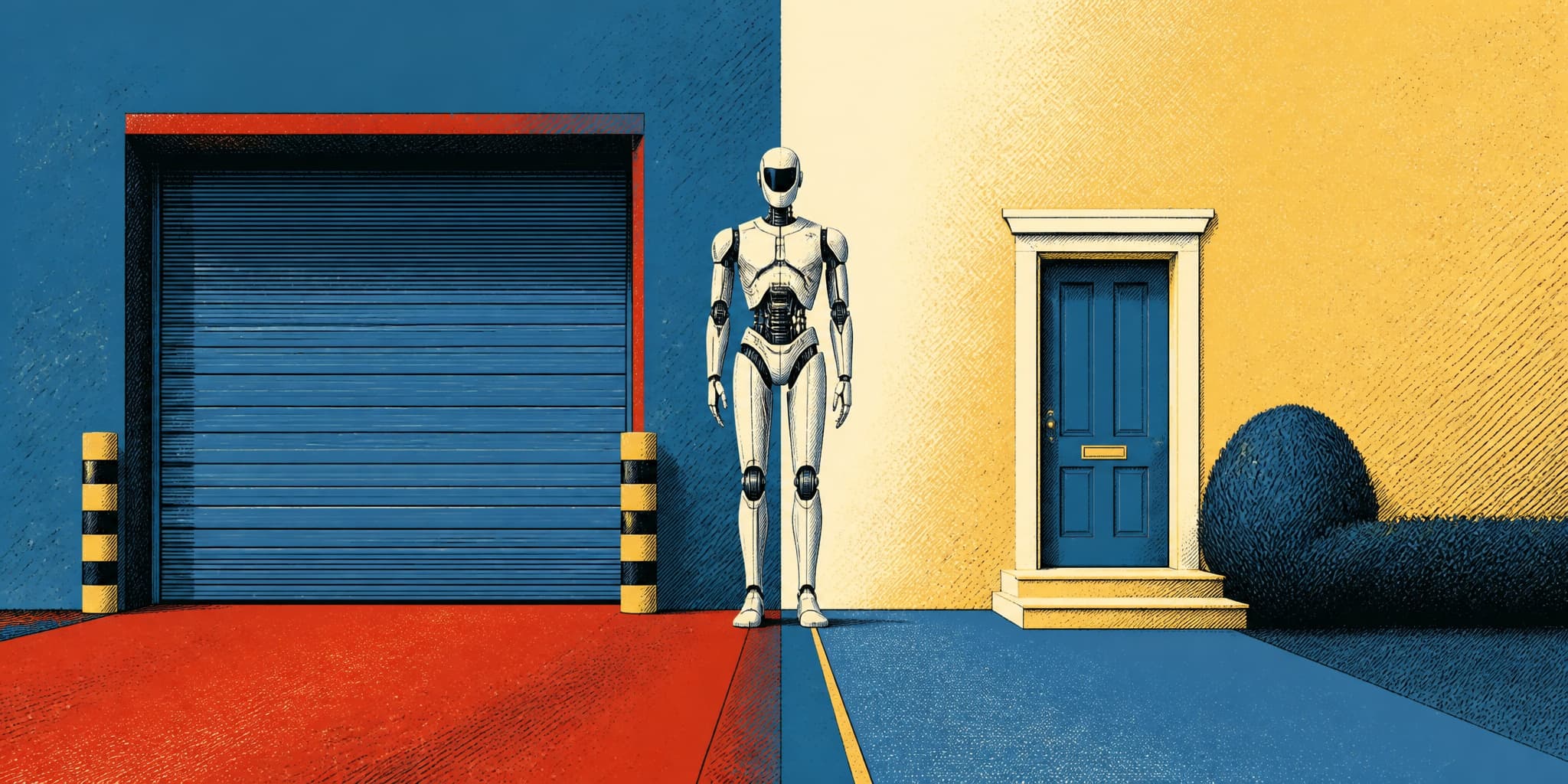
Neither IEC 62619:2022 nor IEC 62133-2:2017+A1:2021 names humanoid robots in its scope. The boundary between them is the portable/industrial distinction, and a humanoid robot's use context determines which applies.
IEC 62619's motive-application examples (AGV, forklift) make it the defensible reference for factory-floor humanoids. IEC 62133-2 governs portable applications (consumer electronics, power tools, medical devices) and is closer to home-use or personal-care units, though its shock and vibration profiles were calibrated for hand-carried products, not bipedal locomotion. Neither standard fits without acknowledged gaps.
A single humanoid platform sold into industrial, commercial, and consumer channels can trigger both standards against the same pack design. No arbitration mechanism exists for this overlap. A DVP that cites one standard without stating the target market has left the scope question open, and downstream test planning will inherit that ambiguity.
Use context determines standard:
- Factory / logistics → IEC 62619 (borrowed from AGV/forklift scope examples; no explicit humanoid coverage)
- Home / personal care → IEC 62133-2 (closest fit; portable-product assumptions do not match locomotion loads)
- Commercial service (retail, hospitality) → Neither standard's scope examples apply; DVP-defined
Multi-market complication: Same pack, different sales channels — both standards may apply concurrently. DVP must identify the more stringent test condition from each per parameter.
ISO 13482:2014 covers robot-safety hazard context for personal-care robots but contains no pack-level battery qualification tests. ISO/FDIS 13482, under development, extends scope to commercial-service robots — still no battery tests.
Last verified: 2026-08-08