The Standards Map — Humanoid Robotics


No governing standard exists for humanoid robot battery pack qualification. Nine of ten parameter classes on this card trace to borrowed baselines from industrial equipment standards that assume fixed orientation, moderate C-rates, and steady-state duty cycles. A bipedal robot violates all three assumptions simultaneously. Every borrowed threshold, every structural mismatch, and every void is documented here with sourcing tier labeled inline, so your DVP entry traces to something defensible or explicitly records that nothing defensible yet exists.
The Standards Map — Humanoid Robotics
No governing standard exists for humanoid robot battery pack qualification. Nine of ten parameter classes on this card trace to borrowed baselines from industrial equipment standards that assume fixed orientation, moderate C-rates, and steady-state duty cycles. A bipedal robot violates all three assumptions simultaneously. Every borrowed threshold, every structural mismatch, and every void is documented here with sourcing tier labeled inline, so your DVP entry traces to something defensible or explicitly records that nothing defensible yet exists.
Technical Evidence Base
Challenges and Key Requirements of Batteries for Electric Vertical Takeoff and Landing Aircraft
Most-referenced eVTOL battery analysis in the literature. The quantitative baselines here are where most DVP cycle-life entries trace back to.
The >2,000 cycle claim requires ATM thermal management as a test condition. Citing this figure without specifying thermal protocol overstates baseline chemistry performance.
Technical Evidence Base
Lithium-Ion Battery Power Performance Assessment for the Climb Step of an eVTOL Application
First published experimental cycle life under eVTOL climb loads. The <100 cycle result quantifies the distance between current chemistry and commercial requirements.
Capacity fade alone misses this failure mode. Polarization evolution under high-rate conditions requires separate tracking in the DVP.
The Classification Dependency
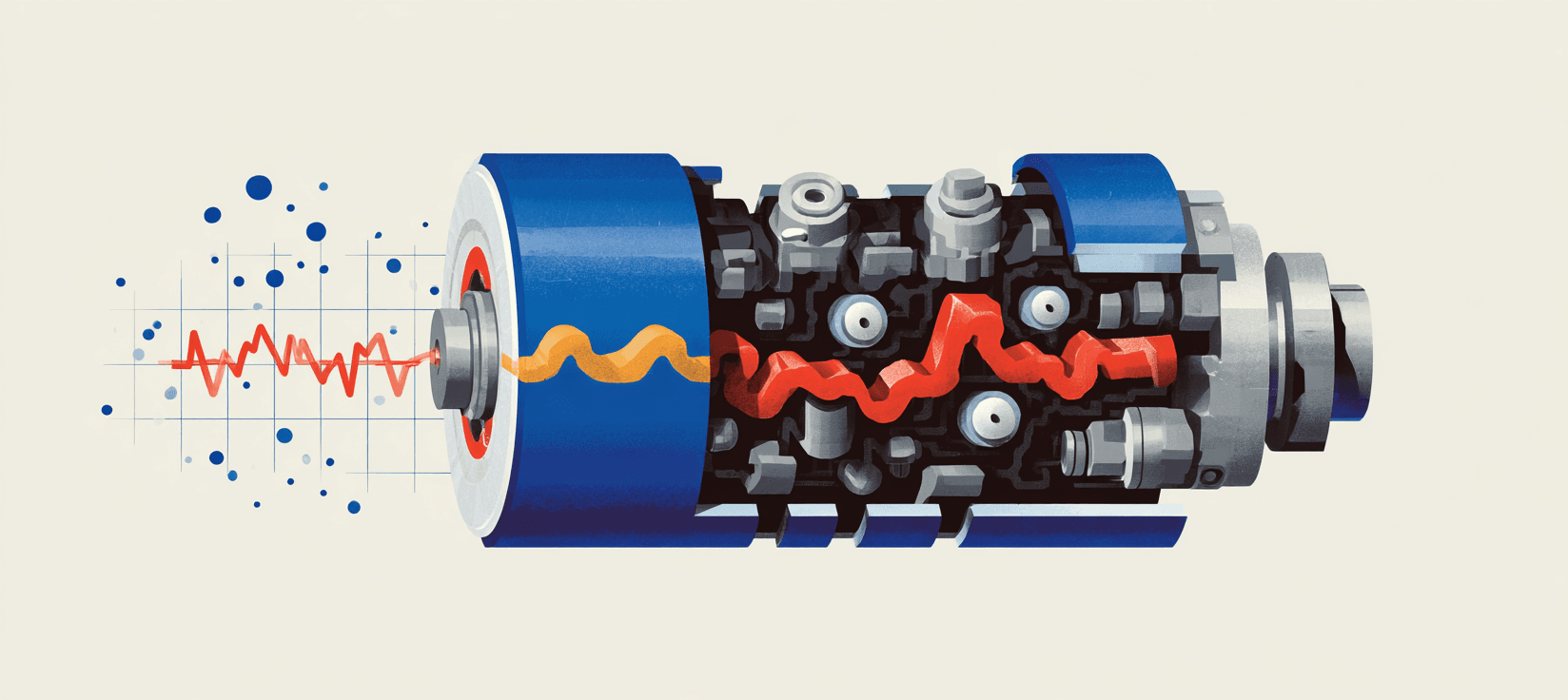
Which pack standard governs a humanoid robot depends on what a humanoid robot is, regulatorily. Nobody has answered that. ISO 10218:2025 covers industrial robots, borrowing IEC 62619 as battery baseline. ISO 13482:2014 covers service robots but references no pack standard. Consumer product classification invokes IEC 62133-2, a scope mismatch for packs running 10–50C pulses.
The IEEE Humanoid Study Group named classification as the prerequisite before standards work can proceed. ISO 25785-1 (working draft, May 2025) covers only industrial settings with zero battery thresholds. Every DVP entry written today borrows a framework no authority has mandated.