
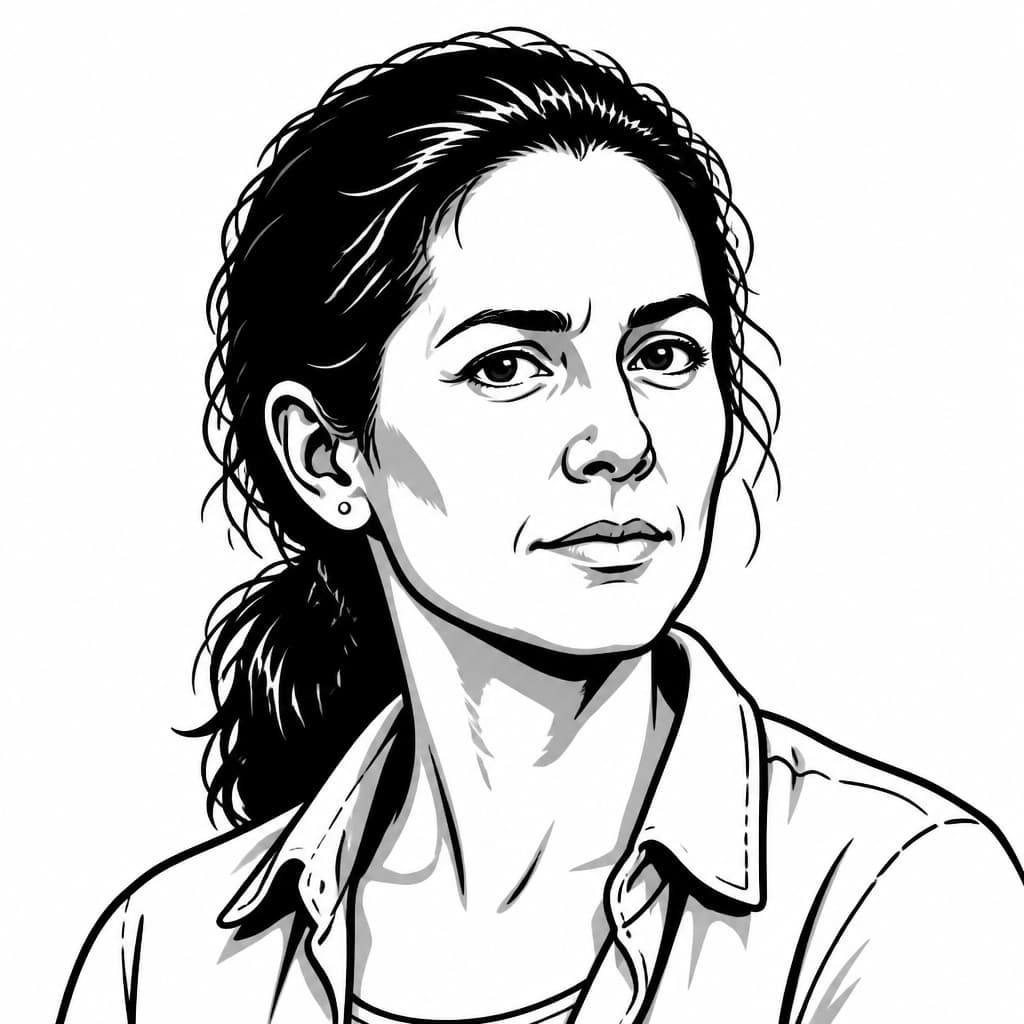

The Civic's AC had been blowing warm since May. Wren drove with the windows down, her left arm already prickling by the time she hit Lomas. Five forty-seven a.m. and ninety-one degrees on the bank sign at Central and San Mateo. By seven, when the Consolidated Telecom regional office opened, the parking lot would be over a hundred.
She had water, a folder of documents on the passenger seat, and a thumb drive she'd bought at the Walgreens on Carlisle three days ago when the letter finally reached her.
Her father's letter. Forwarded twice, singed-looking from sitting in the cluster box at the old house on Ajo Way for who knew how long before the new owners bundled it with the rest and sent it to her mother in Las Cruces. Her mother sent it to Wren with a Post-it that said this seems like yours to deal with.
Consolidated Telecom was retiring its legacy Home Voice product line. Effective July 31, 2026. All stored messages on accounts without activity in the preceding twelve months would be purged. Account holders could contact their regional service center to arrange retrieval. The letter was dated May 19. It had taken seven weeks to find her.
She parked in the shade of the building's east wall. The shade would last about an hour. The strip mall was the kind that had been dying before the heat started killing it faster: a nail salon with papered windows, a vape shop, a place that had been a Subway and was now nothing. Consolidated Telecom occupied the anchor space, its sign sun-bleached to the color of old bone. Two other cars in the lot. Someone had left a windshield shade up with BACK BY 7 written on it in marker.
Wren checked her phone. The PNM hardship appeal form was still open in her browser, half-filled, the cursor blinking in the account number field. Due by end of business today. You couldn't file online. The portal had been down since the system migration in April, and the workaround was a PDF you printed, filled out, scanned, and emailed to an address that auto-replied with a ticket number. She'd tried twice before. The first time the ticket was lost. The second time she'd entered the wrong service address, her father's instead of hers, muscle memory from years of handling his bills.
This was her third window. Five business days from the date of the adverse disposition letter, received July 2. That made today the deadline. $2,340 in charges PNM said she owed from the billing error during the April migration, when her account had been merged with a commercial address on the same block and she'd been billed at the commercial rate for six weeks. She'd paid the undisputed portion. The $2,340 was the difference. If she missed today's deadline, the amount converted to past-due balance, and when the heat moratorium lifted October 16, PNM could terminate.
She'd done the math at three a.m. Sitting on the kitchen floor with the folder and the letter and the thumb drive arranged on the tile like evidence. The appeal was money. The voicemail was forty-five seconds of her father's voice on a server scheduled for wipe, on an account she couldn't access remotely because the account holder was dead and the carrier's portal didn't have a workflow for deceased-customer retrieval. She'd called. Ninety minutes in the phone tree. The agent had been clear: for CPNI-protected content on a deceased account holder's line, she needed to present in person with the death certificate, proof of kinship, and government-issued ID.
So here she was.
At six-fifty a woman in a Consolidated Telecom polo unlocked the front door and propped it open with a rubber wedge. The AC inside hit Wren's face like a different country. Eight chairs, a number dispenser, a mounted screen cycling through promotions for a fiber plan that wasn't available in this ZIP code. She took a number. She was second. The person ahead of her was a man in his sixties with a hearing aid and a folder thicker than hers.
The clerk who called her number was young, maybe twenty-three, with a lanyard that said DEVONTE.
"I need to retrieve voicemail content from a legacy Home Voice account," Wren said. "The account holder is deceased."
Devonte looked at her for a beat too long. "Okay. I'm going to need the account number, the account holder's name, a death certificate, and your ID."
She had all of it. She slid the folder across. Devonte opened it, compared the death certificate to something on his screen, typed. The hearing-aid man was at the other window explaining something about a bundled rate from 2019. The AC cycled. Wren's phone buzzed. PNM reminder: Your dispute response is due today, July 9, 2026. File by 5:00 PM MST.
"The account's been inactive since October 2023," Devonte said.
"That's when he died."
"Right. I see that." More typing. "There's an outstanding balance of $214.18. Service charges continued billing after—" He stopped. "After the account went inactive. We'd need that cleared before we can release content."
"The account holder is dead. He didn't use the service."
"I understand. But the system requires a zero balance for content release on closed accounts." He said it the way people say things they've already lost the argument about internally. "I can process a credit request, but that takes seven to ten business days, and the mailbox purge is—"
"July 31."
"Right."
"Can I just pay it."
Devonte looked at his screen. Looked at her. "You can pay it."
Her card was declined on the first try. She transferred from savings on her phone while Devonte watched the ceiling tiles with practiced neutrality. The transfer took four minutes. The $214.18 went through. Her savings balance afterward was $87.12.
"Okay," Devonte said. "I can access the mailbox now. There are three saved messages. You want all of them?"
"Yes."
"I have to play them on the system first to verify content before I can export. Policy. You'll hear them through the desk speaker."
The first message was a pharmacy automated refill notification from September 2023. The second was her mother, asking if he'd eaten, her voice carrying the specific tension of someone who already knew the answer.
The third was him.
"Wren, it's Dad. Pump pressure's reading thirty-two PSI this morning, which is down from thirty-eight in June. I want you to look at the drawdown log next time you're out here. Something's off and I don't think it's the pump. Ernesto says his well's doing the same thing but I haven't verified that. Call me back. Oh, the Sandoval kid brought the mail up again. Tell your mother."
Forty-five seconds. His voice dry and unhurried, the way it always was when he was reporting data. Thirty-two PSI down from thirty-eight. A six-point drop in three months on a residential well in the Tucson basin. She hadn't looked at the drawdown log. She'd been in Albuquerque. He'd died three weeks after leaving the message, a heart attack at the kitchen table, and the log was in a binder in a house that belonged to other people now, and the well was someone else's problem, and the six-point drop was a data point that existed nowhere except on this server and, in a few minutes, on a thumb drive she'd bought for $11.99.
Ernesto Vigil. She hadn't thought his name in years.
"That's the one," she said.
Devonte exported all three messages to her thumb drive. The process took twelve minutes because the system had to convert from whatever format legacy voicemail used to something a modern device could read. He apologized twice. She told him it was fine. It was eight twenty-three. Her phone's weather widget said 98. The NWS banner across the top of the screen read EXCESSIVE HEAT WARNING UNTIL 8 PM MST.
She could still make it. Drive home, pull the account number from the original bill in the filing box under her bed, print the form, fill it out, get to the library on San Pedro because her scanner died in March and the library's was the only public one she could use. Library opened at ten. The parking lot there had no shade and the walk from the lot to the door was two hundred yards of full sun. Last time she'd been there in heat like this the line for the public computers had been forty minutes because half the city was using the library as a cooling center.
She could do it. If the PDF loaded. If the email address worked. If the auto-reply came back with a ticket number instead of a bounce. If nothing else went wrong.
Devonte handed her the thumb drive. Red, the size of her thumbnail. She closed her hand around it.
"Is there anything else I can help you with?"
"No. Thank you."
The heat outside was a physical compression against her face and arms, the air dense enough to feel like contact. The shade from the building's east wall had moved. Her car sat in full sun, the steering wheel too hot to grip. She used the hem of her shirt. The Civic started on the second try. The AC blew warm.
Her phone buzzed again. PNM. She cleared the notification, pulled out of the lot, and turned south toward home.
Eight hours and twenty-nine minutes until the deadline. $87.12 in savings. The AC blowing warm.
She drove.
-
Landlines are disappearing fast: AT&T received FCC approval to end traditional landline service for 184,000 California households starting June 2027, raising questions about what happens to legacy accounts and stored content when carriers wind down service.
-
Heat kills indoors too: Maricopa County's 2025 heat report counted 430 heat-associated deaths, and among indoor deaths where AC was present, 72% involved units that weren't functioning, collapsing the distance between "has cooling" and "is cooled."
-
Utility shutoff rules vary wildly: After an 82-year-old customer died following a disconnection during extreme heat, Arizona Public Service agreed in a 2026 settlement to suspend power shutoffs when forecast highs reach 95°F, but protections like these remain patchwork across states.
-
The safe day keeps shrinking: A 2026 study found North American hours with fire-favorable weather have risen 36% in fifty years, and parts of the Southwest have gained as many as 2,000 additional potential burning hours annually, compressing the windows for outdoor work, travel, and routine life.