The Big Blowup and the Century It Built

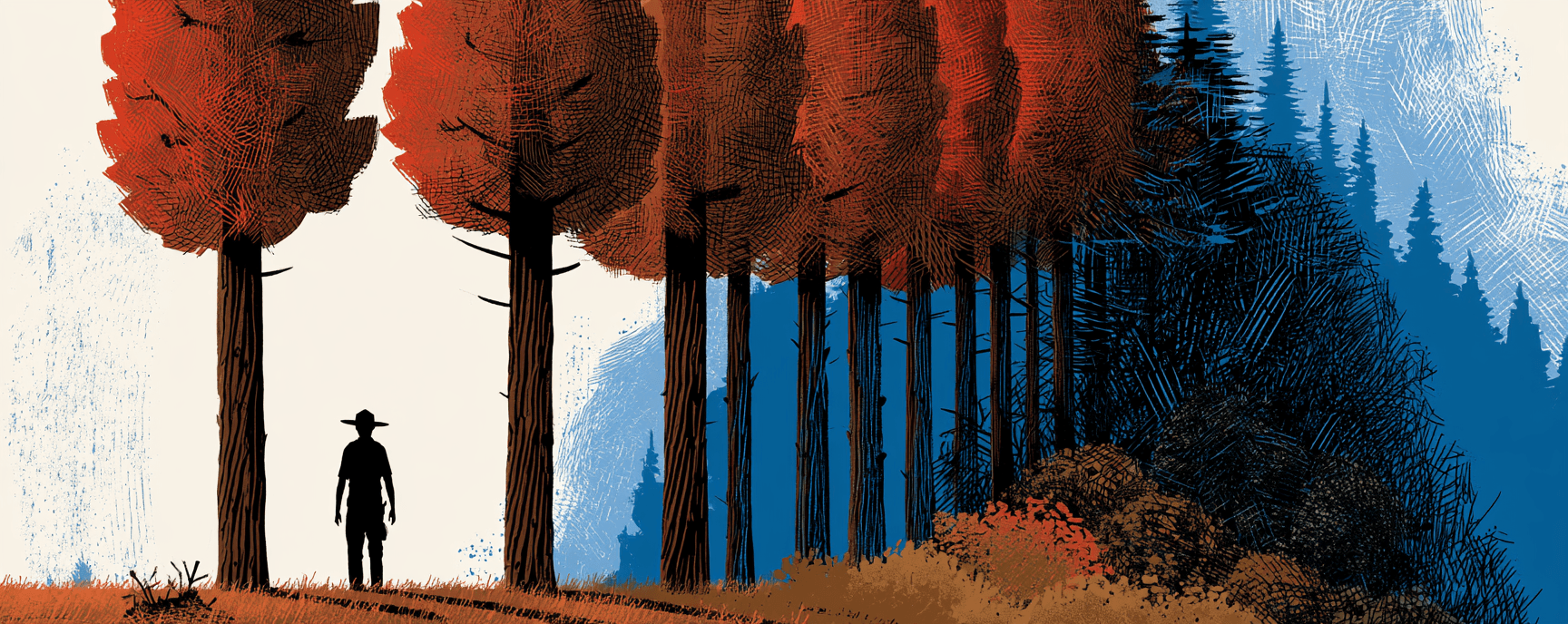
In August 1910, a firestorm burned three million acres across the Idaho-Montana borderlands in two days, killed eighty-five people, and nearly destroyed a Forest Service barely five years old. The agency survived by making a promise: this would never happen again. Total fire suppression became doctrine, forged under genuine political pressure and genuine grief. It secured funding, built institutional power, and transformed the forests it was meant to protect into something structurally primed for the very fires it was designed to prevent.
The Big Blowup and the Century It Built
In August 1910, a firestorm burned three million acres across the Idaho-Montana borderlands in two days, killed eighty-five people, and nearly destroyed a Forest Service barely five years old. The agency survived by making a promise: this would never happen again. Total fire suppression became doctrine, forged under genuine political pressure and genuine grief. It secured funding, built institutional power, and transformed the forests it was meant to protect into something structurally primed for the very fires it was designed to prevent.
Recovery as Doctrine

Oregon's 1948 reforestation bond passed by fewer than 2,000 votes. Over the next two decades, 72 million Douglas-fir seedlings went into the ground by hand, a billion seeds dropped from helicopters, 20,000 schoolchildren bused to the scorched Coast Range to plant their rows in the ash.
Four fires between 1933 and 1951 had burned 355,000 acres of old-growth. The goal was straightforward: restore the blackened landscape to green forest. In 1973, Governor Tom McCall declared the job done, renaming the Tillamook Burn the Tillamook State Forest.
But the forest that grew was almost entirely Douglas-fir, the single species volunteers had planted. Today 87% of it is less than 80 years old. Gail Wells, who wrote the definitive history, called it a created forest. Thousands of Oregonians, many of them kids carrying seedlings in paper bags, believed they were undoing damage. They built something new instead, shaped entirely by the conviction that recovery means returning to what was.

She Spent Eight Years Learning to Light Fires the Forest Service Wouldn't Let Her Start
CONTINUE READINGTwo Reform Failures
The Summer That Wouldn't Rain
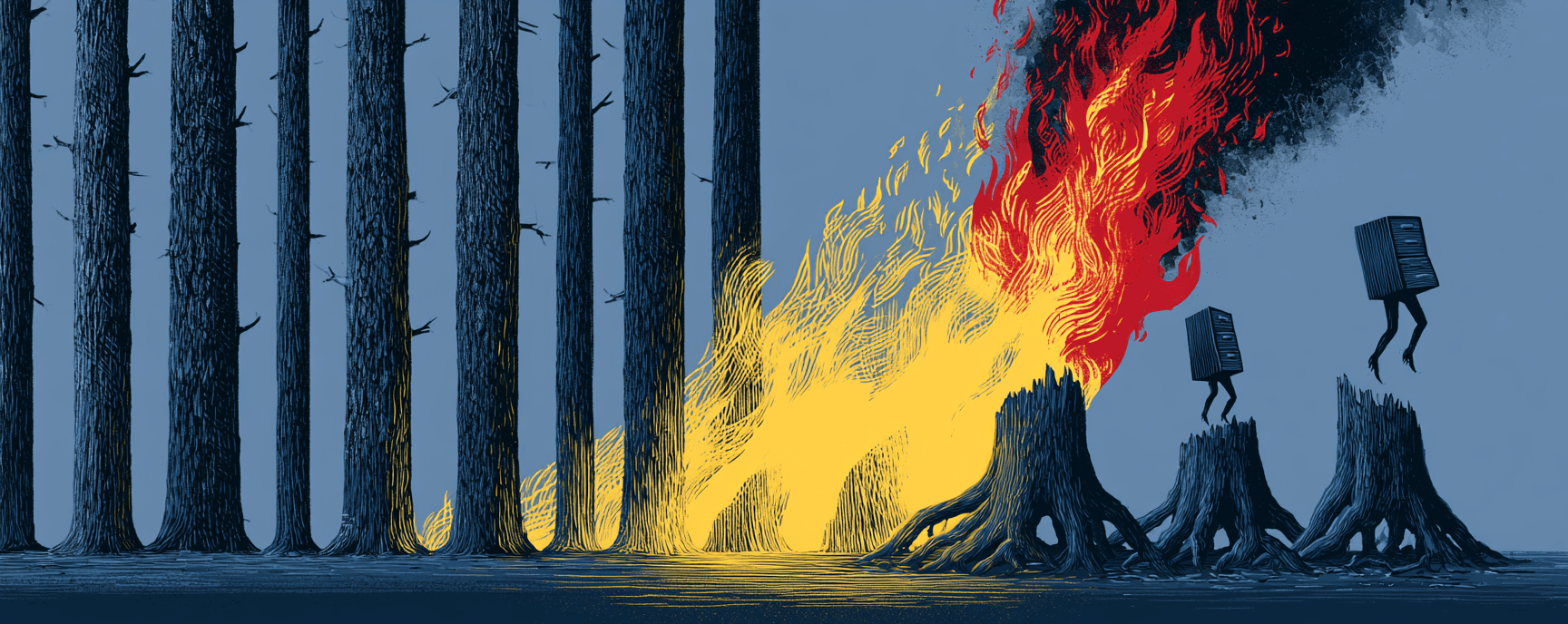
In the 1970s, Yellowstone adopted a fire policy built on solid science: let lightning fires burn. For years, most went out on their own. Then came the summer of 1988, when unprecedented drought turned sound ecological reasoning into 793,880 acres of political crisis. Park managers followed the plan, adjusted as conditions changed, and ordered full suppression before the worst arrived. None of it mattered once America's most iconic landscape was burning on the evening news.

Ninety-Six Hours
The burn plan called for 900 acres of controlled fuel reduction near Los Alamos. The fire burned 48,000 acres, destroyed hundreds of homes, and displaced 18,000 people. The Cerro Grande escape became the weight every burn boss in the West carried into every go/no-go decision for years. The science of prescribed fire was as valid as ever. Every burn boss in the West understood that validity alone wouldn't protect your program next season.
Further Burning