
She pressed her thumbnail into the rind of the butternut squash and held it. The skin resisted. Weeks from ready. She moved down the row on her heels, testing each one the same way, pulling dried leaves from the base of the plants, snapping off a tendril that had wound itself into the fence wire.
Ninety-three at four in the afternoon. The Cascades hazed out to a flat gray line. The air tasted of dust and the chemical sweetness of the sunscreen she'd put on at noon and again at two. She should have been inside. When she stood, the blood went out of her head and she caught the fence post, the wood hot against her palm, and waited for the yard to come back. Her knees held. They took their time straightening.
The light across the yard had shifted. Not much. A degree or two of angle, the sort of thing you don't register unless you've watched the same shadow cross the same strip of dirt for fifty years. Her shoulders came up toward her ears. The long muscles beside her spine drew tight, the way they did when the pressure was about to break.
Nothing broke. She stood at the fence and the heat sat on her scalp and the muscles didn't let go for a while anyway.
Inside, she drank a glass of water at the sink. The cooling system hummed through its afternoon cycle. Electricity cost less before five, so the house took on cold in the morning and coasted through the peak hours with the blinds down.
She set the glass in the basin and opened the high cabinet above the refrigerator.
Two dozen quart jars, lids boxed separately. She brought them down four at a time and lined them along the counter, running the pad of her finger around each rim. One had a rough edge where the glass had chipped. She set it aside. The others she washed in water hot enough to redden her hands, turning each jar slowly, feeling for the hairline flaws that would fail under pressure.
She had nothing to put up. The tomatoes were still green at the shoulders on their cages. The pears on the tree by the shed were the size of golf balls, and the hazelnuts along the back fence had been giving her empty shells for three years.
She dried the jars and left them out.
Meg came by at six with nectarines from the stand on 99. The stickers said Medford. Meg was forty-three, had come down from Bend eight years ago, and moved through August the way you move through the only weather you've ever known. Tank top. Bare shoulders. Sweat at her collarbone and no attention paid to it.
"Brought you some before they turn."
She took one and held it. The skin was warm and furred and gave under her thumb, the same pressure her hand had spent the afternoon not finding in the squash.
Meg's eyes went past her into the kitchen, where the jars stood along the counter catching the late light.
"Getting a head start?"
"Just checking them over."
Meg nodded. She had the face of a person deciding not to ask the second question.
They ate the nectarines on the porch and watched the sprinklers come on across the road. The Petersons were on the evening water window, their lawn a green rectangle in a yard of gravel and lavender and the low gray plants everybody else had gone to. The spray hit the sidewalk and the smell of it came over, wet concrete and hot mineral, gone in a minute.
"You doing all right?"
"Fine. It's hot."
"It's hot," Meg agreed.
After Meg left she stood in the kitchen looking at the jars. Twenty-three of them. She put them back in the cabinet. Then she took them down again.
The woodsmoke came on a Thursday evening.
She was on the back porch with a book, the light finally tolerable, the valley letting go of the day. Seasoned fir in a woodstove. That was what it was. Not the smoke she knew from most Augusts now, the acrid haze that pushed down into the valley and turned the sun copper and kept the windows shut for weeks. This was a chimney drawing well on a cold night. This was somebody's house in November.
She put the book down. Her sinuses opened the way they opened in October, air moving through her nose with a clarity that had no business in that dry warmth. She could taste it at the back of her throat, wood ash and the faint bite of creosote.
She walked around the house. Nothing anywhere. The sky was clear, pale blue thinning to gold behind the ridge. The Hendersons had the only working chimney on the block and it stood clean against the light.
When she got back to the porch the smell was gone.
That night she slept nine hours, the longest stretch since spring. She woke before the alarm in full dark and lay without moving. The cooling system had cycled off. The air in the bedroom felt dense against her face. Not humid. Her ears had the low fullness they got when the pressure dropped, and the knuckles of her right hand ached in the joints, and both of these things meant the first real rain was a day out, two at the most.
She checked her phone. Ninety-six tomorrow. Clear through the weekend. Nothing in the ten-day.
She put on socks before she went downstairs.
Her daughter called Saturday morning.
Lena lived in Portland and worked on stormwater, sensors and models and the arithmetic of how much water a system could take in six hours. She was good at it. She was also, at thirty-eight, good at the particular tone that meant she'd been told something and was working out how not to lead with it.
"Meg texted me."
"Meg should mind her business."
"She said you were canning."
"I was cleaning jars."
A pause. She could hear her daughter choosing words the way Meg had chosen a face.
"It's August, Mom."
"I know what month it is."
"Okay."
"I know what month it is, Lena."
"I believe you."
They talked about other things. Lena's commute. A culvert project in Clackamas County. Whether the hazelnuts would do anything this year, which they wouldn't. She kept meaning to take the trees out and hadn't.
After they hung up she went to the hall closet and pulled out her winter coat. She didn't put it on. She turned it in her hands and found the place where the lining had let go from the shell at the left shoulder, a four-inch separation she'd noticed in March and forgotten. She got the sewing kit and sat at the kitchen table and held the needle out at arm's length until the eye came clear.
Small even stitches. The wool smelled of cedar and of the closet. The kitchen was eighty-one degrees and the needle went warm and slightly damp between her fingers, and she wiped her thumb on her leg every so often and kept the stitches even.
Sunday she made soup.
Butternut from the store, not her own, hers still hard and green out in the row. Onions and garlic, the squash roasted down until the edges caught, a pour of cream at the end. She stood over the pot and the steam came up into her face and something behind her sternum came loose that had been tight for weeks.
She ate two bowls standing at the counter with her weight shifted onto one hip, the way an hour at the stove settled into her lower back now. Sweat ran along her hairline and down the side of her neck and she let it. The second bowl she ate slowly, blowing across the spoon out of habit, in a kitchen that did not require it.
She set the bowl down and the hair on her forearms rose. She watched it happen — the skin drawing tight in the heat and the steam, every follicle standing up as though the room had dropped thirty degrees in a second. She laid her arm flat on the warm counter and pressed. The hair stayed up.
Afterward she opened the windows to let the evening in. Cranking out the kitchen casement she ran a finger along the frame where the caulk met the sash, and it was cracked in two places, and she thought she'd want to redo that before the rains.
Her finger stopped in the gap.
The rains were months off. The dry ran deep into October now, sometimes into November, and then the atmospheric rivers came in off the Pacific and dropped three weeks of water in four days and found every failed seal and clogged gutter on the street. Everybody sealed up ahead of it. In September. In October. Not in the third week of August.
The light came through the glass at the angle she'd been noticing all week, low and amber across the counter. Since the solstice the days had been getting shorter, the way they always had, the one thing that had not moved.
She pressed the cracked caulk and a piece of it came away under her fingernail.
Outside the valley was gold and dry and still, warm asphalt, cut grass, a truck downshifting somewhere out on the county road.
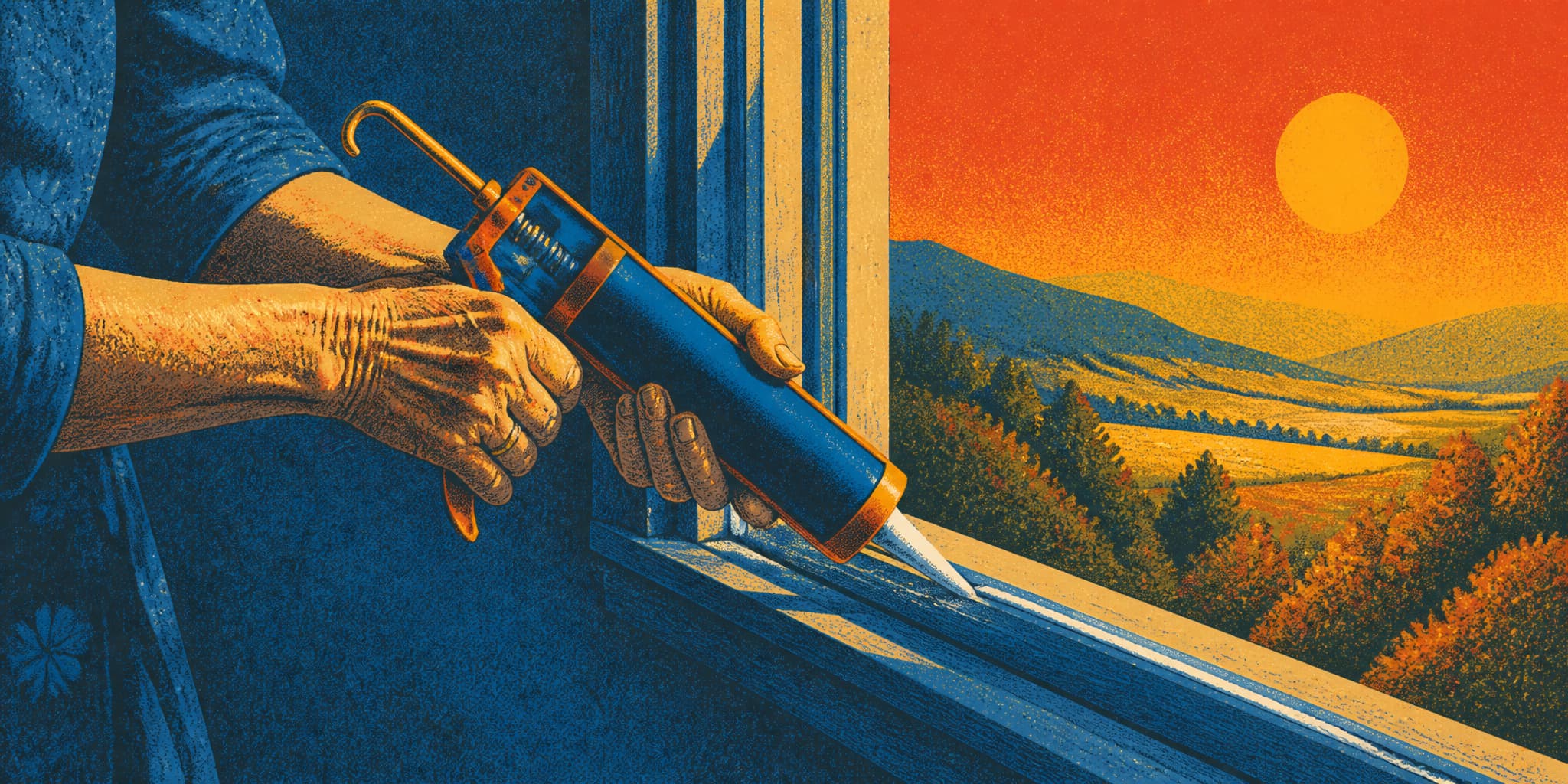
She got the caulk gun from the garage.
- Phantom smells in aging: In a population-based Swedish study of adults ages 60–90, 4.9% reported perceiving odors that weren't present, with smoky or burnt smells the most commonly reported type.
- Shortening days, unchanging photoperiod: Oregon's Seventh Climate Assessment projects warmer, drier summers and diminished snowfall across the state, but astronomical day length remains the one seasonal signal that warming cannot shift.
- Rain falling harder, land getting drier: A 2026 Nature study found that concentrating precipitation into fewer, heavier events reduces terrestrial water storage even when total rainfall stays the same or increases.
- When the river outlasts the warning: Research published in Nature Geoscience found that river heatwaves lasted longer than atmospheric heatwaves in 99.6% of compound events, by an average of nearly three days.
