Alameda, California, an island city in San Francisco Bay, 2041.
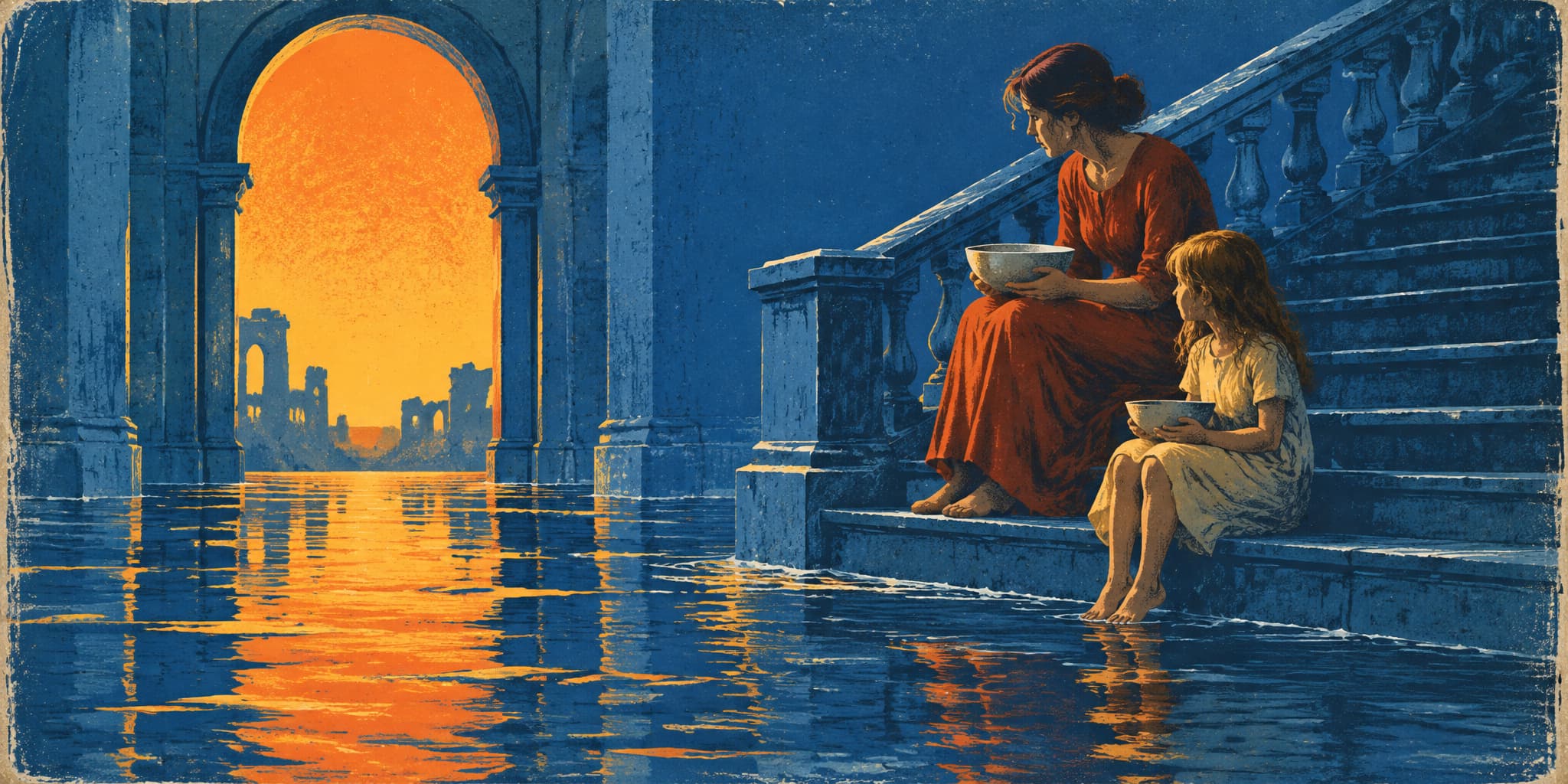
At 4:10 a.m. the kitchen tile is cold under her feet, not yet wet. She lifts the chairs onto the table while her daughter, mostly asleep, carries the dog upstairs.
The water comes from below. It beads in the grout, then the concrete itself starts to sweat. It rises without a sound. Pennies and the bay at the back of the throat. The corner pump runs the whole time; nothing is wrong with it. The water reaches the cabinet's second shelf anyway. They stopped keeping anything there.
They eat on the stairs, bowls on knees, watching the water hold still.
By noon it has sunk back into the floor, leaving a pale line on the cabinet doors, a finger-width above last spring's.
She mops. Upstairs, at bedtime, the cold of the tile is still in her feet.
What the household calls things
- The visit: the water that comes up through the floor most mornings. Usually gone by noon.
- Breathing: the pump at night. Even when it stops, part of it is still underwater.
- Bay day: rain and high tide (the sea at its daily highest) arriving together. The water climbs higher and stays past lunch.
- Penny smell: iron from the grout. Means the floor hasn't dried in a week.
- The yard: where the pump sends the water. The grass went brown, then white with salt. Pickleweed, a wild plant that likes salt water, came up on its own.
- Gurgle: the downstairs drain pushing back. No one flushes while the water is in.
- The pencil line: a hairline crack across the hall floor, traced in pencil every month. Lately it has started to turn a corner.
- Upstairs: the dog, the rice, the passports.
- The city map: rates their street's flood risk as average, because it counts the dry months too.
