

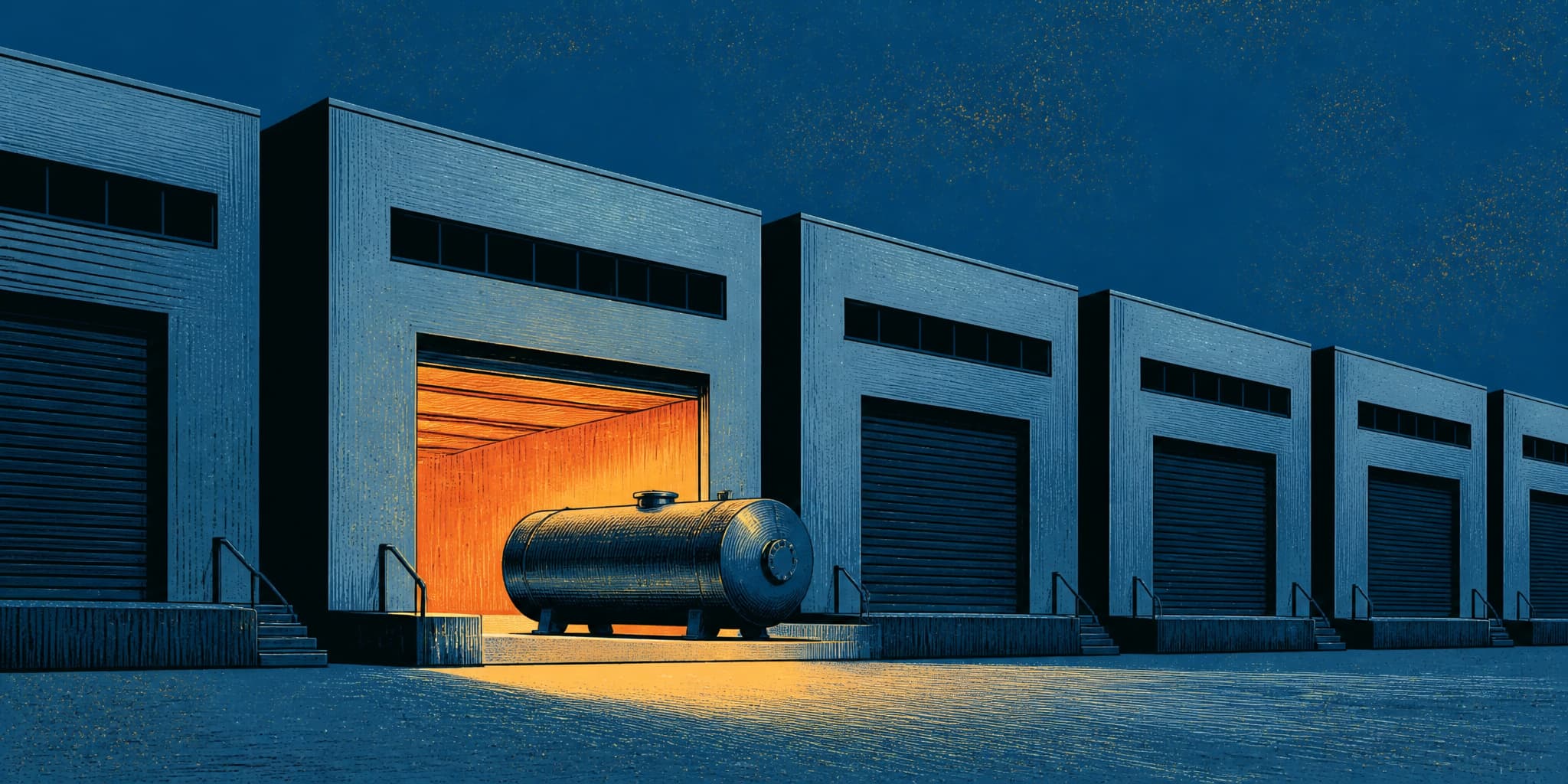
Tier Summary
| Supply-Chain Tier | What It Produces | Typical Investment | Tier-3 Viable? |
|---|---|---|---|
| OEM Final Assembly | Large power transformers (100+ MVA), utility-scale switchgear lines, HVDC converter stations | $200M–$1B+ | No |
| Components & Enclosures | Bushings, MV switchgear structures, specialty transformers (1–10 MVA), tanks/enclosures, controls/wiring assemblies | $30M–$110M | Yes |
| Repair & Remanufacturing | Transformer service, oil processing, rewinding, refurbishment of distribution and small power units | $5M–$30M | Yes — compliance-gated |
Hitachi Energy committed $106 million to Alamo, Tennessee (population ~2,400). WEG committed $77 million to Washington, Missouri (~14,000). Pennsylvania Transformer Technology committed $102.5 million to Raeford, North Carolina (~5,000). Eaton committed $30 million-plus to Bellevue, Nebraska (metro Omaha, but the building and investment profile are instructive at the facility level). Eaton and PTT target production by first half 2027. The timeline compression matches what the market data shows: grid-equipment manufacturers cannot add capacity fast enough, and they are solving the problem in smaller markets where buildings exist, land clears, and permitting moves.
The companies say so publicly. Hitachi Energy cited the need to "expand transformer component manufacturing capacity" to meet "growing demand for grid infrastructure." WEG described a 50% production-capacity increase for specialty transformers. Eaton framed Bellevue around "high volume of switchgear structures" and integration with prefabricated power systems. Grid modernization spending under IRA and IIJA is flowing through state energy offices and utility rate cases. The installed base of U.S. power transformers is aging. Data center construction is accelerating utility capital plans. All three forces land on the same constraint: not enough domestic manufacturing capacity for the equipment utilities need to order.
The same large-load growth driving that demand competes with your site for substation capacity and utility engineering resources. That constraint surfaces in the power section below.
OEM Final Assembly — The Anchor Layer
Large power transformer final assembly and utility-scale switchgear line production do not land in tier-3 markets. The disqualifiers are specific: labor pool depth (500+ specialized employees), test infrastructure (high-voltage bays rated to 500 kV+), and supply-chain gravity pulling toward existing OEM campuses. Hitachi Energy in South Boston, Virginia. ABB in St. Louis. Siemens Energy in the Charlotte area.
These facilities matter to tier-3 cities as the downstream customers creating supplier pull. When a large transformer OEM announces an expansion, the actionable question for a smaller market is what that plant needs to buy within a regional trucking radius.
Components and Enclosures — Five Product Categories
Bushings and Transformer Components
Hitachi Energy's $106 million expansion in Alamo, Tennessee (announced August 20, 2025; 100+ jobs) adds 60,000+ square feet: 35,000 square feet of manufacturing, 20,000 of warehousing, 5,000 of office. The facility produces bushings for HVDC and AC transmission systems rated to 800 kV, with an integrated logistics center and vertically integrated machine shop for just-in-time delivery. Tennessee provided state support; disclosed dollar amounts were not found in public sources.
Alamo is a town of roughly 2,400 people. But this is an incumbent expansion, and that is the dominant pattern in bushing manufacturing. The process requires specialized tooling and quality certifications that make greenfield entry expensive. A city without an existing bushing manufacturer is unlikely to attract one cold.
The tier-3 opportunity is in the functions Hitachi is vertically integrating. Precision machining of bushing hardware. Gasket and seal fabrication. Crating and logistics handling of fragile high-value components. A 230 kV bushing weighs roughly 850 pounds and measures nearly 13 feet. Bushings ship in orientation-controlled crates by flatbed or drop-deck truck. Highway access matters more than rail adjacency. The workforce profile centers on electrical and electronic equipment assemblers (BLS 51-2028) and inspectors and testers (51-9061), plus machinists for the integrated machine-shop functions. SVHEC in South Boston, Virginia, provides the closest training proof point: a five-day customized program for Hitachi Energy covering transformer structural assembly, metric measurement, and blueprint reading, with a 10-person first cohort and employer-donated equipment.
Medium-Voltage Switchgear Structures
Eaton's $30M+ facility in Bellevue, Nebraska (announced April 8, 2026; 200+ engineering, manufacturing, and production roles) occupies a 370,000-square-foot former Blue Buffalo building on 22.5 acres, with production expected first half of 2027. Local officials cited interstate proximity and building availability as location advantages. The city planned to evaluate Eaton for LB-840 economic development funds; no dollar amount was disclosed.
Bellevue is functionally an Omaha suburb within a metro of roughly 1 million. The labor pool, interstate network, and building inventory Eaton draws on are metro-scale assets. The comp is instructive for facility specs and investment level. A standalone city of 65,000 should not assume equivalent labor-shed depth.
This is the most accessible product category in the component tier. The manufacturing process is closer to heavy sheet-metal fabrication than to transformer winding. Switchgear sections ship as individual vertical units on pallets, typically 600 to 1,050 pounds each, by dry van or flatbed. No oversize permitting. No rail requirement evident in the Eaton comp.
What the Bellevue deal reveals about site requirements: the $30M investment level suggests retrofit and equipment, not ground-up construction. An existing industrial building of 300,000+ square feet with interstate proximity was sufficient. Public sources did not disclose power-service configuration, clear height, floor load, or crane systems. The 200+ jobs span electrical and electronic equipment assemblers (BLS 51-2028), inspectors and testers (51-9061), and first-line production supervisors (51-1011).
A city with a large vacant industrial building, interstate access, and a community college willing to stand up assembler training has a credible pitch here. A city that has to build ground-up is competing against the Bellevues that already have the building.
Specialty Transformers (1–10 MVA)
WEG's $77 million expansion in Washington, Missouri (announced September 23, 2025; 50 new jobs) adds 130,000 square feet to a campus already operating three transformer facilities producing units from 2.5 MVA pad-mounts to 100 MVA power transformers. Washington is a city of about 14,000. WEG has operated there since at least 2021, when it opened its fifth North American transformer factory on roughly 13.4 acres with 158,000 square feet of manufacturing space. Missouri DED confirmed the project will benefit from Missouri Works, which provides retained withholdings or tax credits for job creation. WEG's 50 new jobs at wages "well above" county average likely qualify under the Statewide Works tier, which requires a minimum of 10 new jobs at 90% of county average wage.
Harder to win as a greenfield prospect. Specialty transformer manufacturing requires coil winding equipment, vacuum-pressure impregnation or vapor-phase drying systems, and high-voltage test bays. The workforce profile includes coil winders, tapers, and finishers (BLS 51-2021), a narrow occupation that does not exist in most labor markets. WEG's solution: a registered apprenticeship through East Central College covering industrial maintenance, welding, and machining, plus state-funded customized training that put 45 employees through welding certifications in a single year with a 100% completion rate. ECC also delivered on-site English Language Acquisition classes for 31 WEG employees. That detail signals the real workforce pipeline challenge in smaller markets more clearly than any labor-shed analysis would.
The realistic tier-3 path here is incumbent expansion, not greenfield recruitment. If your city already has a transformer manufacturer, the expansion case is strong. If it does not, the entry point is tank fabrication or controls assembly, not a standalone transformer line.
Tank and Enclosure Fabrication
No single comp in the research isolates this category as a standalone operation. It is embedded in every transformer project above. Transformer tanks are welded steel enclosures meeting dimensional tolerances, oil-tightness standards, and corrosion-protection requirements. A tank for a 10 MVA transformer can weigh 8,000 to 15,000 pounds empty, potentially crossing oversize/overweight thresholds that require permits, route surveys, and escort vehicles depending on state regulations.
The facility profile is a steel fabrication shop: overhead crane capacity of 20 to 60 tons (PTT's Raeford facility has 60-ton crane and high-bay space), welding stations, blast-and-paint capability, floor load rated for heavy steel assemblies. Cities with legacy heavy-fabrication infrastructure and a welding workforce have a structural fit. The product ships to OEM assembly plants within a regional radius. Two corridors show concentration: the Mid-South from Tennessee through the Carolinas (Hitachi in South Boston and Alamo, PTT in Raeford), and the Missouri-to-Illinois corridor (WEG in Washington, ABB in St. Louis). A city outside these corridors is not disqualified. But proximity to an OEM campus within same-day truck delivery range (editorial estimate: 250 miles or less) strengthens the pitch materially.
PTT's $102.5 million expansion in Raeford, North Carolina (announced February 17, 2025; 217 jobs; 300,000 square feet across two new facilities) provides the clearest incentive benchmark in this sector:
| Incentive | Source | Amount |
|---|---|---|
| Performance-based grant (job creation + capex targets required) | One North Carolina Fund | $800,000 |
| Sewer infrastructure grant | Rural Infrastructure Authority | $1,400,000 |
| 78 acres industrial-park land (appraised $751,500; sold at $4,500/acre) | Hoke County | $352,395 purchase price |
Named project partners included NCDOT Rail Division, North Carolina Railroad Company, Aberdeen & Rockfish Railroad, Golden LEAF Foundation, and Piedmont Natural Gas. PTT's new 150,000-square-foot pad-mount facility targets Q4 2026 completion with shipments beginning early 2027.
The incentive structure tells a consistent story across the comp set. Infrastructure investment and discounted land carried more weight than cash grants. Where incentive details are public, the infrastructure commitments (sewer extensions, rail access, site preparation) are larger and more operationally decisive than the cash. The workforce pipeline proof point: Sandhills Community College's partnership with PTT launched registered pre-apprenticeships and apprenticeships in welding and industrial electrician occupations, backed by a $155,000+ three-year training partnership and no-cost pre-employment training for assembler, mechatronic technician, and supervisor openings at $21.65/hour starting pay with guaranteed interviews.
Controls and Wiring Assemblies
Lightest-touch entry point in the tier. Control cabinets, wiring harnesses, and relay panels for switchgear and transformer applications are assembled in clean, climate-controlled environments closer to electronics manufacturing than heavy industry. Shipments move by dry van at standard truck weights. The workforce centers on electrical and electronic equipment assemblers (51-2028) and inspectors/testers (51-9061). Training pathways are shorter than for coil winding or heavy fabrication: Sandhills Community College's pre-employment training with PTT covers assembler and mechatronic technician roles and can be stood up within a single enrollment cycle.
Facility requirements: 30,000 to 80,000 square feet (editorial estimate based on the scale of controls operations embedded in larger comp facilities), standard three-phase 480V, loading docks. Logistics proximity matters but is harder to pin to a radius than for tank fabrication. Controls assemblies serve multiple OEMs and integrators, and the customer relationship determines the shipping pattern. A city within 300 miles of a transformer or switchgear OEM campus can make a proximity argument. A city farther out needs a cost-of-operations case. The variable is the specific OEM relationship, not a universal distance threshold.
The Power Constraint That Doesn't Make the Press Release
Across all five categories, power requirements range from standard three-phase 480V service for controls assembly up to an editorial estimate of 1 to 5 MW for specialty transformer test bays. That estimate is inferred from the process requirements of high-voltage testing, vacuum impregnation, and vapor-phase drying, not from disclosed utility loads at the comp facilities. None of the comp announcements disclosed specific power draws.
None of them disclosed whether the local utility had spare capacity to serve them, either. Cities located near major data center clusters or large industrial electrification projects may find their local utility fully committed. A 100 MW data center campus absorbs substation capacity and utility engineering staff for months or years. The 2 to 5 MW a component manufacturer needs may be technically available on the system but practically delayed by interconnection queue depth and engineering bottleneck.
Before pitching a grid-equipment manufacturer, call your utility. Ask about interconnection queue depth and utility engineering staff allocation, not just available capacity on paper. A city 60 miles from the data center boom, with a utility that has spare capacity and available engineering resources, may be better positioned than the city at the center of demand.
Repair and Remanufacturing — Four Compliance Gates
Transformer repair and remanufacturing is growing on the same capacity bottleneck pushing the component tier. Utilities that cannot get a new unit for 18 months or longer are investing in life extension of existing equipment. Investment levels run $5M to $30M. The facility profile is a heavy industrial shop with overhead cranes, oil-handling infrastructure, and test equipment. The workforce overlaps with the component tier but adds oil-processing technicians and high-voltage test specialists.
Public facility announcements in this tier are scarce. Most repair and remanufacturing operators are privately held regional firms that do not issue press releases when they expand. The opportunity is real. The public signal evidence is thinner than in the component tier. Directors evaluating this category should look for regional operators already in their market or adjacent to it: transformer service companies, oil-processing firms, industrial motor repair shops with electrical-apparatus capability. Waiting for a national announcement is the wrong posture.
The gate is compliance, operating on four tracks a city must evaluate independently.
Oil containment. EPA's 40 CFR 112 SPCC requirements mandate secondary containment sized for the largest single container plus precipitation. This is a site-design requirement that adds cost and constrains building layout but is not a permitting barrier for a city with industrial-zoned land and stormwater infrastructure.
PCB intake. Any facility accepting pre-1979 transformers must assume PCB contamination potential. EPA's 40 CFR 761 governs handling, storage, and disposal. Declining PCB-contaminated units narrows the addressable market. Accepting them triggers storage, manifesting, and disposal requirements that add regulatory complexity and cost.
Fire protection. NFPA 30 governs storage and handling of transformer oil. ICC guidance notes that Class IIIB combustible liquids in sprinklered buildings may not have a maximum allowable quantity per control area, but spill control and secondary containment requirements apply differently by liquid class. Local fire-code review may distinguish environmental containment, insurer containment, and fire-code containment as three separate requirements rather than one. Local fire marshal interpretation is the operative variable.
Insurance. Often the binding constraint. FM Global's Data Sheet 5-4 specifies containment sized for transformer fluid contents plus fire-suppression discharge for at least 20 minutes with no less than 3 inches of containment depth, emergency drainage, and approved suppression systems. Outdoor containment must accommodate at least 60 minutes of 500 gpm fire-hose flow plus water-spray discharge. A facility that cannot meet FM or equivalent insurer standards may be technically permittable but economically uninsurable. Directors evaluating a repair/reman prospect should ask the prospect's insurance carrier what the facility requires before investing in site preparation.
Workforce Pipeline — Three Models by Product Category
The three training partnerships documented in the comp cities show what grid-equipment manufacturers actually require from a training partner. Each maps to specific product categories.
Registered apprenticeship with curriculum depth (specialty transformers). East Central College runs registered apprenticeships with WEG covering industrial maintenance, welding, and machining. Missouri One Start funding supported 45 employees through welding certifications in a single year. This model fits the specialty transformer category, where coil winders (51-2021) and maintenance technicians require months of training before they are productive.
Pre-apprenticeship bridge with high-school pipeline (tank fabrication, assembly, controls). Sandhills Community College launched registered pre-apprenticeships and apprenticeships in welding and industrial electrician occupations with PTT, including high-school pre-apprentices from Hoke County High School. A $155,000+ three-year training partnership covers 16+ training types. This model fits tank fabrication and assembly categories where welders, assemblers, and mechatronic technicians are the core occupations.
Rapid customized training for incumbent expansion (bushing/component manufacturing). SVHEC in South Boston delivered a five-day customized program for Hitachi Energy covering transformer structural assembly, metric measurement, and blueprint reading, with a 10-person first cohort and employer-donated equipment. This model fits the component category where an incumbent manufacturer is expanding and needs to onboard workers fast.
The common thread: the manufacturer defines the curriculum. The institution delivers it. The proof artifact a director needs is not an existing program catalog listing. It is a documented willingness and capacity to build an employer-specific training partnership within one enrollment cycle.
Timing
Every comp cited above announced between February 2025 and April 2026, with production targets in 2026–2027. IRA and IIJA funding for grid modernization is flowing through state energy offices and utility rate cases now. The supply-chain constraint driving these investments is structural: an aging installed base, accelerating electrification, and years of underinvestment in domestic transformer and switchgear manufacturing capacity do not resolve in a single build cycle.
Facility-siting decisions are happening in a compressed window as OEMs and their suppliers race to add capacity. A city that can demonstrate site readiness, workforce pipeline, and utility availability now is positioned for the current wave. A city that needs 18 months to get a site pad-ready is positioned for the next one.
-
FERC's computational-load order: FERC directed NERC on July 16, 2026 to develop new reliability standards for computational-load integration by December 31, 2026, which would formalize large loads as a permanent planning category and sustain grid-equipment demand beyond the current data center cycle.
-
Distribution transformer bottleneck shift: DOE's March 2026 webinar recorded a manufacturer stating that distribution-transformer lead times had "normalized over the last several months," while special components like lightning arresters, secondary breakers, and fuses still face supply challenges, suggesting the opportunity may be migrating from generic transformer scarcity toward specific component bottlenecks.
-
Siemens Energy's Mississippi greenfield: Siemens Energy's $1 billion U.S. grid-equipment investment program includes a new high-voltage switchgear facility in Mississippi, one of the few greenfield grid-equipment plants announced outside an incumbent campus, worth tracking for disclosed site attributes and incentive terms as the project advances.
-
Data center electricity demand range: LBNL's June 2026 update estimates U.S. data center electricity use could reach 649 TWh by 2030 in the reference case, with bounds of 521 to 843 TWh, a range wide enough that the grid-equipment demand outlook could shift materially depending on which scenario holds.