

Brownsville, TX Publishes What Most Tier-3 Utilities Won't: Named Substation Capacity With Dates

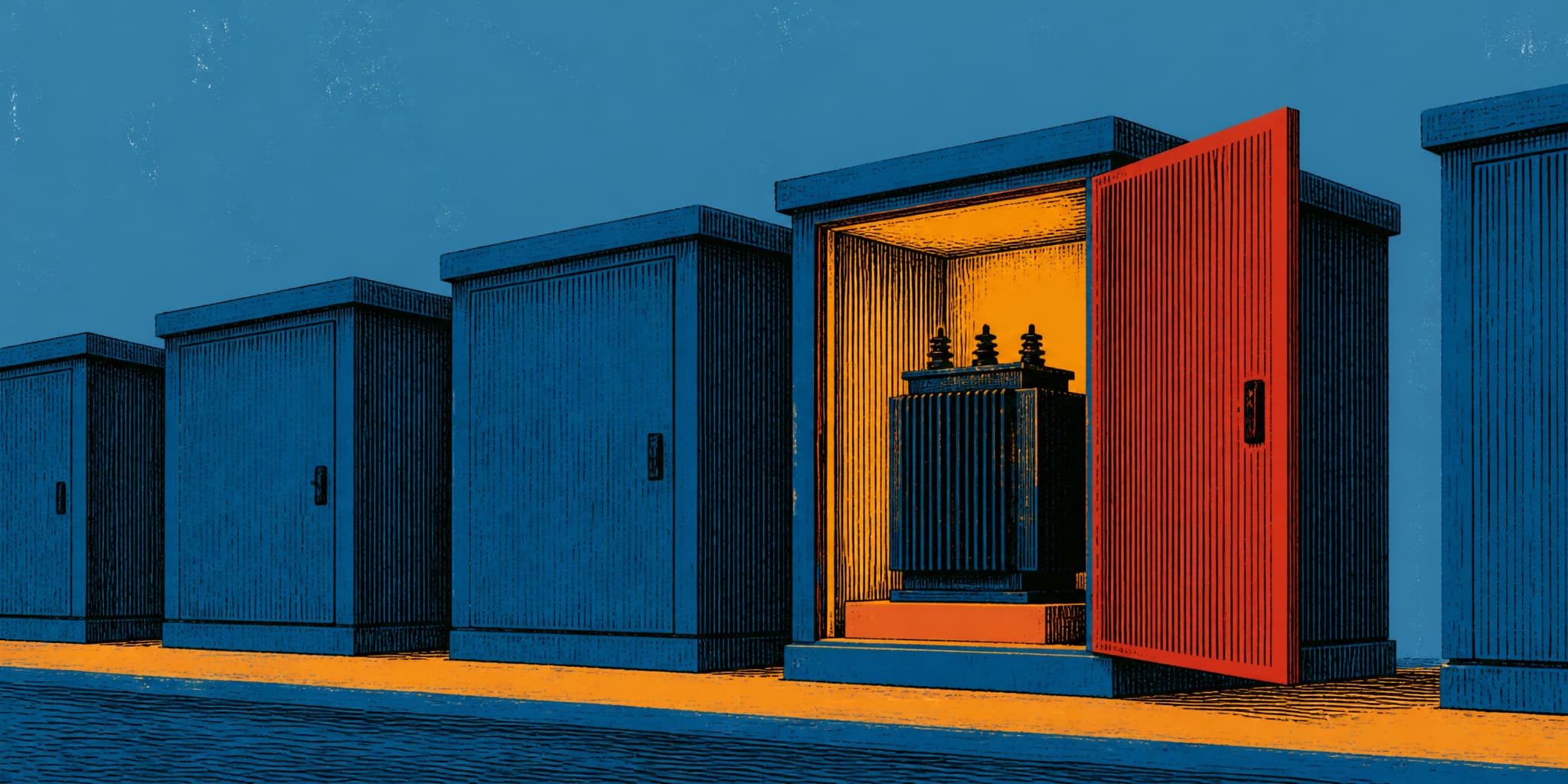
Brownsville, TX (pop. 186,738) is running two pre-deal positioning moves on overlapping timelines: a federal EDA application for horizontal infrastructure on 60 acres enabling 740,000 SF of industrial buildout, and a municipal utility substation program that publishes MVA ratings and energization dates through Q3 2028, including a 250 MVA transformer. The deal category is energy-intensive manufacturing with large power draws. The competitive differentiator is the documentation. A site selector's engineering team can evaluate both site readiness and power timelines from public-facing pages without placing a single call.
Brownsville, TX Publishes What Most Tier-3 Utilities Won't: Named Substation Capacity With Dates
Brownsville, TX (pop. 186,738) is running two pre-deal positioning moves on overlapping timelines: a federal EDA application for horizontal infrastructure on 60 acres enabling 740,000 SF of industrial buildout, and a municipal utility substation program that publishes MVA ratings and energization dates through Q3 2028, including a 250 MVA transformer. The deal category is energy-intensive manufacturing with large power draws. The competitive differentiator is the documentation. A site selector's engineering team can evaluate both site readiness and power timelines from public-facing pages without placing a single call.
The Limit Case

Connecticut awarded $4M to the Waterbury Development Corporation for Phase 3 abatement and remediation at the 17.46-acre former Anamet site (698 South Main Street). The grant completes a cleanup sequence dating to 2017: $650,000 site acquisition, $2.7M roof replacement on a 200,000 sq ft high-bay building, and over $2.4M in prior state and regional brownfield funding across Phases 1 and 2. Total public investment now approaches $9.8M.
The documented reuse case in the June 17, 2026 grant: warehouse, distribution facility, and office complex. Not manufacturing. Three RFP rounds over nine years produced no manufacturing outcome. The market routed to logistics and commercial.
The $4M bounds environmental liability on a parcel that has carried it for decades. Contamination uncertainty is retired. End-use alignment is a separate variable, and remediation funding does not touch it. A fully remediated site with a logistics reuse plan is a clean site with no documented manufacturing case.
The two disqualifiers are independent. Any director sitting on a legacy industrial parcel with remediation money in hand still needs a sector-specific reuse case built from utility documentation, workforce data, and tenant interest before the site is pitchable for manufacturing.