
On July 13, 2026, the Sunnyside Neighborhood Association posted a short announcement about a new Events Committee. The committee would coordinate Halloween festivities, the Spring Fest, neighborhood cleanup days. Neighbors interested in helping could email Sara, identified through the contact address as Sara Barz, the board's Member-at-Large. The post ran a few sentences. It did not explain why the committee was needed. But the fact of its creation tells you something: the SNA had concluded that scheduling events and designing events were different problems. Someone needed to think about how gatherings actually worked once people walked through the door.
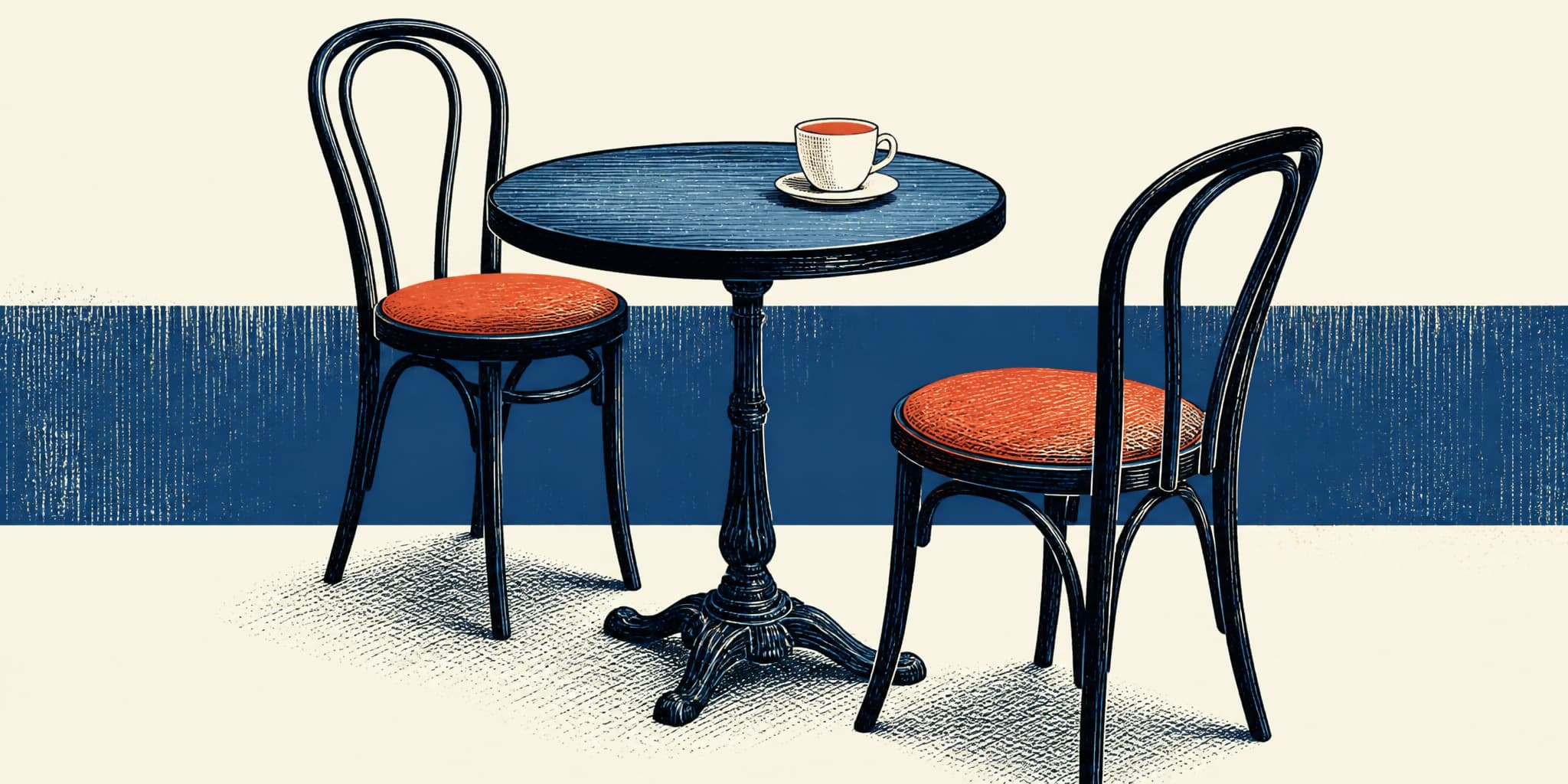
The most immediate result of that thinking is also the smallest: the SNA coffee hour at Railroad Espresso, 705 Monterey Blvd, held on the last Saturday of each month from 9 to 10 a.m. The next one falls on July 25.
San Francisco's active business registration records show Railroad Espresso operating at that address since 1998. Twenty-eight years at the same spot on the commercial stretch that functions as Sunnyside's closest approximation of a main street. The SNA could have booked a community room or a church basement. Instead it chose a shop that many residents have already entered for their own reasons on a Saturday morning. The threshold is a door you've probably already walked through.
The SNA's June 26 post describes the coffee as a chance to "meet the board and neighbors, raise a gripe, or propose a project." That three-part phrase repays a closer reading. "Meet the board and neighbors" asks nothing of the person who shows up; you are there to attach faces to an organization you may have only vaguely registered. "Raise a gripe" grants permission to arrive with a complaint rather than enthusiasm, which is honest about why many people first seek out a neighborhood association. Something is bothering them. A pothole, a construction permit, a noise pattern. "Propose a project" signals that the SNA is listening for ideas it has not yet had.
Taken together, the three phrases describe a gathering with no wrong way to attend. You can buy a coffee, sit near the table, and leave without having spoken to anyone on the board, and you will not have failed at the event. There is no sign-in sheet, no agenda, no program to sit through. The hour has edges but no interior structure to navigate.
This matters more than it might seem, because the first minute of any community gathering is the hardest minute. A person walks in, scans the room, tries to figure out where to stand and whether anyone will acknowledge them or whether they'll have to initiate. A coffee shop compresses that calculus. The room already has a commercial purpose. Other customers are already seated for their own reasons. The SNA table is one element in a functioning business, not the sole justification for the room's existence. A newcomer who loses nerve can order a drink and sit down and still be a customer, which is a role that requires no explanation.
The SNA board has published its membership and roles on the association website. A resident who wants to know who they might encounter at the coffee table can look up names and positions before leaving the house. A small courtesy, but it reduces the informational gap between the person walking in and the people already seated.
None of this is dramatic. A neighborhood coffee hour will not resolve a land-use dispute or produce a lasting friendship on any given Saturday morning. Most months, it probably yields a few brief conversations, a complaint or two that the board files away, and a general confirmation that the association is staffed by actual people who drink actual coffee at an actual table. That is enough. The value of a recurring, low-stakes gathering accumulates not in any single instance but across months. A resident who came once and spoke to no one comes back a second time and nods at someone whose face has become familiar. A third visit produces a name. A fourth, a conversation about the block. Familiarity assembled through repeated proximity, over time, without anyone having to force it.
Saturday, July 25, 9–10 a.m. at 705 Monterey Blvd. The only requirement is that you buy your own drink.