
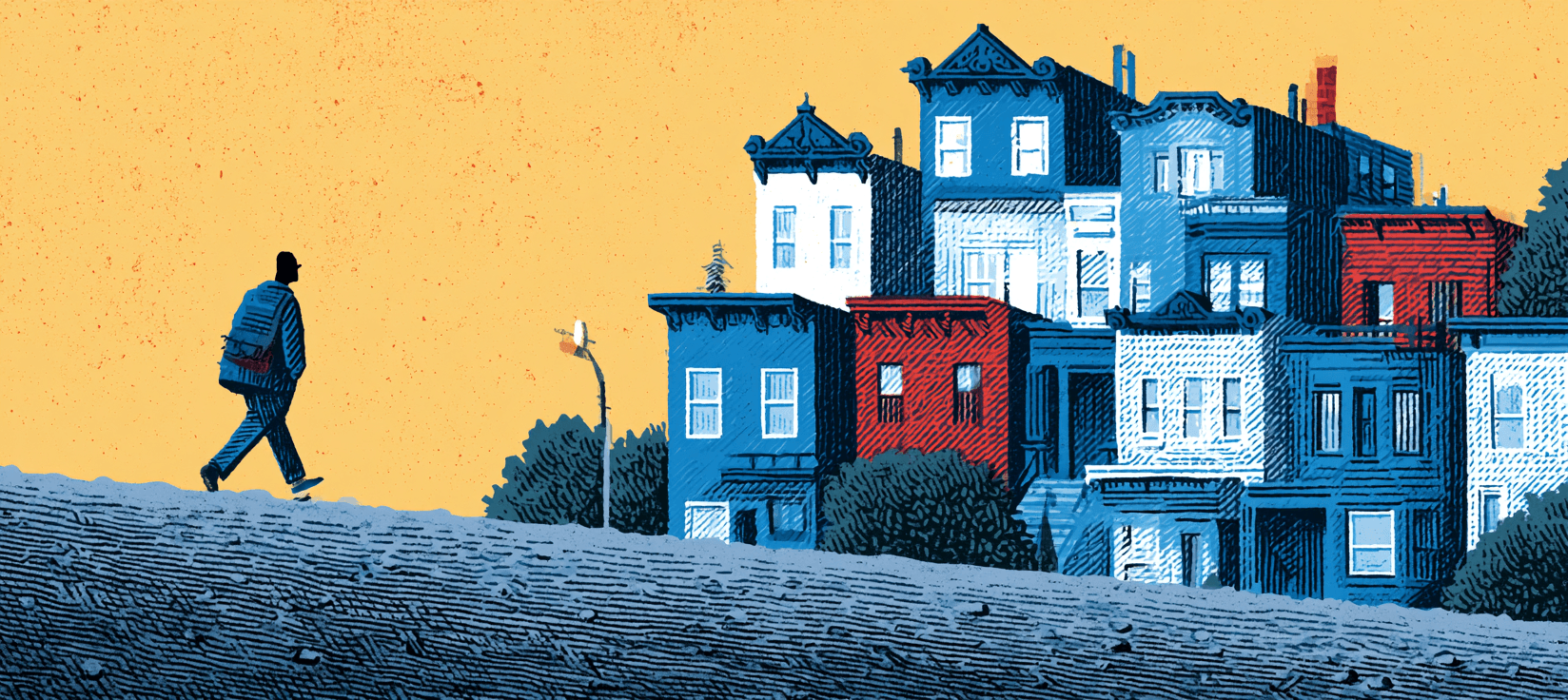
The Double Announcement

Four sites in Sunnyside share a pattern: each is officially designated public space, but what makes any of them feel public to a person standing there is the visible evidence of care.
Sunnyside Conservatory earned Landmark No. 78 in 1975; three years later, a mistakenly issued demolition permit took down a third of the building. What reads as public at 236 Monterey today — the ferns, the bronze fence, the garden passage to Joost — is volunteer work made visible. At the Detroit Steps, a blighted right-of-way became a destination only after signage, native plantings, and a stairway mural gave it a face. Dorothy Erskine Park, dedicated 1979, is still becoming legible, its native grassland half-obscured by invasive grasses the Friends group works to clear. At the Joost and Baden Mini Park, the official city sign competes with a neighbor's stone dachshund for the job of marking the entrance.
As the Sunnyside History Project has documented, all four trace to the Sunnyside Land Company's 1891 failure to read the topography. Streets too steep became stairs; lots too rocky became parks; sewer easements became gardens. The designations came later. What a walker sees at each site is the accumulated evidence of volunteer care.
Steep and Leftover

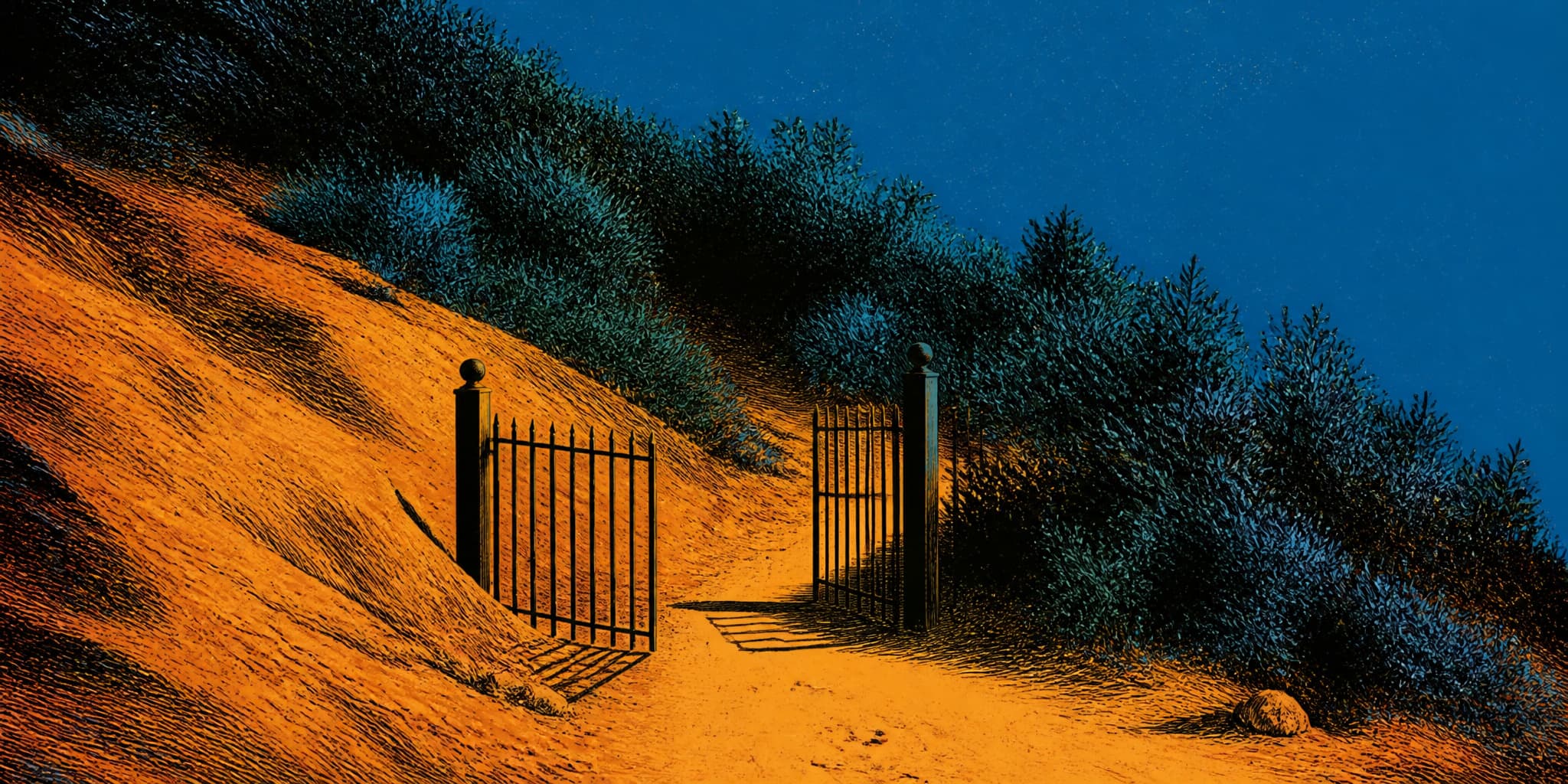
Stand on Joost Avenue and look south toward the Conservatory. Its glass roof sits at your feet, level with Monterey Boulevard, twenty-two feet below. That grade difference is why the building has a rear entrance at all. It's also the first clue to a pattern that holds across Sunnyside's smaller public spaces: the stairway garden on PUC utility land, the hilltop park whose entrance looks like a private driveway. These places occupy terrain the street grid couldn't absorb. They became public through decades of accumulated, mostly anonymous care.
Steep and Leftover
Stand on Joost Avenue and look south toward the Conservatory. Its glass roof sits at your feet, level with Monterey Boulevard, twenty-two feet below. That grade difference is why the building has a rear entrance at all. It's also the first clue to a pattern that holds across Sunnyside's smaller public spaces: the stairway garden on PUC utility land, the hilltop park whose entrance looks like a private driveway. These places occupy terrain the street grid couldn't absorb. They became public through decades of accumulated, mostly anonymous care.
Two Announcements
Hearst Avenue, Designated Slow
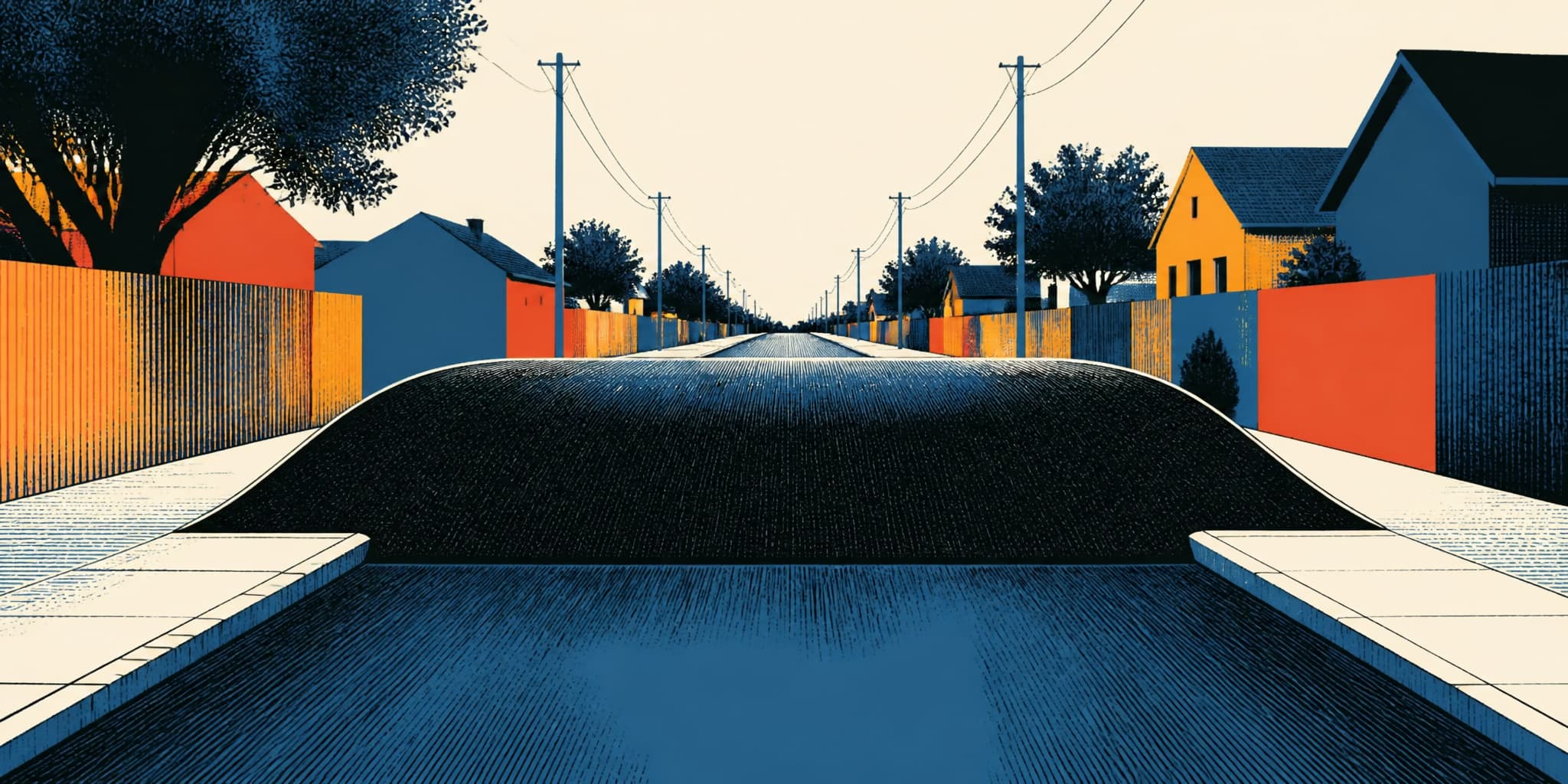
Hearst Avenue has carried a permanent Slow Street designation since December 2022, backed by signs, posts, and six speed tables installed to hold vehicle speeds at or below 15 mph. When SFMTA evaluated the corridor in January 2023, median speeds were running at 20. The speed tables came in response, two years later. Whether they changed anything remains, by the published record, unanswered. Walking from Ridgewood to Baden shows where the infrastructure is, and where it runs out.

The Conservatory's Two Entrances
The Sunnyside Conservatory at 236 Monterey Boulevard is one building with two street entrances separated by fifteen feet of grade. From Monterey, it reads as a civic landmark with a front gate and a garden path. From Joost Avenue, it is a rear stairway a passerby could miss entirely. The Article 10 landmark designation, the 1978 demolition permit that should never have been issued, and the topography itself all bear on how a single public building meets its neighborhood from two directions.