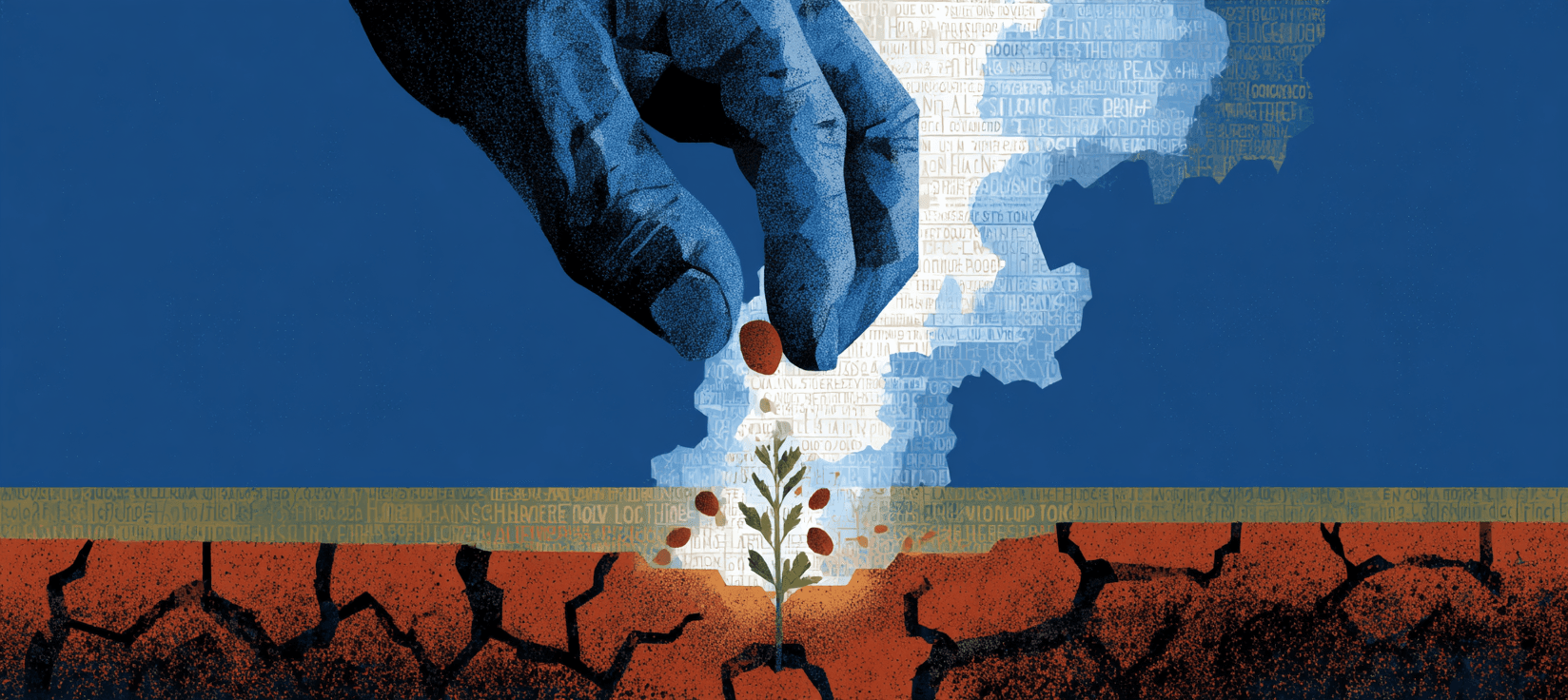
The Double Cost


After the largest wildfire in Nebraska's recorded history burned 642,000 acres of Sandhills rangeland in March, ranchers in Morrill County entered a financial trap with no federal instrument designed to spring it. They owe full overhead on land producing nothing while paying separately to keep displaced herds alive through calving season. Each USDA program covers a fraction of a specific loss. Nobody asks the compound question: whether a family operation survives years of double cost on zero revenue. The grass will likely recover. It will recover into a more flammable version of itself, on a timeline no one is required to confront.
The Double Cost
After the largest wildfire in Nebraska's recorded history burned 642,000 acres of Sandhills rangeland in March, ranchers in Morrill County entered a financial trap with no federal instrument designed to spring it. They owe full overhead on land producing nothing while paying separately to keep displaced herds alive through calving season. Each USDA program covers a fraction of a specific loss. Nobody asks the compound question: whether a family operation survives years of double cost on zero revenue. The grass will likely recover. It will recover into a more flammable version of itself, on a timeline no one is required to confront.

An Actuary Built Wildfire Risk Models for Thirty Years, Then Got His Own Nonrenewal Letter
CONTINUE READINGThe Declaration Gap

FEMA's March 13 Fire Management Assistance Declaration reimburses state and local governments for up to 75 percent of firefighting costs. It sends nothing to individual households. No housing repair, no personal property replacement, no temporary shelter. Those require a presidential major disaster declaration carrying an Individual Assistance designation.
None has been issued. Governor Pillen's May 8 request to the White House seeks Public Assistance only, covering infrastructure. Ranching families file through USDA's Farm Service Agency, where every program addresses agricultural losses. The house, the truck, the medical bills occupy no federal column.
What Else Burns

What Disasters Destroy Beyond the Visible
The Highway 82 Fire destroyed 110 homes in Brantley County, Georgia—the worst single-wildfire loss in state history. The fuel was Hurricane Helene's uncleared debris. In fire-adapted Western communities, decades of repetition have built go bags, defensible space, evacuation muscle memory. Brantley County had none of it. What does recovery look like when the disaster that arrives is one your community has never rehearsed, and the generosity filling the gap traces the outline of everything that was never built?

The Systems That Were Keeping People Alive
Eighteen months after Hurricane Helene, the roads in western North Carolina are mostly repaired. The buildings are going back up. But the Tuesday 12-step meeting, the daily Suboxone, the sponsor who picks up on the second ring—the systems keeping people in recovery alive were never counted as infrastructure, and they're still fractured across these mountains. No FEMA form asks about the therapist you stopped seeing because you were pulling drywall out of your living room.
Further Reading