

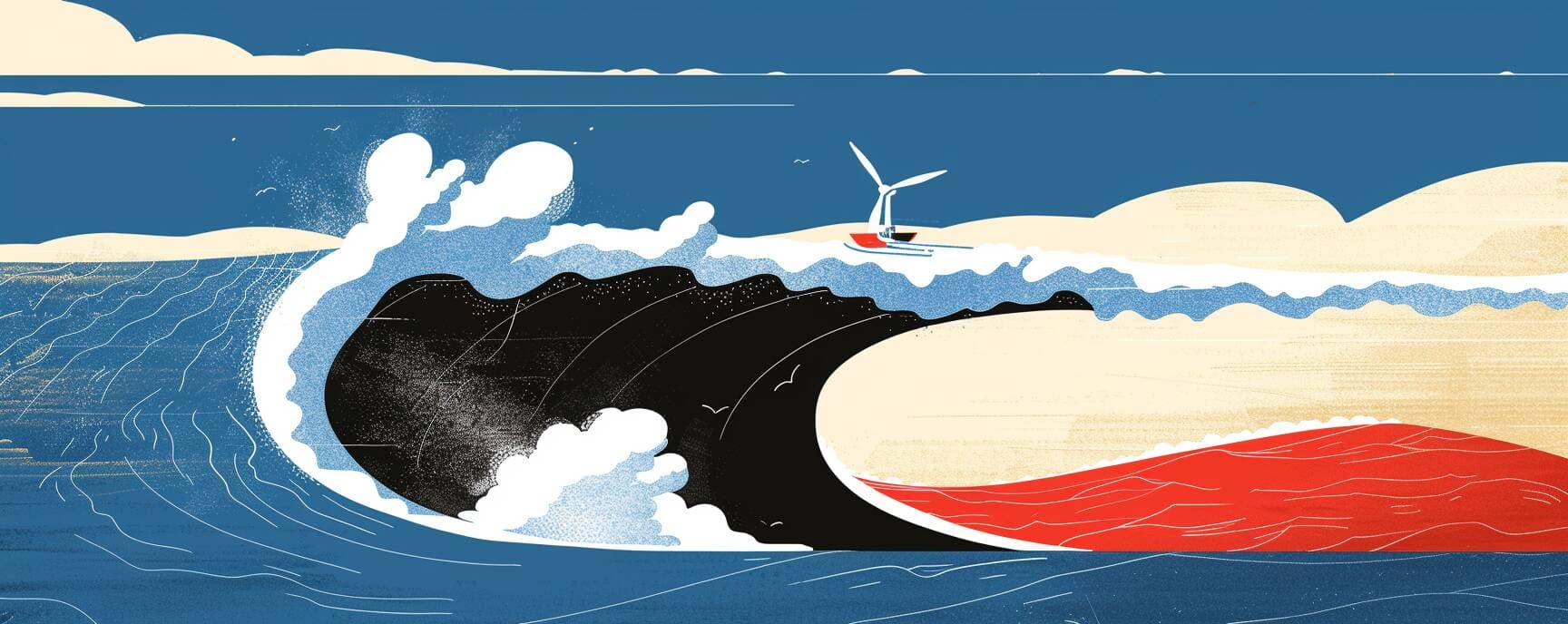
On April 21, 1927, the Mississippi River broke through the main levee at Mounds Landing, eight miles north of Greenville, Mississippi. The crevasse released a volume twice that of Niagara Falls. Water covered Washington County to a depth of ten feet and kept spreading, eventually inundating an area the size of New England.
In Greenville, the seat of the county, Will Percy chaired the local Red Cross relief operation. He was forty-one, a poet, the son of former U.S. Senator LeRoy Percy, and his first instinct was straightforward: the Black refugees flooding into town from surrounding farmland needed to be evacuated to Vicksburg by steamboat, where provisions and shelter were better. He arranged the boats.
His father stopped it.
LeRoy Percy, who still controlled the political machinery of the Delta even after leaving the Senate, understood the arithmetic. The region's cotton economy depended entirely on Black labor. If thousands of sharecroppers were relocated outside Mississippi, a significant percentage would never come back. The elder Percy quietly made his opposition known. At an emergency meeting, the relief committee reversed Will Percy's decision. White residents would leave by boat. Black residents would remain.
The Logic of Detention
Will Percy, retaining his chairmanship, ordered all Black residents onto the levee. The camp stretched seven miles along the crest. More than 13,000 Black evacuees were held near Greenville alone. National Guard troops enforced the perimeter. Across the flooded region, Black Americans constituted 69 percent of the 325,146 people in 154 Red Cross camps. The Colored Advisory Commission later reported:
"Negro inmates complained whites came and went at will without passes, while colored people were not given similar privileges."
The justification was economic and was stated plainly. As John M. Barry documented in Rising Tide, drawing on primary sources: "Mississippi was determined to keep its workers if it required force to do so." Even before Will Percy's relief camp was established, Charles Williams, an employee of LeRoy Percy's plantation, had set up what National Geographic described as "concentration camps" on the levee, complete with field kitchens and tents, for thousands of plantation workers. The infrastructure of detention preceded the relief operation.
After floodwaters receded, the coercion continued through different mechanisms. Local law enforcement arrested thousands of Black men, held them in pens, and released them to white planters who needed labor to rebuild. Will Percy later wrote in his 1941 memoir Lanterns on the Levee, fourteen years after the flood, that Black victims "had no capacity to plan for their own welfare; planning for them was another of our burdens." Shortly after a public speech at a Greenville church, he resigned his chairmanship and left for Japan.
The Report That Never Surfaced
The Chicago Defender, the most widely circulated Black newspaper in the country, broke the story nationally. On July 30, 1927, the Defender ran the headline: "Flood Refugees Are Held as Slaves in Mississippi Camp." Distributed through Pullman porters and mail subscriptions across the urban North, the coverage turned a regional disaster into a national racial crisis. Workers were held by armed guards, compelled to labor without pay, denied freedom of movement. The Defender named the system operating in the camps for what it was: peonage.
The complaints reached Herbert Hoover, who as Secretary of Commerce had been appointed to coordinate all federal flood relief. Hoover's response was calculated. He established the Colored Advisory Commission and named Robert Russa Moton to lead it. Moton was the principal of Tuskegee Institute, Booker T. Washington's successor, and a figure the Republican establishment considered reliable. Hoover's allies had urged him to recruit "the big Negroes" in the party to quiet his critics. He expected that a benign report from the conservative Tuskegee establishment would discredit the NAACP's accusations.
The commission convened on June 2, 1927, at Red Cross headquarters in Memphis. Its members divided into small groups and inspected the camps. What they found confirmed the Defender's reporting: forced labor resembling peonage, inadequate food and medical supplies, discriminatory treatment by relief authorities who prioritized white evacuees.
Moton presented the findings to Hoover. The information was never made public. Hoover had asked Moton to keep a tight lid on the investigation. In return, Hoover implied that if he won the presidency, Moton and Black Americans would play a role in his administration "unprecedented in the nation's history." He hinted at breaking up large plantations and making sharecroppers into landowners. An ecstatic Moton told other Black leaders this would be:
The transaction was explicit. Moton suppressed the report. He championed Hoover's candidacy to Black voters. He managed Black delegates at the Republican convention. Hoover won the nomination on the first ballot and the presidency easily in 1928.
The Broken Promise
The land redistribution never came. The unprecedented role in government never materialized. Hoover, once in office, pursued a "lily-white" Southern strategy, courting white voters in the five Southern states he had carried in 1928, partly because the Democratic candidate Al Smith was Catholic. The political logic that had made Black support useful during the campaign made it expendable after.
The betrayal did not produce an immediate partisan shift. The commonly repeated claim that Hoover "lost the Black vote" in 1932 overstates the speed. In Chicago, the Democratic share of the Black vote actually declined from 27 to 21 percent between 1928 and 1932. By 1932, Moton refused to endorse Hoover but could not bring himself to endorse Roosevelt either, noting that if FDR "has done anything for the Negro as Governor of New York, I have not heard of it." Robert L. Vann, publisher of the Pittsburgh Courier, appealed to Black voters that year:
"Go turn Lincoln's picture to the wall. That debt has been paid in full."
Even Vann's rhetoric did not yet produce a majority.
The flood broke a trust that had held since Reconstruction. The emotional bond between Black Americans and the party of Lincoln, already strained by decades of Republican indifference, cracked at Greenville in 1927. The mechanism was specific: documented abuse exchanged for silence, silence exchanged for promises, promises abandoned once the silence had served its purpose. The full realignment to the Democratic Party came through FDR's New Deal policies over the following decade. But the crack started here.
What the Water Carried
Barry estimates that roughly half the Black population of the Mississippi Delta left after the flood, most heading to Chicago. The Great Migration was already underway before 1927. But the flood accelerated it with particular force. People who had been held on a levee, who had watched their labor compelled and their food rationed by race, who had seen promises of land and dignity offered and retracted, made rational decisions about where to build their lives.
What was not preserved in any archive is the deliberation among the 13,000 people on that seven-mile levee about what they would do when the water went down. The committee minutes from Greenville were recorded. The Defender headlines were preserved. The Moton report, eventually released, was preserved. The decisions made by the people those documents describe were not.
They answered with their feet.