The Wrong Thermometer
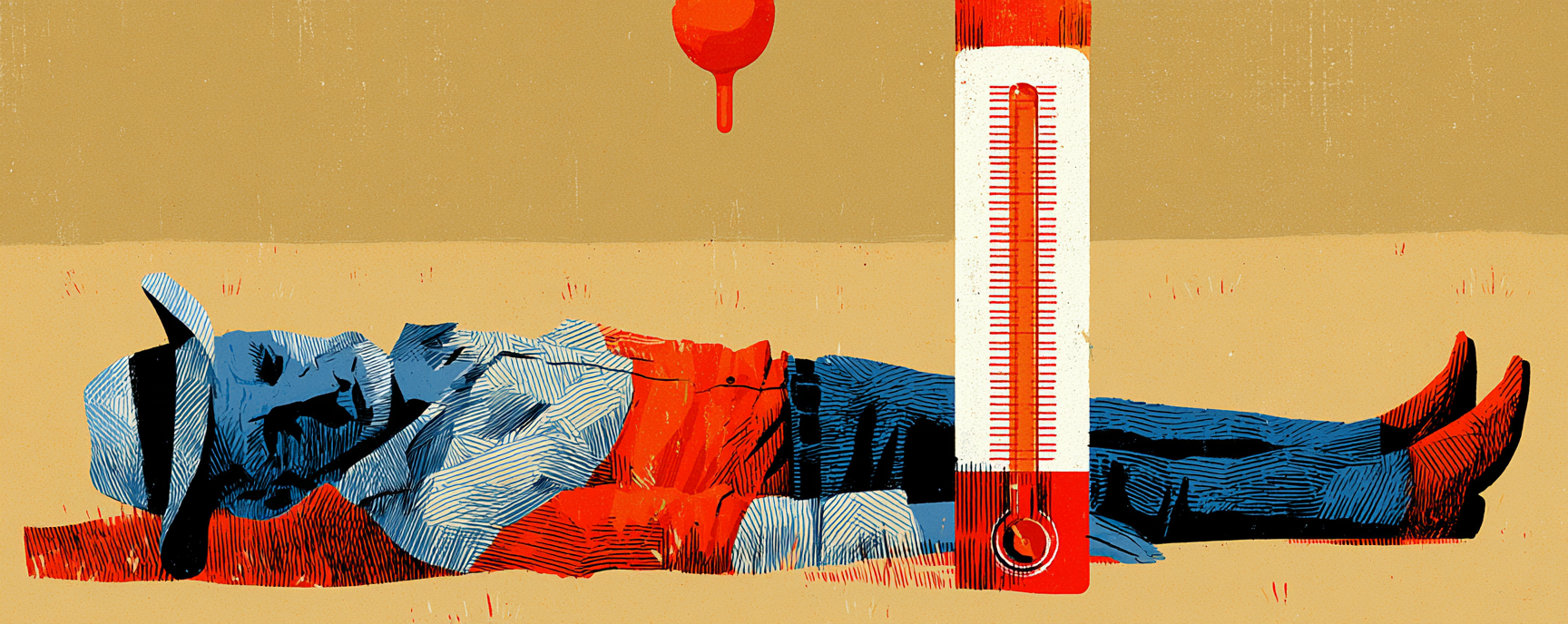
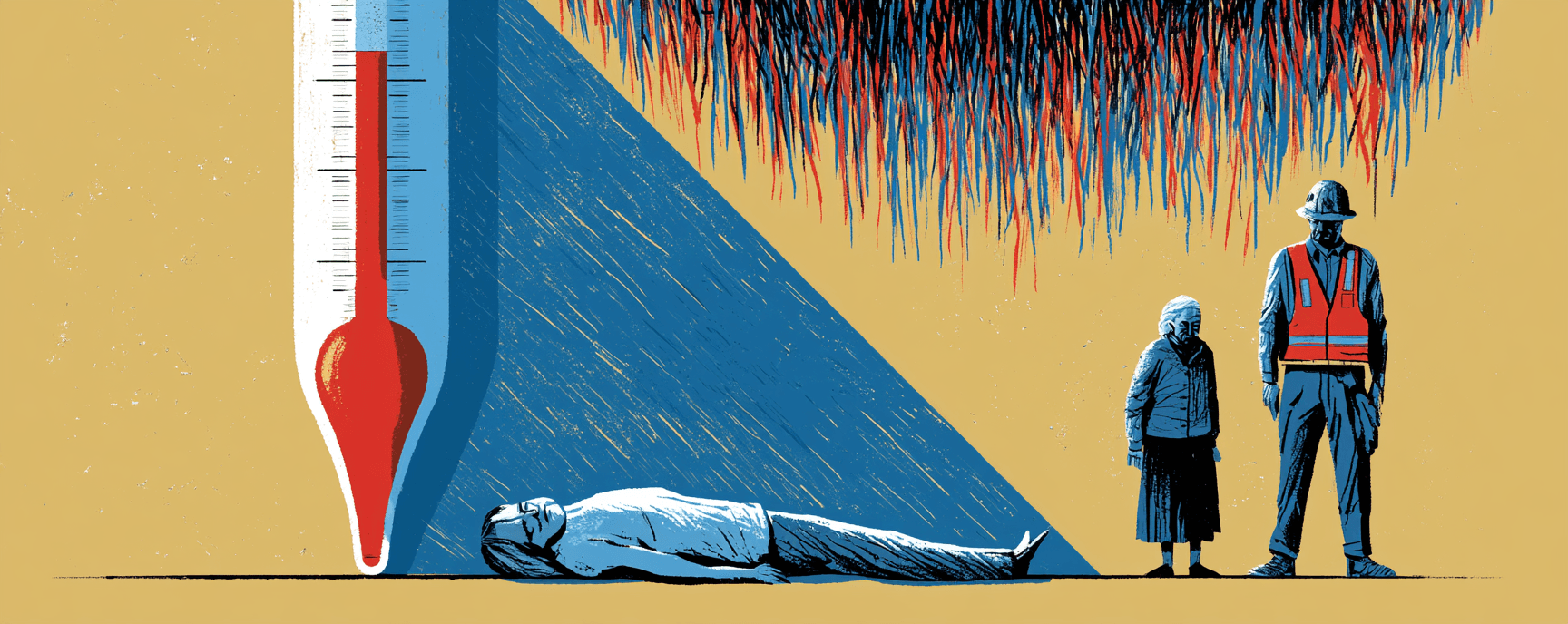
Every heat warning system in the United States measures the air. Temperature, humidity, wet-bulb, heat index. The instruments point outward. But whether someone dies in heat depends on what's happening inside the body, where the cooling system either maintains its gradient or doesn't. Three studies published in 2026, from different disciplines and continents, have converged on a disruptive finding: the wet-bulb threshold that has anchored climate risk assessment for fifteen years was derived from physics, from thermodynamic first principles. Nobody tested it on a human being. When researchers finally did, the actual limits fell well below the line the world has been using.
The Wrong Thermometer
Every heat warning system in the United States measures the air. Temperature, humidity, wet-bulb, heat index. The instruments point outward. But whether someone dies in heat depends on what's happening inside the body, where the cooling system either maintains its gradient or doesn't. Three studies published in 2026, from different disciplines and continents, have converged on a disruptive finding: the wet-bulb threshold that has anchored climate risk assessment for fifteen years was derived from physics, from thermodynamic first principles. Nobody tested it on a human being. When researchers finally did, the actual limits fell well below the line the world has been using.
The Quiet Tax
Effect of climate-driven childhood sleep erosion on potential regional economic inequality
Elderly adults, women, children, and residents of lower-income countries face the steepest losses with the least access to cooling.
Each step in the chain, from climate model to sleep data to cognitive outcome, compounds the uncertainty of the one before it.
The Quiet Tax
Temperature discomfort impairs everyday cognition: a pilot study using smartwatch-based ecological momentary assessment
Prior heat-cognition work used extreme lab conditions. This study caught impairment during unremarkable summer days, via smartwatch prompts.
Performance dropped while participants felt fine. The erosion operates below the threshold of self-awareness, not just below emergency.
The Quiet Tax
Rising temperatures erode human sleep globally
It provides the observed relationship between nighttime temperature and sleep loss that the 2026 projections are built on.
Elderly populations, women, and those in lower-income countries, where adaptive cooling remains least available.
The Quiet Tax
Climate warming may undermine sleep duration and quality in repeated-measure study of 23 million records
Two independent studies, different populations and methods, both projecting significant sleep erosion. The magnitude differs; the direction holds.
Deep sleep, the phase your body relies on for physical recovery, immune defense, and consolidating what you learned that day.
The Invisible Inhalation

When the Smokehouse Creek Fire burned a million acres of Texas Panhandle in February 2024, smoke reached Oklahoma and western Kansas. The visible haze was only part of what traveled. Unburned gases drifted into downwind cities, met urban exhaust, and sunlight cooked them into ozone, a strong oxidant you cannot see or smell.
A study in Science Advances from Minghao Qiu's team at Stony Brook analyzed 18 years of surface ozone data and found wildfire smoke boosts ground-level ozone by up to 16 percent in some regions, contributing to more than 2,000 excess U.S. deaths per year. Particulate pollution and ozone rarely overlap in time or space. When the sky clears and the app reads green, the oxidant may still be running. Someone in Wichita who checked the forecast and stepped outside was breathing something the monitors weren't tracking.