

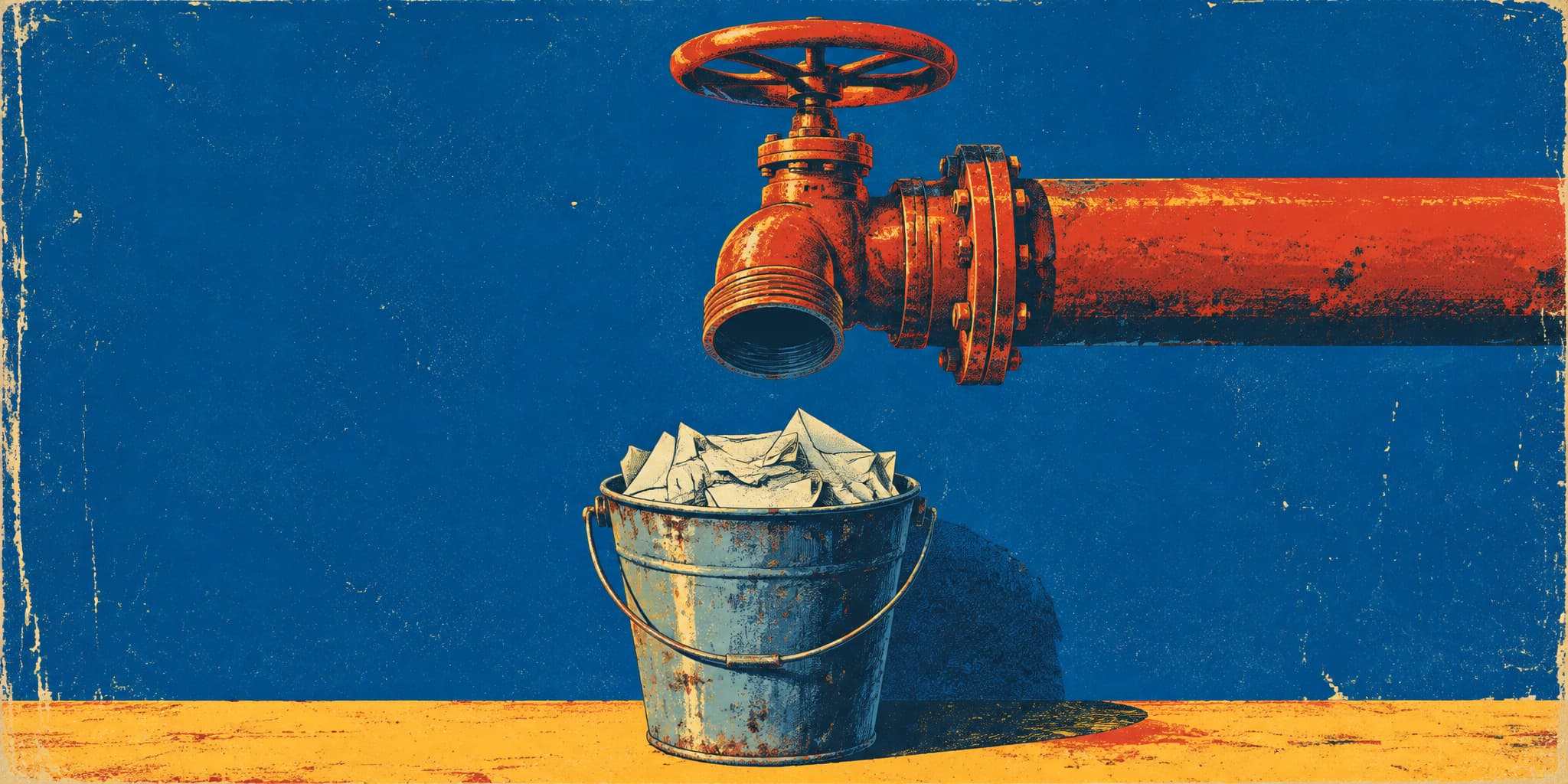
In May 2025, a month before Hurricane Lala hit the Big Island, state consumer advocate Mike Angelo told Hawaiʻi's Public Utilities Commission to appoint a receiver for Punaluʻu Water and Sanitation, a private company serving 76 condominiums that had just reported it was broke. Hawaiʻi law gives the PUC that authority. Since 2009, the commission can step in when a regulated water or sewer utility fails or is about to fail, installing a temporary manager to keep things running.
The statute says a receiver can spend "existing utility company revenues" and charge costs back to ratepayers. Punaluʻu had no revenues before the hurricane. After the storm destroyed the physical system, there was no service to bill for and reconstruction costs running into the millions. Angelo had urged the PUC months earlier to start planning, warning the process "could take months." The hurricane arrived before the commission acted. The law is on the books. The money is not.
Spent before the storm: Punaluʻu Water and Sanitation had burned through $1.3 million since taking over operations. Owner contributions, loans, and credit were all exhausted by April 30, 2025. Water rates hadn't changed since 1977.
The rate request: A proposed increase would have generated roughly $617,000 per year, enough to keep the lights on but not to rebuild anything.
No takers: Two large Hawaiʻi water companies were contacted pre-hurricane about acquiring the system. Both declined. Too small.
Land complications: Punaluʻu's infrastructure sits on land controlled by a separate landowner under an easement whose scope hadn't been confirmed as of the last public proceeding.
Scale of the problem: The PUC regulates roughly 38 small private water and sewer utilities statewide, most on the neighbor islands. Punaluʻu is the cautionary case, not the only vulnerable one.