The Word They Wouldn't Say
For roughly sixty-five years, the federal agency responsible for telling Americans about dangerous weather maintained a written prohibition against the word "tornado" in public forecasts. It was printed in the station regulations, folded into personnel evaluations, and enforced through internal review. When the deadliest tornado in American history killed 695 people across three states in 1925, the bureau investigated the storm with real professional care — its path, its speed, its casualties — and did not investigate the policy that guaranteed nobody was warned. Then it kept the ban another twenty-seven years.
The Word They Wouldn't Say
For roughly sixty-five years, the federal agency responsible for telling Americans about dangerous weather maintained a written prohibition against the word "tornado" in public forecasts. It was printed in the station regulations, folded into personnel evaluations, and enforced through internal review. When the deadliest tornado in American history killed 695 people across three states in 1925, the bureau investigated the storm with real professional care — its path, its speed, its casualties — and did not investigate the policy that guaranteed nobody was warned. Then it kept the ban another twenty-seven years.
The Outside Break
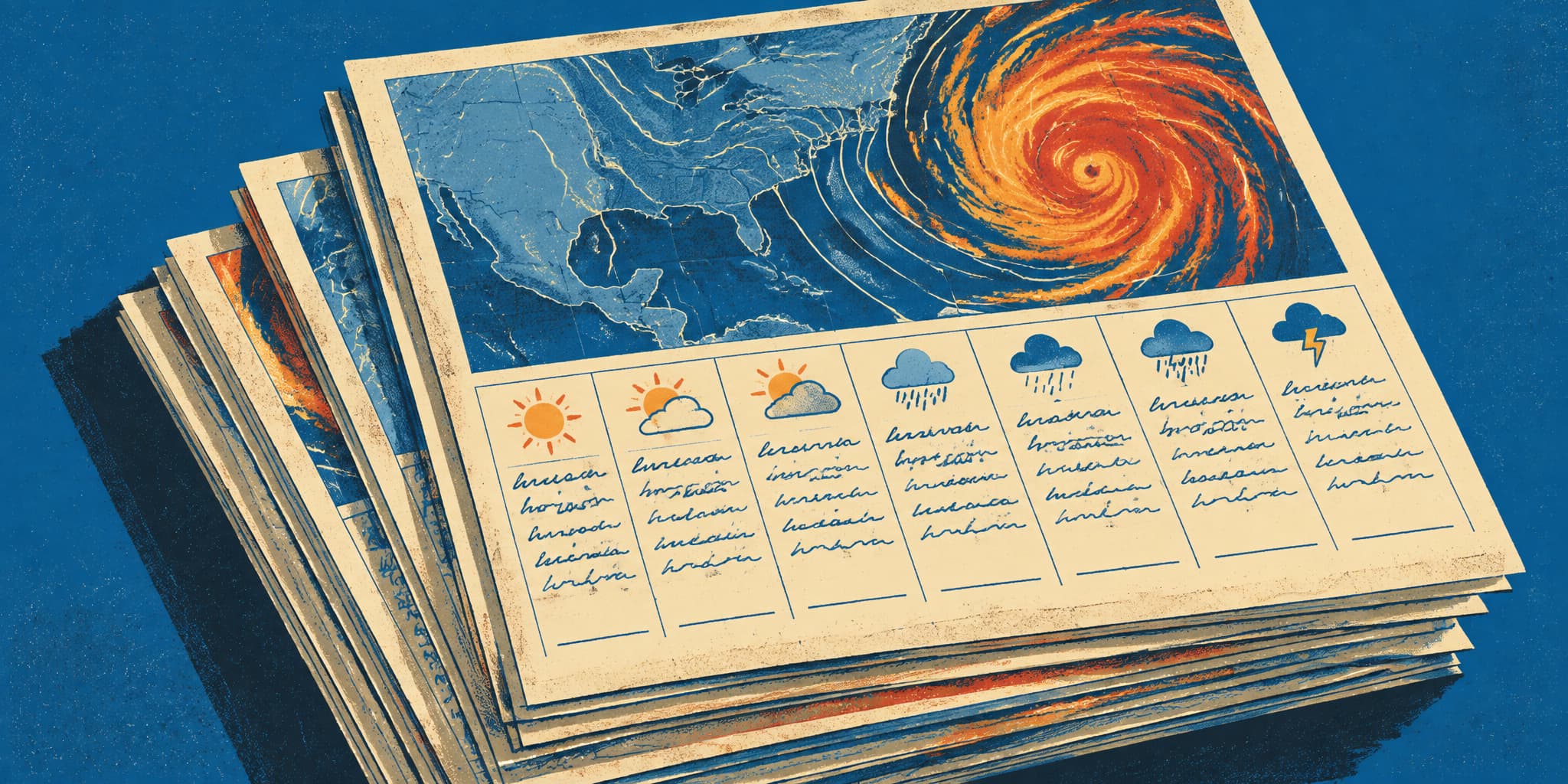
The U.S. Weather Bureau banned the word "tornado" from public forecasts in 1887. Officials figured warnings would cause more panic than the storms. That policy held for over sixty years.
The ban broke from outside the bureau. On March 20, 1948, an unforecasted tornado hit Tinker Air Force Base in Oklahoma City, destroying 54 aircraft. The base commander asked his two meteorologists a question the bureau wouldn't touch: Can you predict these?
Five days later, Captains Fawbush and Miller saw the same weather pattern forming and issued a forecast at 2:50 p.m. The tornado struck at 5:58.
Their forecast covered the base. Civilians across Oklahoma City got nothing. The bureau didn't lift its public ban until 1950, and only built a warning center after Congress forced them to in 1952.

Same Storm, Two Different Words — A Conversation with the Forecaster Who Couldn't Say "Tornado"
CONTINUE READINGToll and Transfer
Murphysboro, 2:34 P.M.
On March 18, 1925, about ten thousand people in Murphysboro, Illinois, had no warning from anybody that anything was coming. The Weather Bureau's forecast for the state said "rains and strong shifting winds." Then the deadliest single-community tornado in American history killed 234 of them in a few minutes. The survivor accounts, most written decades later with honest caveats about memory, are what we have of a town meeting catastrophe with nothing said in advance.
Which Dangers Get a Warning
Tornado warnings eventually came, and so did hurricane tracking, flood forecasting, and fire-weather alerts. But heat, which kills more Americans most years than tornadoes, hurricanes, or floods, waited decades for anything comparable. Some NWS offices did not issue a formal heat advisory until 2025 and 2026. Which dangers get warning systems has depended less on how many people die than on whether the dying is visible, fast, and attached to somebody with political weight. Compound climate risks now sit in a familiar kind of gap.
Present Warnings