

Steve Brewer is 75, a disabled Navy veteran who gets around with a walker, and a renter in a studio apartment at Colony I at Sea Mountain, a condo development in Punaluʻu on the southern coast of Hawaiʻi's Big Island. When Civil Beat visited him in early September, three weeks after Hurricane Lala came through, the lights worked. The water and the toilet did not.
Friends and neighbors were bringing him cooked food and bottled water. Recent stomach surgery had taken his savings. Somebody had set portable toilets out on the property, but they were hard for a man with a walker to reach. He stayed because he couldn't afford to go and had no accessible place to go to.
That is close to everything the public record has to say about how Brewer actually lives now. Nobody has published how much water he gets in a day, or where he keeps it, or whether he can wash, or whether anyone walks him out to the portable toilet and back. The state expanded its disaster case-management program on September 11, putting more than 80 case managers in the field for hurricane-affected households. Whether one of them has knocked on his door isn't in the record either.
What is in the record, at length and in detail, is the arrangement that left him dry.
Why the lights came back on
Hawaiian Electric serves the Big Island. One regulated utility, generation through distribution, the whole island. When Lala took the power out, the company put crews in the field, published a restoration schedule, and announced on August 31 that it had finished repairs to all major damaged systems on Hawaiʻi Island. By the time Civil Beat got to Brewer's door, his lights were on.
The water and sewer serving Colony I belong to Punaluʻu Water and Sanitation LLC, a small private utility legally separate from the condo association, owned through a chain of affiliated LLCs, and regulated by the PUC. Lala destroyed its well, its controls, its transformer, its chlorination equipment and its pump motors. That is the whole machine, top to bottom.
The difference in outcome isn't mysterious. Hawaiian Electric has the size, the capital and the crews to absorb a catastrophic repair. Punaluʻu Water and Sanitation has none of those things. And the system under Colony I was already dying before the storm got there.
Twenty-five thousand dollars
Early in 2025, months ahead of the hurricane, Punaluʻu Water and Sanitation asked the PUC for a temporary rate increase of roughly 2,795 percent. That number is not a typo. The utility reported 2024 income of $25,006 against $405,758 in operating expenses. It had been living off a $750,000 loan from an affiliated LLC called Black Sand Beach, and the loan money was gone. It owed back payments to the contractor who ran the plant. Its own attorneys asked to withdraw from the rate case because they weren't being paid either.
Twenty-five thousand dollars a year. That was the revenue of the outfit responsible for delivering water and taking away sewage for roughly 76 condominium units and a handful of single-family properties. A working plumber in Honolulu bills that in a couple of months.
The physical plant matched the books. A county fire inspection in 2023 found all 16 hydrants needing repair or service, some of them missing outright. The utility told regulators it urgently needed a wastewater effluent pump and an electrical panel for a pump station, the panel being the kind of part whose failure burns out the pumps and puts the sewage on trucks.
There is nothing exotic about any of this equipment. I spent five years on cargo ships where everybody's drinking water came out of machinery no more complicated than this, and the rule was the same in every engine room I ever stood in: pumps and chlorinators are consumables. They wear out on a schedule a person can predict. Somebody has to put the money aside beforehand, because afterward you are hauling water in cans.
The PUC approved the temporary increase on May 8, 2025, good for about $639,000 in revenue over the following twelve months. The broader rate investigation stayed open. Just over a year later the hurricane made the whole proceeding academic. What Lala took out was a utility that had been running on borrowed money it had no means of repaying.
Five offices
From behind a walker the question is simple: when does the water come back on? On the institutional side it breaks into pieces, and nobody holds enough of the pieces, or enough money, to put them back together.
The utility owns the physical plant, or what's left of it, and holds the certificate to operate. It cannot pay for reconstruction. Before the storm its revenue covered about six cents of every dollar it spent. The rate increase was described as a stopgap while the owners looked for a buyer.
The condo association speaks for the Colony I unit owners, but it doesn't own the water and sewer infrastructure. The association's president told Civil Beat the association wanted the PUC to consider appointing a receiver, or letting a community nonprofit take the system over. Asking for that is an admission the association can't direct the repairs itself.
The PUC sets rates, certifies the utility and has authority under HRS §269-14.5 to appoint a receiver when a regulated water or sewer utility is failing and the failure threatens customers' health and safety. A receiver manages the utility's existing assets and revenues. The statute doesn't come with a construction fund. Where there's no money and no working plant, receivership means putting somebody legally in charge of wreckage.
Hawaiʻi County put emergency water spigots out after the storm. Mayor Kimo Alameda told Civil Beat the county has no agreement to take over the private system. The county's Department of Water Supply tracks recovery on its own public systems, and Punaluʻu isn't one of them. The county does have building-code authority over dangerous or insanitary conditions, which covers inadequate plumbing and insufficient water supply. Whether anybody has inspected Colony I or made a habitability finding isn't in the public record.
The state Department of Health regulates drinking-water safety and wastewater, not rates. During the storm response the state said DOH was assisting with bulk water and required notices, and DOH and PUC staff inspected the damaged system. DOH doesn't rebuild private utilities.
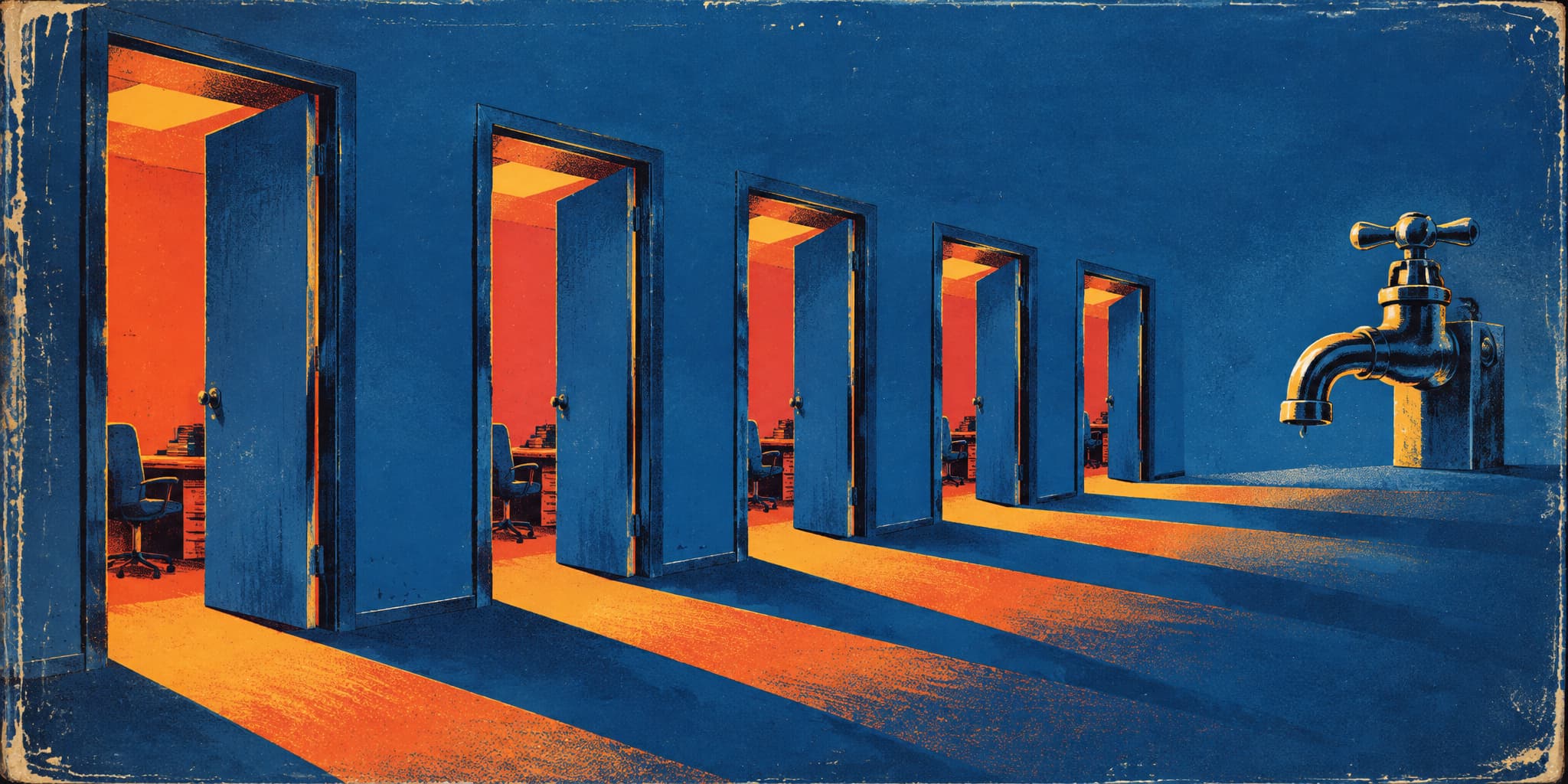
Call any of these five offices and ask why Steve Brewer has no water, and the person who picks up can tell you, accurately, that the broken part isn't theirs. Nobody is lying. The boundaries are real ones, written down and enforceable. Brewer's faucet doesn't recognize them.
The rate docket was still listed as "in progress" in the commission's fiscal year 2025 annual report, published in January. After the hurricane the commission inspected the damage and then declined to tell Civil Beat what it might do next. No receivership petition, no new proceeding about reconstruction, no identified buyer appears anywhere in the public record. Whatever the system was worth to a buyer before, Lala likely took care of that. As of late September, nothing visible in the record is moving toward putting water back into Colony I.
Who is paying for the portable toilets?
I keep coming back to this one. The public record doesn't say who ordered the portable toilets, who services them, who pays the bill or how long the arrangement runs. Somebody signed for them. Somewhere there's a purchase order, a service route and a driver who shows up on a schedule to pump them out. That's a commitment with an expiration date on it, and when it expires somebody renews it or Brewer and his neighbors lose the toilets along with the water.
The same silence covers whatever water tanks may be sitting on the property, and the bottled water the friends bring, and the question of what Brewer's landlord, unnamed in every published account, owes him under Hawaiʻi's landlord-tenant law, which requires a landlord to keep the place habitable, the plumbing working and the water running.
I wrote earlier this year about Cheryl Henderson in Phoenix, a renter whose apartment stayed cool or didn't depending on equipment, landlord decisions, the power supply and building rules, not one of which she controlled. Brewer is further down that same road. Henderson's system worked badly. Brewer's stopped. And renting means he has no standing anywhere in the matter. He can't put money into the plant, can't sell the unit and leave, can't file anything at the PUC, can't even negotiate with a utility that isn't his counterparty.
What he can do is wait for five institutions to produce one working faucet. In the meantime his friends bring water, his neighbors bring food, and somebody we can't name keeps the portable toilets coming.
Twenty-two thousand private water systems
Brewer's trouble is specific: one storm, one utility, one studio apartment. The arrangement that produced it is everywhere.
The Government Accountability Office has reported that more than 90 percent of the country's roughly 50,000 community water systems serve fewer than 10,000 people. A 2025 study of EPA data put 45.5 percent of them, 22,168 systems, in private hands. Nobody publishes a clean count of how many households are served by systems that are both small and private, because the federal data don't cross-tabulate that way. But the universe is large.
And when one of these little private systems fails, the same fracture tends to open up. In San Bernardino County, California, Havasu Water Company serves about 226 connections on the Chemehuevi Indian Reservation: recurring outages, boil-water notices, compliance failures. EPA handles drinking-water oversight because the land is a reservation. The California PUC kept authority over rates. A Tribal Court ordered the pipeline relocated. A county court approved a temporary receiver in September 2026. Water quality, rate regulation, land authority, pipeline access and receivership each sit in a different building. The customers get one interrupted tap.
An EPA study of "intractable" water systems found the same thing in three small private systems in Orange County, New York: years of violations, multiple agencies, court-appointed receivers, and the consistent finding that the authority to step in and a funded entity willing to own the thing afterward are two separate items.
Plenty of states have comparable receivership tools. The legal power to intervene exists. What doesn't exist anywhere is a mechanism that produces a funded, willing operator when the private owner can't or won't keep going.
What habitability actually requires
A place to live isn't scored on a curve. Power and no water doesn't average out to half a home.
Brewer has electricity, a roof, walls, a door, and a studio he can afford in a place where housing that's both affordable and navigable with a walker barely exists. He does not have water in the faucet or a toilet he can reach and flush.
If the system isn't rebuilt, Colony I becomes a condo development with electricity and no water, and 76 households go looking for somewhere else in a market that has no room for them. Brewer, walker and no savings, goes looking too. Nothing in the public record suggests anybody has worked out where.
Somewhere between those five offices and Brewer's studio, somebody is still paying to have the portable toilets pumped. There's a renewal date on that paperwork, and a dollar figure, and a vendor deciding month to month whether to keep sending the truck. That's the clock Colony I is actually running on. I can't find an agency anywhere that's watching it.
- Havasu Water receivership outcome: A San Bernardino County court approved a temporary receiver for Havasu Water Company in September 2026, and whether that receiver can actually restore service will test the same gap between legal authority and funded operation that Colony I faces.
- Beulah's one-operator district: An earlier Human Stories piece followed a 166-tap Colorado water district that passed its water tests but was running out of institutional capacity to keep operating, a situation that shows what a small system looks like before the crisis Punaluʻu reached.
- Arizona's indoor heat deaths: Maricopa County's 2025 heat report found that an air-conditioning unit was present in 94 percent of indoor-death cases but not functioning in 72 percent of those, another instance where the equipment's presence and the service's delivery are different facts.
- Federal data gaps on ownership: GAO has reported that EPA's ownership records for community water systems are incomplete or outdated enough that no one can produce a reliable national count of households served by small, privately owned utilities like Punaluʻu Water and Sanitation.