Spokane, 2043.
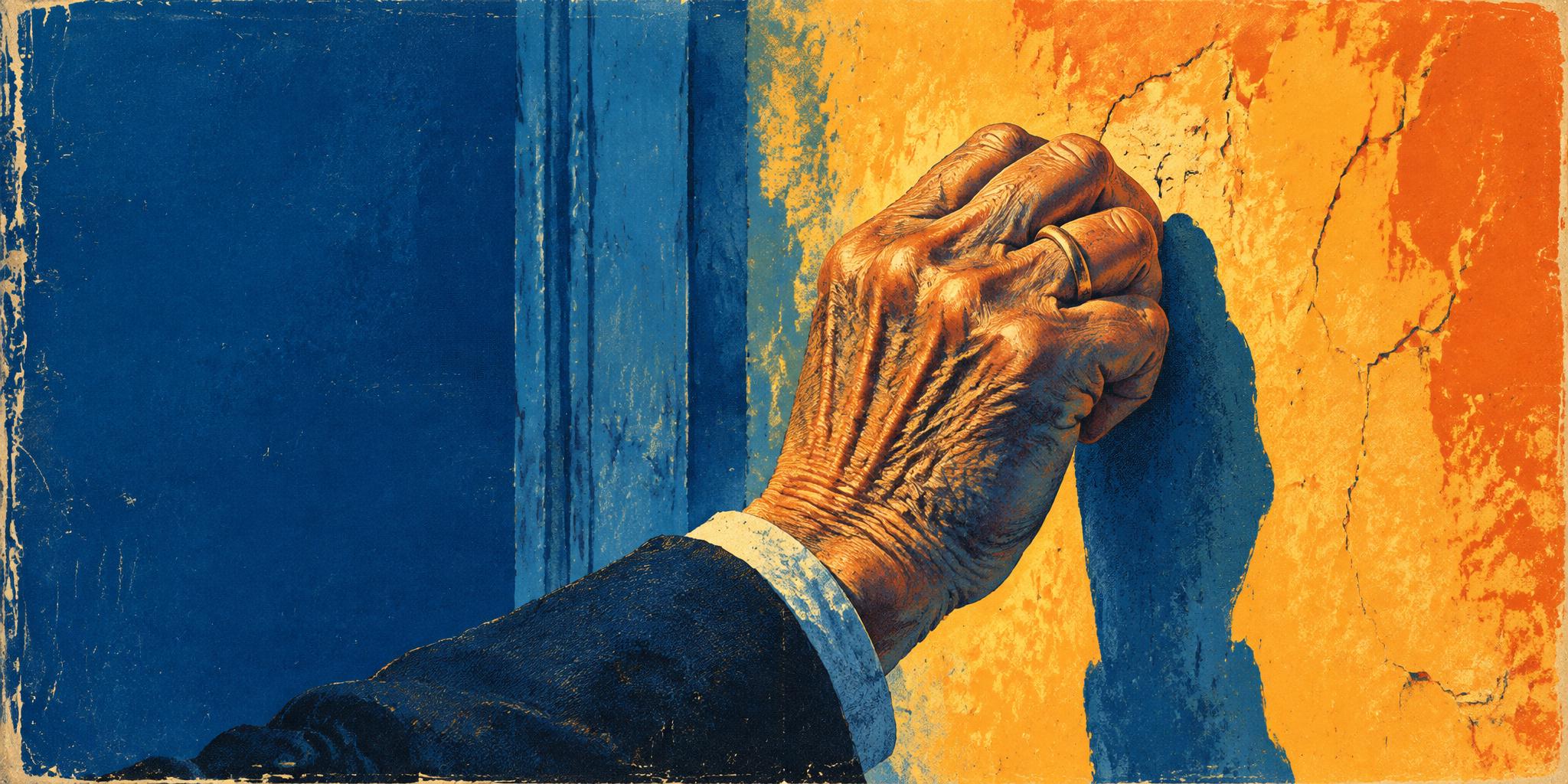
Three knocks meant a visit.
Dale's knuckle landed low, at the height of the knob, where it had landed for forty-four years. Lifting it higher had never occurred to him. Two knocks meant anything else: coffee's on, the Mariners are up in the eighth, your reading glasses are in the freezer again. Three knocks, spaced, meant he was standing out in the hall with his hair combed wet and the good undershirt on. Irene could say come in or she could say not tonight, sweetheart, and either answer was allowed. That was the arrangement. No one wrote it down. It began the winter of 2032, when she carried her pillow down to the back bedroom and the pillow stayed.
At seventy the knock still reached her body before her ears were done with it. A heat started under the breastbone, climbed her throat, and settled in her earlobes. Wanting her husband, possibly. A hot flash, possibly. Her doctor had promised the flashes would taper off in her fifties. Instead they had followed her into retirement from the county assessor's office and kept regular hours. By feel she couldn't tell the two apart. Usually she said come in and let the next twenty minutes sort it out.
The back room was hers. A narrow bed, a north window over the alley, the sewing machine under its quilted cover, and eight hours a night of air nobody else had breathed. The front room was his: the double bed, the radio murmuring all night on the overnight call-in show, the door propped wide so he could hear the house. Hers stayed shut. Still his snoring came down the hall and through the wood at about the volume of rain on the front porch roof, and at some point she had begun counting it as weather.
For years the city had required landlords to cool at least one room in every rental. In June an inspector finally reached their block, and Kessling, their landlord, did exactly what the city made him do.
The man he sent was named Tobias. He came up the porch steps with a window air conditioner strapped to a hand truck and a tablet in a case printed with the property company's logo, and he wiped his feet on the mat for a long time. He had the patience of someone who had been inside a great many old people's houses that week.
"Which bedroom?"
Dale pointed down the hall to Irene's door. So did Irene.
Tobias looked at the two index fingers aimed at the same door. "Okay," he said. "Easy."
He was thorough, so he checked the front room anyway. Dale's window opened outward on a small geared crank and had not closed all the way since before they moved in. Tobias pressed his thumb into the gap. "Can't seat a unit in a crank," he said. "Mostly the window decides."
While he worked he gave a speech he had obviously given forty times. The rule covered a room you slept in or a room where you spent your leisure time. Kitchens didn't count. Neither did bathrooms.
"We spend a lot of leisure time in the bathroom," Dale said.
Tobias let that pass. He screwed in the bracket, ran foam weatherstrip along the sill, and tipped the unit back a few degrees so the condensation would drip into the alley and not down the wallpaper. When he switched it on, the first cold came out low and found Irene's shins before anything else in the room. It smelled of new plastic and the back wall of a refrigerator. Dale held both palms to the vents, fingers spread, the way he warmed his hands at the lake in October.
At the front door Tobias said, "Second room's on you. You're allowed to put one in. They can't charge you for it." Then his eyes went down the hall to the two bedroom doors facing each other from either end, both open, and he left without saying anything more.
July nights still let go of the heat. After supper they opened the windows and air came down off the South Hill smelling of other people's sprinklers. By two in the morning Irene was reaching for the blanket. Afternoons, the new unit ran while she read with her feet up, and now and then Dale came in to stand in front of it with his shirt held away from his belly so the air could get under. He knocked twice first.
On the sixth of August the smoke arrived from wherever the fires were that year. The phone on the kitchen counter told them, in its mild voice, to keep windows and doors closed, and they closed them. The light went the color of weak tea. At four in the afternoon the sun was a flat orange disc she could look at directly. Her eyes didn't water or even narrow, and that bothered her more than the smell.
Shut tight, the house took each day's heat into its plaster and gave it back all night. The front room got the worst of it, from the west wall and the porch roof. On the third night she stood in Dale's doorway and the room's air met her before she stepped in. It leaned on her face and the tops of her forearms with real weight. He was lying on top of the sheet with the radio going, a dark stripe of sweat down his undershirt along the line of his spine.
"I run cold," Dale said. He had been saying this since 1999. He said it now with the shirt stuck to his back.
The next morning he drove to the hardware store on Division and came home with a portable unit, the kind that sits on the floor and breathes its heat out a window through one fat hose. The crank window wouldn't take the hose, so he spent the afternoon cutting cardboard and taping it in place, dripping onto the cardboard as he worked. At twenty to eleven that night both machines stopped together. So did the hall nightlight and the red numbers on her clock. In the silence she heard a dog two alleys over, and then her own pulse in the ear against the pillow.
Dale went down to the basement wearing the headlamp their grandson had given him for Christmas and flipped the breaker back. The units hummed up. Twenty minutes later they quit. On the third trip he stood at the top of the basement stairs with the headlamp aimed straight into her eyes and said, "Well."
Kessling texted the following afternoon. The electrical panel was "original to the structure." Both bedrooms ran on a single breaker. A rewire was "on the list." The portable went back in its box and the box went into the hall, where by Friday it was holding up a week of mail.
That night Irene stood in his doorway again.
"Bring your pillow."
"I'm fine."
"You're soaked through. Bring your pillow."
The first night he slept on the air mattress from the garage, on the floor beside her bed. Getting up to pee at three in the morning took him four tries: knees, one hand on her dresser, the other hand, and then a sound she had not heard come out of him in forty-four years. In the morning they agreed there would be no second night of that.
So the beds traded places. Her twin went up the hall to the front room. His double came down the hall on its side and wedged in her doorframe, and when Dale shoved, it folded at the middle and came down over him slowly, the way a wet tent sags when the poles give. He went to his knees under it.
"I'm all right," he said through the mattress.
Irene laughed until she had to sit down on the hall floor. Partway through, a flash came up. Her scalp prickled, sweat broke at her hairline, her stomach ached from laughing, her face burned, and she could not have said which of those was causing which.
Then they lived in the back room.
His radio went on her sewing table. His pill organizer, the big one with raised letters for the days, sat beside her lamp. Their reading glasses lay folded together on the nightstand, and they kept putting on the wrong pair. The double took up nearly all the floor. To reach her closet she had to go sideways, belly pressed to the mattress edge.
The cold stayed in only with the door shut. If it stood open even a hand's width, a band of warm air lay across her ankles where the hall began, a line she could have chalked on the floor. Dale had slept with his door open for eleven years. He went to the bathroom and came back and left it open. He went for a glass of water and left it open.
"Door."
"Sorry."
"Door."
"Sorry. Sorry."
Within a week it was down to the one word, and he reached back for the knob without turning around, the way you swat at a fly you can't see.
The unit cycled. With the compressor running, the bracket buzzed against the sill on one low note, and inside that sound she could almost go under. Then a click. The compressor stopped, the fan went on alone, and Dale came up out of the quieter air: a rasp at the top of the in-breath, a small flutter of lips on the out-breath. Then the compressor clicked on and covered him over again.
She lay on her back with her eyes open and listened to the two of them take turns.
On the fourth night she dug through the bottom dresser drawer and found the shirt she had made him in 2031, a tube sock stitched between the shoulder blades with a tennis ball inside, so he couldn't lie on his back, where the snoring was worst. The ball had gone soft as a plum. She found a fresh one in the garage, in the coffee can that still held the dog's leash six years after the dog. Dale put the shirt on without a word. He also gave up his evening beer "for the duration," as if this were a war. A small one, confined to the house.
The shirt worked for about an hour. He rolled onto his side and the snoring dropped to a purr. Then he kept rolling. The bed was fifty-four inches across and he had annexed most of it. She woke with his knee in the back of her thigh and his breath on her neck, warm and damp, the only warm thing in the room.
The knob on the unit was numbered one through seven, with no degrees anywhere. Tobias had called that a mercy, since people got strange about numbers. At two in the morning a flash would start in her chest and spread outward. Sweat came between her breasts and down her ribs and sat there, because the air in a shut room didn't move enough to take it off her. She kicked the sheet away, reached up, and turned the knob to seven. At four Dale woke cold. He didn't touch the knob, it not being his room. He went looking for his wool cap instead.
At six she woke beside her husband asleep in a knit cap in August, blanket pulled to his ears, the tennis ball raising a lump under his back like an egg he was keeping warm. She laughed into the pillow so as not to wake him, and woke him.
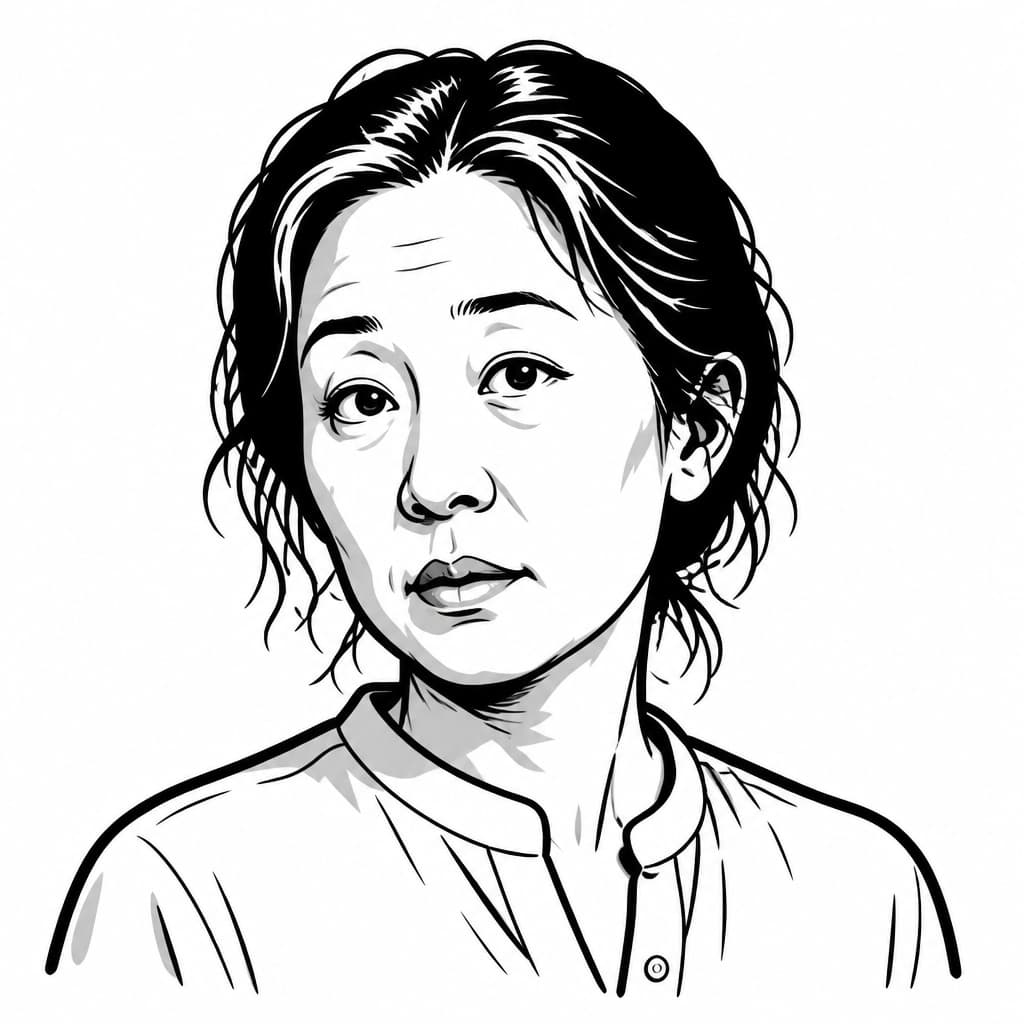
She slept naked. She had since the flashes began, in her own room behind her own shut door. The first night in the shared bed she had put on a nightgown out of something like manners and kicked it to the floor by midnight. So now he had seen. For forty-four years he had mostly seen her by hallway light, on visits, with the lamp off. Now morning came through the north window, flattened and browned by the smoke and nowhere near flattering, and he saw her stomach, the gallbladder scar, her breasts lying wherever they liked. He looked, then looked at the ceiling, then looked again, more slowly.
She looked back. The hair on his shoulders had gone white. The knee-replacement seam ran pale down his shin. When he sat up to find his glasses his belly settled onto his thighs, and he put on hers.
On the tenth day she said, "I'm going to need the room this afternoon."
Dale looked at her over the top of the crossword. It took him a moment. "Oh."
"Yes."
"How long?"
"Forty minutes."
"Forty."
"I'm seventy years old, Dale."
He took the crossword and a bag of frozen peas to the kitchen. She stood with her hand on the knob, the room's cold on her front and the hall's heat on her back. Whoever shut the door got the cold, and whoever was left outside it got the kitchen.
For the first few minutes she lay on top of the sheet listening for his chair on the linoleum. The hum. The bracket's buzz. Her own breathing, and nobody else's in the room for the first time in ten days. The sheet was cool under her shoulder blades. Her ears took a while to stop reaching down the hall for him, and then they stopped, and it was fine, and then it was better than fine. Afterward she lay with a forearm over her eyes while her heart slowed, and she had no one's face to arrange her own face for.
When she opened the door the hall heat came at her like a held breath let out. Dale sat at the table with the peas draped over the back of his neck and fourteen across filled in wrong.
On Friday he asked for the room. She sat in the kitchen with the peas, which had thawed and refrozen so many times they had fused into one green brick that no longer bent to the shape of a neck. Through the wall she heard the compressor click on and off exactly once.
Eleven minutes.
"Eleven minutes," she said when he opened the door.
"I was motivated."
"By what?"
He stood in the doorway with the cold spilling out around his ankles and looked at her for a long time. Heat climbed her chest and into her face. The kitchen was hot. The hall was hot. The whole house was hot, and she had no way to know.
Saturday night they lay in the dark with the compressor running. A knock had nowhere to go. There was no door between them and no other room for either of them to come from.
Dale reached across her and rapped three times on the wall above the headboard. Plaster. A dull sound, like knocking on a loaf of bread.
"You're already in," she said.
"I know where I am."
"Come in, then."
With no hall to arrive from, they had to begin in the middle. Cold lay along her back. His hand was warm. The only light was the small green power dot on the unit. Halfway through, a flash came up over her chest and neck, sweat beading on her upper lip, and she started laughing and couldn't stop. He stopped and asked what.
"Both," she said.
He didn't ask both what. They went on.
Before, someone had always walked back down the hall afterward. She had loved that walk: cool boards under her bare soles, the hall dark, his toothpaste still on her tongue, then her own sheets smelling of nobody and the rest of the night slept her way, flat on her back and spread to all four corners.
Inside of four minutes Dale was on his back, the tennis-ball shirt somewhere on the floor. The snoring started under the compressor and rose clear of it each time the compressor clicked off.
She lay awake on her strip of mattress, the soles of her feet still waiting for floorboards.
On the seventeenth the phone said the air was clean. They opened every window in the house. Evening came down off the hill smelling of cut grass and somebody's barbecue and only faintly of smoke, and by ten the hall boards were cool under her feet again.
Dale stood in the hall holding his pillow against his chest.
"Well," he said.
They moved the mattress properly this time, on its side, Irene walking backward and calling out the doorframes. The twin came back down the hall. His radio went back on his own sill, his cap on his own bedpost. The pill organizer went with him. So did her reading glasses, which she discovered in the morning.
She switched the unit off. The quiet afterward pressed on her eardrums the way the cold had pressed on her shins that first day. The machine stayed in the window in its ring of foam. Tobias had said it belonged to the building now and wouldn't be coming out.
Out of eleven years' habit she shut her door, lay down, and felt the room go dead around her. The window was open and nothing came through it, because air that came in had nowhere to go. Within a minute the sweat was sitting on her skin again, going nowhere either. She got up and opened the door a hand's width.
The room began to move. Air came in at the window and crossed to the gap in the door, over her shins, her stomach, the backs of her hands, along a line she could feel exactly. Down the hall the box sat under its mail. Past it, through Dale's door, propped wide as always, the same gap let in Dale. The in-breath and its rasp. The out-breath and its flutter. It arrived about as loud as rain on her own sill.
She lay on her side in the moving air and counted him. Somewhere after twenty she lost her place, and picked it up again at his next breath.
- Spokane's one-room rule: The real ordinance behind Tobias's visit took effect September 2, 2026, and Spokane Municipal Code §10.57.175 requires adequate cooling in at least one sleeping or leisure room, but it never says who in the household chooses that room.
- The second unit question: Washington's portable cooling device statute protects a tenant's right to add a unit without fees, though a landlord can still restrict one that would exceed the building's or circuit's electrical capacity.
- Snoring and long marriages: A small study of married couples found that treating one spouse's snoring and apnea cut the partner's nightly arousals from 21 to 12 per hour, even after years of habitual exposure.
- Hot flashes at seventy: Irene's doctor may have been too optimistic, since one study of older postmenopausal women found that more than half of those with bothersome hot flushes still had them three years later.
